

Abu Dhabi announces activities open to foreign ownership

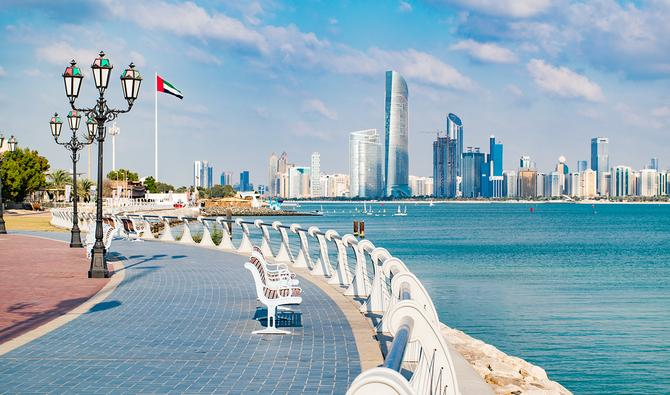
Activities open to foreign ownership include plastic surgery and marine leasing. (file/Shutterstock)
Short Url
Updated 21 May 2021
Follow

Abu Dhabi announces activities open to foreign ownership

  • 1,105 commercial and industrial activities are listed
  • Existing companies can change status

ABU DHABI: The Abu Dhabi Department of Economic Development (ADDED) has announced a list of 1,105 registered commercial and industrial activities that are open to ownership by natural and legal non-citizens, WAM reported.

This enables them to fully or partially own commercial companies to practice these activities in Abu Dhabi.

The list includes a broad range of activities from manufacturing to equipment rental and photography to running a zoo.

“This announcement reflects the keenness of the Abu Dhabi Government to attract further foreign direct investments and to promote an open and resilient competitive business environment,” said ADDED Chairman Mohamed Ali Al Shorafa. “The decision is one of many decisions and initiatives to provide incentives for the private sector in Abu Dhabi and to enhance the status of Abu Dhabi on the global investment map.”

The list of activities available for foreign ownership was decided by the Council of Ministers according to what would have the biggest strategic impact.

Existing companies have the right to adjust their status, provided they comply with the regulations on activities or other applicable restrictions, in accordance with ADDED-adopted procedures.


Kuwait to boost Islamic finance with sukuk regulation

Updated 05 February 2026
Follow

Kuwait to boost Islamic finance with sukuk regulation

  • The move supports sustainable financing and is part of Kuwait’s efforts to diversify its oil-dependent economy

RIYADH: Kuwait is planning to introduce legislation to regulate the issuance of sukuk, or Islamic bonds, both domestically and internationally, as part of efforts to support more sustainable financing for the oil-rich Gulf nation, Prime Minister Sheikh Ahmad Abdullah Al-Ahmad Al-Sabah said on Wednesday.

Speaking at the World Governments Summit in Dubai, Al-Sabah highlighted that Kuwait is exploring a variety of debt instruments to diversify its economy. The country has been implementing fiscal reforms aimed at stimulating growth and controlling its budget deficit amid persistently low oil prices. Hydrocarbons continue to dominate Kuwait’s revenue stream, accounting for nearly 90 percent of government income in 2024.

The Gulf Cooperation Council’s debt capital market is projected to exceed $1.25 trillion by 2026, driven by project funding and government initiatives, representing a 13.6 percent expansion, according to Fitch Ratings.

The region is expected to remain one of the largest sources of US dollar-denominated debt and sukuk issuance among emerging markets. Fitch also noted that cross-sector economic diversification, refinancing needs, and deficit funding are key factors behind this growth.

“We are about to approve the first legislation regulating issuance of government sukuk locally and internationally, in accordance with Islamic laws,” Al-Sabah said.

“This enables us to deal with financial challenges flexibly and responsibly, and to plan for medium and long-term finances.”

Kuwait returned to global debt markets last year with strong results, raising $11.25 billion through a three-part bond sale — the country’s first US dollar issuance since 2017 — drawing substantial investor demand. In March, a new public debt law raised the borrowing ceiling to 30 billion dinars ($98 billion) from 10 billion dinars, enabling longer-term borrowing.

The Gulf’s debt capital markets, which totaled $1.1 trillion at the end of the third quarter of 2025, have evolved from primarily sovereign funding tools into increasingly sophisticated instruments serving governments, banks, and corporates alike. As diversification efforts accelerate and refinancing cycles intensify, regional issuers have become regular participants in global debt markets, reinforcing the GCC’s role in emerging-market capital flows.

In 2025, GCC countries accounted for 35 percent of all emerging-market US dollar debt issuance, excluding China, with growth in US dollar sukuk issuance notably outpacing conventional bonds. The region’s total outstanding debt capital markets grew more than 14 percent year on year, reaching $1.1 trillion.