BEIRUT: Lebanese President Michel Aoun on Tuesday distanced himself from his foreign affairs minister who appeared to suggest that Gulf states were responsible for the rise of Daesh, as Saudi Arabia issued a strongly worded statement denouncing the minister’s “shameful insults.”
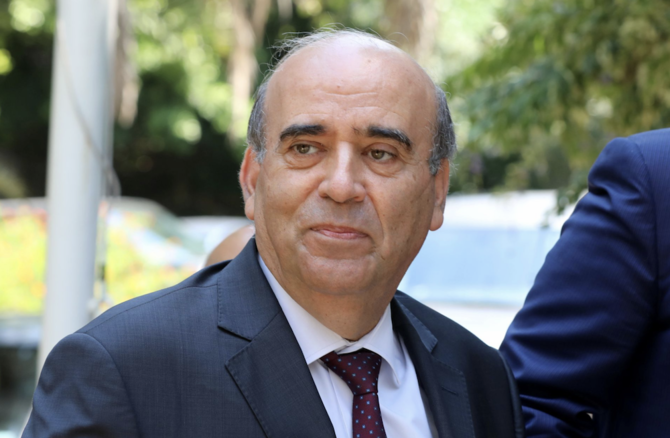
Foreign Affairs Minister Charbel Wehbe has sparked fury and condemnation after telling Al-Hurra TV on Monday: “There is a second stage when ISIS (Daesh) came, and the countries of the people of love, friendship, and brotherhood brought them. The countries of love brought us Daesh and planted it for us in the Nineveh Plains, Anbar, and Palmyra.”
When he disliked comments from a Saudi guest during the same interview, Wehbe decided to leave the show and criticized “the Bedouins.”
On Tuesday, Saudi Arabia’s Foreign Ministry condemned Wehbe’s statements that “bashed the Kingdom and its people, the shameful insults to the Kingdom, its people, and the GCC (Gulf Cooperation Council) countries.”
It said Wehbe’s statements were “inconsistent with the simplest diplomatic norms” and were not consistent with the external relations between the “two brotherly peoples.”
It also said it had summoned the Lebanese ambassador to Saudi Arabia, Fawzi Kabbara, “to express the Kingdom’s rejection and condemnation of the Lebanese foreign minister’s insults, and it handed him a protest note.”
The UAE also summoned the Lebanese ambassador in Abu Dhabi, who was told the minister’s comments were “derogatory and racist,” and there were protests from authorities in Kuwait and Bahrain. Nayef Al-Hajraf, secretary-general of the Gulf Cooperation Council, demanded a formal apology from Wehbe to Gulf states for his “unacceptable” remarks.
A source in Lebanon’s Ministry of Foreign Affairs told Lebanese news outlet Sawt Beirut International that Wehbe is expected to step down from his position on Wednesday.
Outgoing Prime Minister Hassan Diab said he had sought an explanation from Wehbe, and his country was keen to maintain the “best relations” with Saudi Arabia and the Gulf.
Aoun was quick to disavow Wehbe’s comments, saying the minister had expressed his personal opinion, which in “no way” reflected the position of Lebanon and its president, who was “keen to reject what harms brotherly and friendly countries in general, and the Kingdom of Saudi Arabia and the Gulf states in particular.”
Wehbe tried to contain the crisis by saying he was “surprised by the incorrect interpretations” of his words and that he “did not refer to the brothers in the Arab Gulf states” nor did he name any country.
He then issued a statement in which he admitted “using inappropriate expressions in an emotional moment, rejecting the unacceptable offenses directed at the president of the republic.”
The minister added that he would not hesitate to apologize for the expressions, stressing that “the intention was not to offend any of the brotherly Arab states or peoples. We all make mistakes.”
Wehbe’s interview remarks went viral on social media, provoking harsh comments that described him as “an idiot and a fool” and accused him of “falsifying history.”
His remarks shocked politicians, clerics, and economists inside and outside Lebanon, especially those working in the Gulf states.
The media office of Prime Minister-designate Saad Hariri said: “Wehbe’s words have nothing to do with diplomatic action and are a reckless round of tampering with foreign policies and this would result in severe consequences for Lebanon and the interests of its people in the Arab countries.”
Lebanon’s Grand Mufti Sheikh Abdul Latif Derian also criticized the minister. “Defamation, slander, and insults are not acceptable,” he said. “Whoever attacks the Kingdom and the rest of the Gulf states is attacking Lebanon. How can relations between brothers and siblings be built?”
The leader of the Progressive Socialist Party Walid Jumblatt called the Saudi ambassador to Lebanon, Walid Bukhari, to denounce Wehbe’s “offensive and irresponsible statement,” while the leader of the Lebanese Forces party Samir Geagea said the minister was supposed to be the foreign minister of Lebanon but “ended up being the foreign minister of Hezbollah.”
Geagea said that those who brought Daesh to prominence were Iran and the Syrian regime. “The first enemy of Daesh and its sisters is the Saudi leadership and other Islamic leaders,” he added, recalling Saudi Arabia’s support for Lebanon.
The media office of businessman Bahaa Hariri held the president and whoever brought him to power responsible for the “grave mistakes that affected Lebanon’s relations” with the Gulf countries, especially Saudi Arabia.


![]()

Saudi, GCC anger at ‘insult’ by Lebanon minister
Short Url
https://arab.news/pbeq4
Saudi, GCC anger at ‘insult’ by Lebanon minister
- In a statement, Saudi foreign ministry said comments were inconsistent with the most basic diplomatic norms


Latest updates



© 2026 SAUDI RESEARCH & PUBLISHING COMPANY, All Rights Reserved And subject to Terms of Use Agreement.