Cricket is a sport defined by tradition, but change may be in store after research suggested bamboo could be an attractive alternative to willow in the manufacture of bats.
The Cambridge University study said its prototype bamboo bat was cheaper to produce, more sustainable and stronger than traditional willow blades and could grow the game worldwide.
The article, published in the Journal of Sports Engineering and Technology on Sunday, also found the laminated bamboo bat possessed a larger sweet spot, making it “a batsman’s dream.”
Willow trees take 15 years to mature enough to produce cricket bats, whereas bamboo only requires five to six years and abounds in China, South America and southeast Asia as well as cricket-obsessed India.
Bamboo bats could increase participation in lower-income countries thanks to lower production costs and make cricket much more sustainable without compromising quality, the study claimed.
Co-author Ben Tinkler-Davies said: “Whether you’re playing or spectating, you wouldn’t notice much of a difference.
“Because laminated bamboo is so strong, we’re very confident we can make a bamboo bat light enough, even for today’s fast-scoring, short forms of the game.”
The study found that bamboo is 22 percent stiffer than willow and that its sweet spot performed 19 percent better.
The prototype bat’s sweet spot — the point where the ball is hit most effectively — is larger than a traditional bat’s and located closer to the toe.
That allows it to transfer more energy to the ball, the researchers said.
Bamboo bats would be “a batsman’s dream,” according to co-author Darshil Shah, who played cricket for Thailand at youth level.
“The sweet spot on a bamboo bat makes it much easier to hit a four off a yorker for starters, but it’s exciting for all kinds of strokes,” he added.
Bamboo’s higher density means that the bat’s shape would have to be redesigned to make a lighter product before batsmen can blast bowlers with their new weapon.
The London-based Marylebone Cricket Club (MCC) — the conservative custodian of cricket’s laws — must approve any change to the material used to make bats.
Cricketers have long experimented with different types of bat, from the length of the handle to thickness of the blade and weight, to try to gain a competitive edge.
In 1979, Australia’s Dennis Lillee caused controversy by using an aluminum bat, which was then banned.
Cricket’s current laws — brought in after the Lillee incident — state that bats must be made of wood, but bamboo is a type of grass.
“Playing with a bamboo bat would be within the spirit of the game because it’s a plant-based material. Cane, a type of grass, is already used in the handle,” said Shah.
“Tradition is important but think about how much cricket bats, pads, gloves and helmets have already evolved.
“If we can go back to having thinner blades but made from bamboo, while improving performance, outreach and sustainability, then why not?“

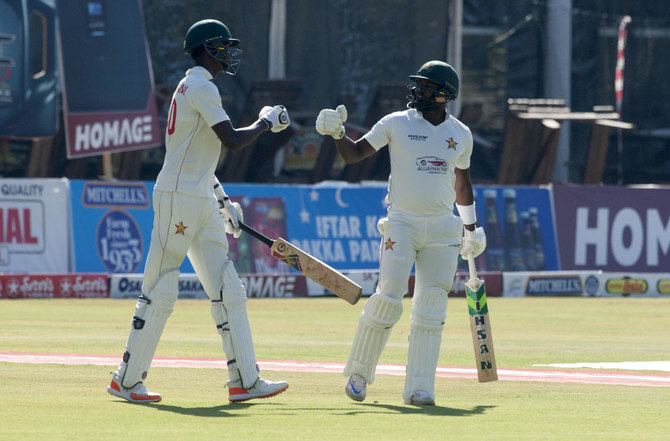
A bamboo bat? That’s just not cricket old boy
https://arab.news/4sj29
A bamboo bat? That’s just not cricket old boy
- Faster growing Bamboo seen as a more sustainable alternative to Willow
PIF-backed EV maker Lucid hits 16k 2025 deliveries, sets sights on robotaxi deployment
RIYADH: Electric vehicle manufacturer Lucid Group, majority-owned by Saudi Arabia’s Public Investment Fund, announced a surge in deliveries in 2025 with volumes reaching 15,841 units, a 55 percent increase year-on-year.
According to a statement, the EV maker also provided an optimistic production outlook for 2026, signaling confidence in its operational turnaround and strategic shift toward autonomy.
In September 2023, the group opened its first-ever international car manufacturing facility in the Kingdom. The hub serves as the company’s second Advanced Manufacturing Plant and its first outside of the US.
According to the earnings report, the company delivered 5,345 vehicles in the fourth quarter of 2025, up 72 percent from the same period in the previous year, marking its eighth consecutive quarter of record deliveries.
Interim CEO Marc Winterhoff said that 2025 “was all about execution and strategy adjustment to set Lucid up for long-term success. Against a challenging macro backdrop, we nearly doubled production, gained market share, reduced unit costs, and strengthened our financial position.”
This commercial momentum translated directly into financial gains. Lucid’s fourth-quarter revenue soared 123 percent to $522.7 million, while full-year 2025 earnings climbed 68 percent to $1.35 billion. The company ended the quarter with a robust liquidity position of approximately $4.6 billion.
A key driver of the improved performance was the ramp-up of production, including the launch of the Lucid Gravity SUV. Despite facing supply chain and tariff headwinds, Lucid nearly doubled its total production for the year.
The company clarified its final production figures for 2025, reporting a total of 17,840 vehicles. This aligns with its previous guidance of approximately 18,000 units.
Lucid explained that a preliminary estimate of 18,378 units, announced in early January, was revised after 538 vehicles were found not to have completed the final internal validation procedures required to be classified as “produced.”
These vehicles are expected to be finalized in 2026, and the company stressed the revision does not impact previously reported financial results.
The manufacturer expects to produce between 25,000 and 27,000 vehicles in 2026, representing growth of up to 51 percent compared with 2025.
Chief Financial Officer Taoufiq Boussaid said: “Q4 marked a clear step-change in production and unit economics. The progress we made is structural, creating a more repeatable and stable operating cadence heading into 2026.”
Beyond the production numbers, Lucid outlined a pivot toward software and autonomy. Winterhoff highlighted the company’s ambition to become an “early mover in the emerging robotaxi market” by leveraging its industry-leading EV technology and strategic partnerships.
To fund these future growth platforms while maintaining financial discipline, the company is making targeted adjustments to its workforce.
“As we prepare for the next stage of our product and volume expansion, we are making targeted adjustments to our US-based, non-manufacturing workforce to reallocate resources to support the next stage of our growth and margin progression,” Boussaid added.
He reiterated the company’s commitment to “financial rigor, operational efficiency, and thoughtful capital allocation.”
In January 2025, the EV maker became the first global automotive company to join the Kingdom’s “Made in Saudi” program, granting it the right to use the “Saudi Made” label on its products, symbolizing the nation’s focus on quality and innovation.
Lucid’s facility, located in King Abdullah Economic City, can currently assemble 5,000 vehicles annually during its first phase. Once fully operational, the complete manufacturing plant, including the assembly line, is expected to produce up to 155,000 electric cars per year.
This comes as the Kingdom is promoting the adoption of electric vehicles as part of its Vision 2030 strategy, which aims to achieve net-zero carbon emissions by 2060.
A critical target of the initiative is for 30 percent of all vehicles in Riyadh to be electric by 2030, contributing to a broader goal of reducing emissions in the capital by 50 percent.