



KARACHI: A rise in coronavirus cases and related restrictions have led to a drop in trade activity ahead of this year’s Eid Al-Fitr celebrations, with businesses in Pakistan’s commercial hub saying theirs have fallen by at least half.
Traditionally, Pakistani shoppers throng markets on the eve of Eid, which this year is likely to be observed on May 14, but as a third way of coronavirus sweeps the country, businesses activity will be officially suspended from May 9 to prevent the virus spread.
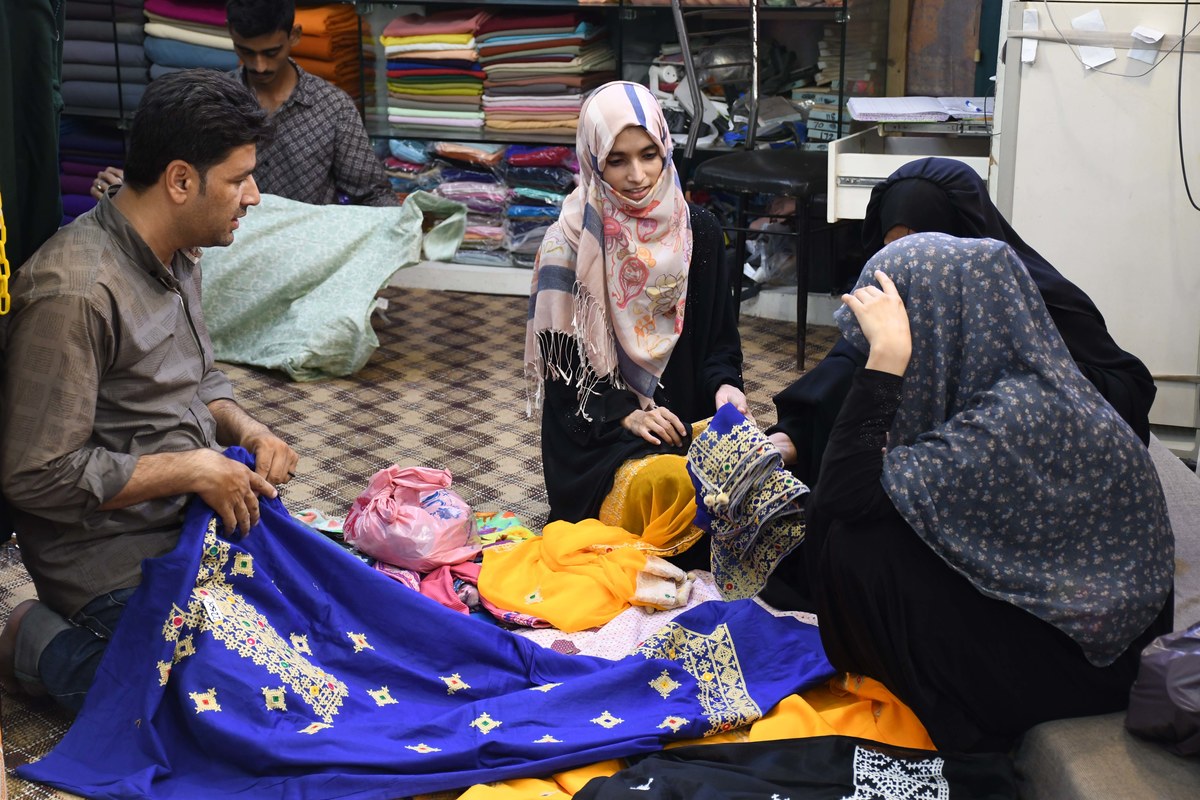
A shopkeeper deals with customers inside a fabric store in Karachi on April 06, 2021. (AN photo)
In Karachi, the commercial center of Pakistan, traders say that during the last days of the fasting month of Ramadan, which normally is the most lucrative time, businesses have not sold even half of what they had stocked for the period.
“The estimated value of various goods traders have stocked for Eid festival stood at around Rs50 billion, but less than half of these goods have been sold this year so far,” Atiq Mir, chairman of All Karachi Tajir Ittehad, an umbrella organization of major business centers in the city, told Arab News on Friday.
Restrictions on markets to operate only between 6 a.m. and 6 p.m. and the ban on all trade from Sunday, have curbed the festive period’s shopping to 30 percent.
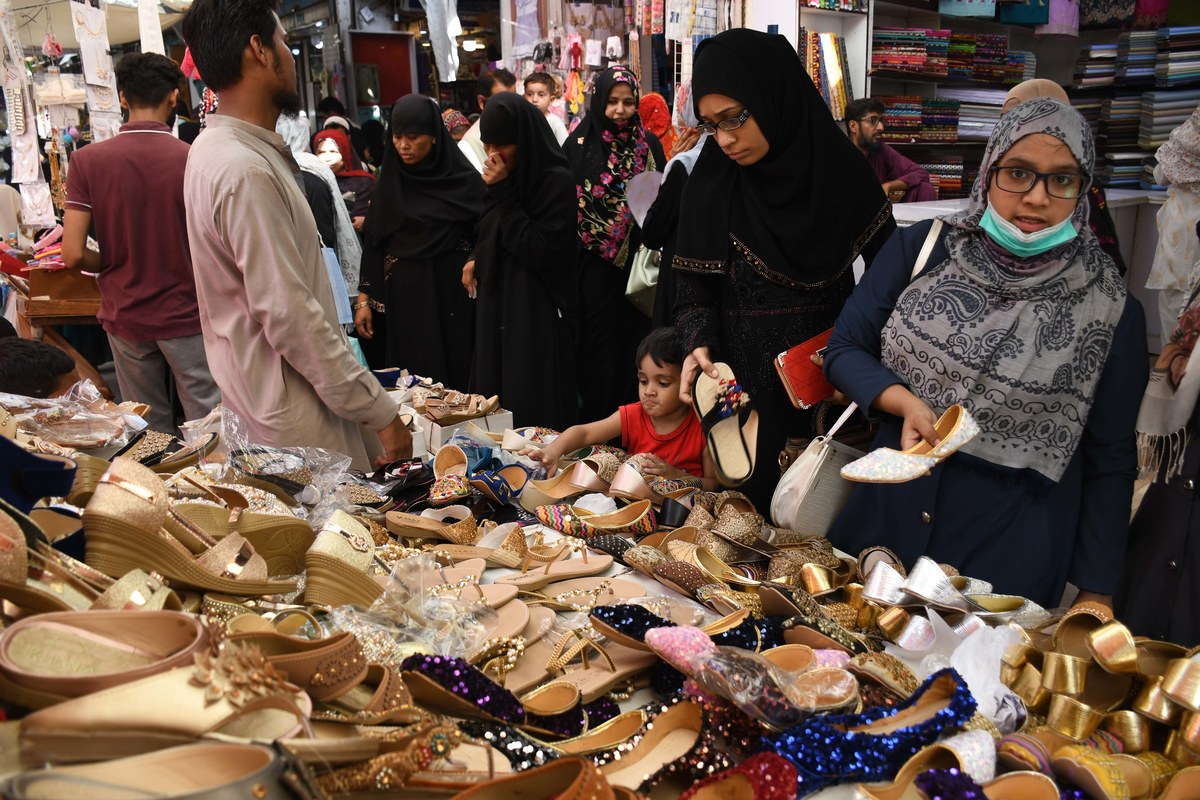
Women shop for shoes in Karachi on April 06, 2021. (AN photo)
“In routine the trading activities worth around Rs100-150 billion would take place only during the month of Ramadan and on the eve of Eid. However, this year the trading is estimated to remain limited to only 30 percent countrywide due to the impacts of COVID-19 and ensuing restriction,” Kashif Chaudhry, president of Markazi Tanzeem-e-Tajran Pakistan, the central organization of Pakistani traders, told Arab News.
Both Mir and Chaudhry warned that the restrictions in place can result in violation of coronavirus health guidelines as people still want to do their Eid shopping.
On Friday, Karachi markets were crowded with shoppers, looking especially for clothes as for Eid Al-Fitr, the festival to mark the end of Ramadan, it is a common practice for Muslims to buy new apparel.
“Rush is due to limited hours. Implementation of standard operating procedures (SOPs) seems almost impossible,” Mir said.
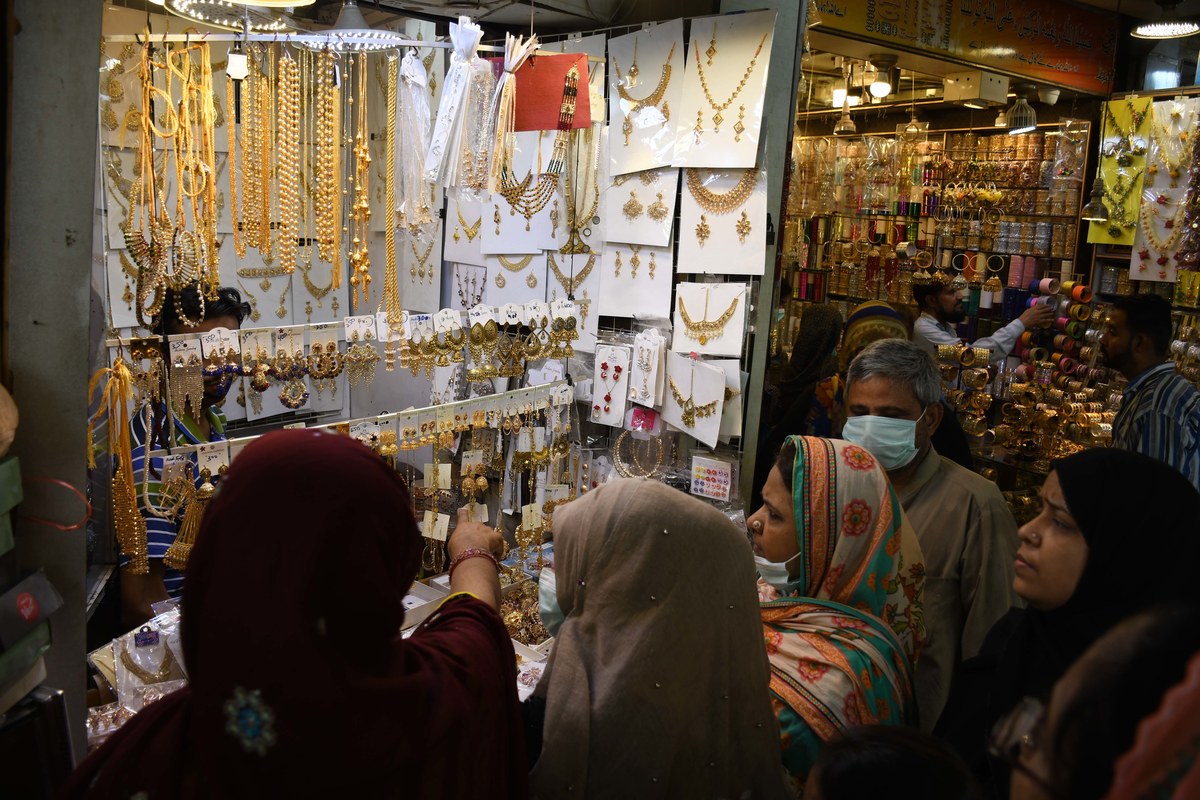
Women shop for jewelry in Karachi on April 06, 2021. (AN photo)
“Instead of being facilitated by the government, traders are being fined and harassed in the name of SOPs implementation,” Shaikh Khalid Noor, president of Jamia Alliance Association, told Arab News.
“Traders now can’t afford lockdowns,” he said. “Last year, people had savings from the previous year but this year it would be difficult because the input cost has increased and the prices of finished goods have also increased. Majority of the goods are being sold from the previous stocks.”
Buyers also complain as with COVID-19 restrictions shipping costs have risen, leading to higher prices as well.
“The prices are far more than last year,” Rasheeda Begum, a housewife, said. “We are disoriented, either to buy wearables for Eid or save for food.”
“The prices are too high this year,” said another housewife, Saira Khatoon. “It was far better to have complete lockdown. We are fed up.”
Shoppers also say the government should not have set the trading hours during fasting time when May temperatures in Karachi cross 35 C.
“Government should have allowed shopping after sunset,” Bint-e-Nadeem, another housewife, told Arab News. “I t is too hot and moving while fasting makes the shopping difficult.”


