GENEVA: The world cannot act soon enough to put idle manufacturing capacity to work making COVID-19 vaccines to help redress a massive imbalance in global supply, the head of the World Trade Organization said on Wednesday.
WTO director-general Ngozi Okonjo-Iweala said equitable access to vaccines, diagnostics and treatments was “both the moral and economic issue of our time”. The World Health Organization said in April that of 700 million vaccines globally administered, only 0.2 percent had been in low-income countries.
Okonjo-Iweala told a meeting of the 164-member WTO that those who had ordered more vaccines than they needed must share with others. Members should also address export restrictions and bureaucracy disrupting vital medical supply chains.
She urged governments to work with manufacturers to use production capacity available in countries such as Pakistan, Bangladesh, India, South Africa, Indonesia and Senegal that could be turned around in a matter of months.
Production needed to rise from the 5 billion doses produced today to the 10.8 billion being forecast for this year to 15 billion, in particular if booster doses would be needed.
The debate on vaccine inequity at the WTO has centered a proposal by India and South Africa to waive intellectual property rights, at least for the duration of the pandemic.
Ten meetings of WTO members have failed to achieve a breakthrough and Wednesday’s online gathering was no different as 42 countries gave their views. However, members also heard that India and South Africa intend to refine their proposal before another discussion later in May.
Okonjo-Iweala said she was happy to hear of the revised text.
“I am firmly convinced that once we can sit down with an actual text in front of us, we shall find a pragmatic way forward,” she said, referring to a balance between developing country demands while protecting research and innovation.


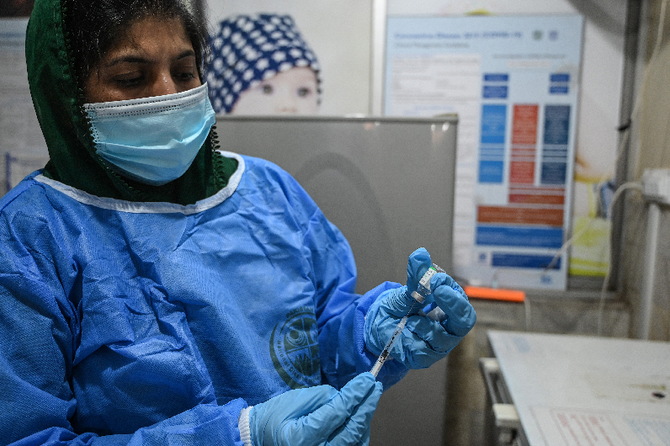
Put idle capacity in countries like Pakistan to work making vaccines — WTO head
https://arab.news/mu5sq
Put idle capacity in countries like Pakistan to work making vaccines — WTO head

- Ngozi Okonjo-Iweala urges governments to use production capacity in countries like Pakistan, Bangladesh, South Africa, Indonesia and Senegal
- Production needed to rise from 5 billion doses produced today to the 10.8 billion being forecast for this year to 15 billion

Saudi-backed Wafi Energy Pakistan announces 7.5 percent increase in profits last year
- Wafi Energy Pakistan operates one of country’s largest fuel retail, lubricants networks
- The company is also planning a Dubai-based subsidiary to expand its commercial activities
KARACHI: Wafi Energy Pakistan Limited, a subsidiary of Saudi Arabia-based Wafi Energy Holding, on Friday announced a Rs3.54 billion ($12.6 million) profit last year, marking a 7.5 percent increase from the previous year.
In 2025, Wafi Energy acquired Shell Pakistan and added 35 new retail sites to its network, including a second eco-friendly Shell site built with recycled plastic, bringing the Shell retail network to over 680 sites nationwide.
The lubricants business continued strong performance across both consumer and industrial segments and Wafi Energy said had continued its growth in indirect and process oil segments, besides expanding its mining portfolio.
“We delivered a strong business performance in 2025 and importantly, we did so while investing to grow. Our focus through the year was clear – to expand in priority growth areas, establish Wafi Energy in Pakistan and strengthen the Shell customer experience,” Zubair Shaikh, Wafi Energy Pakistan’s chief executive officer, said in a statement.
“In 2026, our ambition is to accelerate growth, build shareholder value and continue investing in the energy future for Pakistan.”
Wafi Energy Pakistan Limited, formerly Shell Pakistan Limited, operates one of the country’s largest fuel retail and lubricants networks. Shell plc divested its majority stake in 2024, after which the company was rebranded under Saudi ownership while continuing to market fuels and lubricants under the Shell brand.
The company said it remains focused on operational excellence and growth.
“The company is also advancing its investment strategy by planning a Dubai-based subsidiary to expand commercial activities and strengthen its regional presence,” it said.
“This strategic move underscores Wafi Energy’s commitment to sustainable growth and expanding its footprint.”


