

Afghanistan needs Pakistan’s ‘influence’ to keep Taliban engaged in peace process — envoy

Pakistan's armed forces chief, Gen. Qamar Bajwa, meets Afghanistan’s ambassador to Pakistan, Najibullah Alikhil, at the Pakistan Army's headquarters in Rawalpindi, April 22, 2021. (Photo courtesy: Pakistan Army)
Short Url
Updated 17 July 2021
Follow

Afghanistan needs Pakistan’s ‘influence’ to keep Taliban engaged in peace process — envoy

  • Ambassador Najibullah Alikhil says Pakistan’s role needed for intra-Afghan talks to reach next phase
  • Pakistan was key in bringing the Taliban to the negotiating table when peace talks began in Doha, Qatar, in September last year

ISLAMABAD: Afghanistan needs and expects Pakistan to play a meaningful role in persuading the Taliban to remain engaged in the ongoing peace process and reduce violence, the Afghan ambassador in Islamabad said on Wednesday.
Violence in Afghanistan has escalated sharply in recent weeks as the Taliban have stepped up their attacks against Afghan security forces since the US postponed its troop drawdown to Sept. 11 from a May 1 deadline agreed in talks with the Taliban last year.
The US move also prompted the Taliban to withdraw from a Washington-backed Afghan peace conference in Istanbul, Turkey, which was scheduled for April 24 to fast-track a power-sharing agreement between the group and the Kabul government to end decades of conflict as the US forces pull out.
“It is our expectation that Pakistan will play a meaningful role in encouragement and persuasion of the Taliban in the peace process and to reduce violence. Pakistan’s role is recognized for this purpose,” Ambassador Najibullah Alikhil told Arab News.
He added: “Pakistani side has always emphasized that it has influence over them (Taliban) and we respect this approach that Pakistan has influence.”
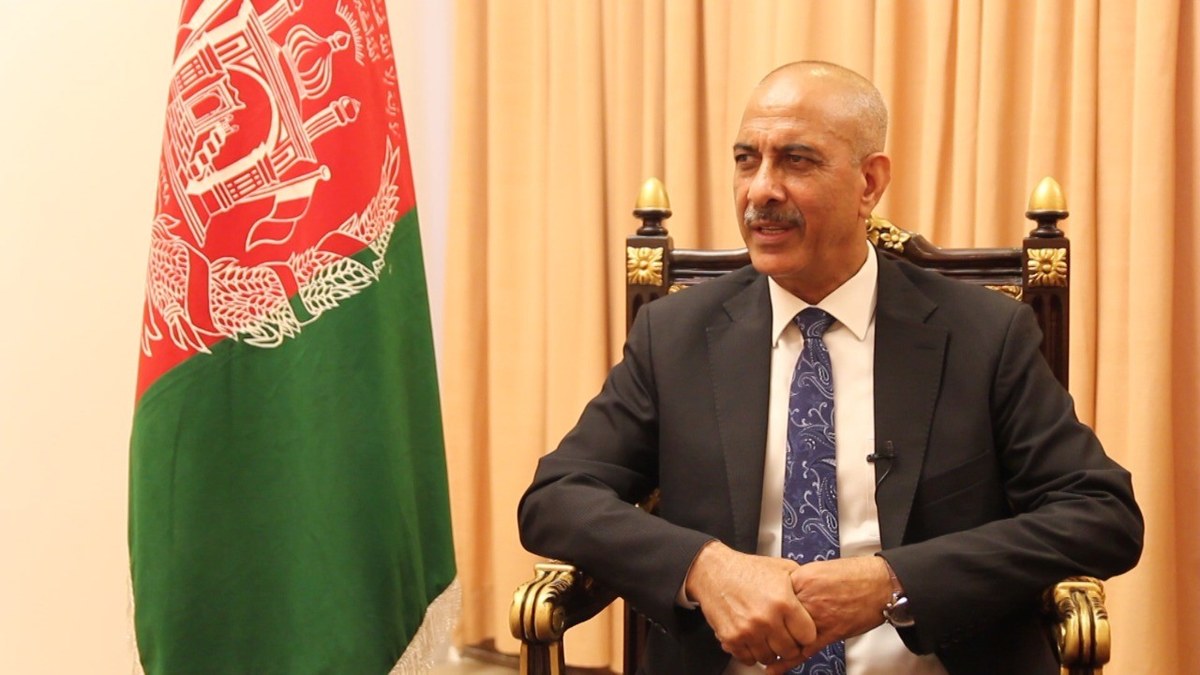


Afghanistan's ambassador to Pakistan, Najibullah Alikhil, speaks to Arab News at the Afghan embassy in Islamabad on Wednesday, May 5, 2021. (AN photo) 

Pakistan was key in bringing the Taliban to the negotiating table when intra-Afghan peace talks began in Doha, Qatar, in September last year.
“We praise Pakistan’s role for paving the way for the start of the Doha peace process,” Najibullah said. “As now we are reaching another phase in the peace process there is a need for Pakistan’s constructive role as a brotherly and neighboring country.”
Last week, US, Chinese, Russian and Pakistani officials met with Taliban representatives in Doha to encourage them to join the Istanbul conference that is expected to be held after Eid Al-Fitr.
“Peace and stability in Afghanistan are in the interests of Pakistan and war in Afghanistan is detrimental for Pakistan,” Najibullah said, adding that Islamabad’s steps for the Afghan peace process over the past eight months have led to improvement in its ties with Kabul.
“The atmosphere of trust has been created to some extent,” he said. “We want to take more steps in this regard.”



Pakistan, seven Muslim nations back Palestinian technocratic body, stress Gaza-West Bank unity

Updated 15 January 2026
Follow

Pakistan, seven Muslim nations back Palestinian technocratic body, stress Gaza-West Bank unity

  • The National Committee for the Administration of the Gaza Strip was announced on January 14
  • Muslim nations call for consolidation of the ceasefire and unimpeded humanitarian aid into Gaza

ISLAMABAD: Pakistan and seven other Muslim-majority countries on Thursday welcomed the formation of a temporary Palestinian technocratic body to administer Gaza, stressing that it must manage daily civilian affairs while preserving the institutional and territorial link between the Gaza Strip and the West Bank amid the ongoing peace efforts.

In a joint statement, the foreign ministers of Pakistan, Egypt, Jordan, Saudi Arabia, Qatar, Türkiye, Indonesia and the United Arab Emirates said the newly announced National Committee for the Administration of the Gaza Strip would play a central role during the second phase of a broader peace plan aimed at ending the war and paving the way for Palestinian self-governance.

“The Ministers emphasize the importance of the National Committee commencing its duties in managing the day-to-day affairs of the people of Gaza, while preserving the institutional and territorial link between the West Bank and the Gaza Strip, ensuring the unity of Gaza, and rejecting any attempts to divide it,” the statement said.

The committee, announced on Jan. 14, is a temporary transitional body established under United Nations Security Council Resolution 2803 and is to operate in coordination with the Palestinian Authority, the ministers said.

The statement said the move forms part of the second phase of US President Donald Trump’s Comprehensive Peace Plan for Gaza, which the ministers said they supported, praising Trump’s efforts to end the war, ensure the withdrawal of Israeli forces and prevent the annexation of the occupied West Bank.

The top leaders of all eight Muslim countries attended a meeting with Trump in New York last September, shortly before he unveiled the Gaza peace plan.

The ministers also called for the consolidation of the ceasefire, unimpeded humanitarian aid into Gaza, early recovery and reconstruction and the eventual return of the Palestinian Authority to administer the territory, leading to a just and sustainable peace based on UN resolutions and a two-state solution on pre-1967 lines with East Jerusalem as the Palestinian capital.