

Afghanistan needs Pakistan’s ‘influence’ to keep Taliban engaged in peace process — envoy

Pakistan's armed forces chief, Gen. Qamar Bajwa, meets Afghanistan’s ambassador to Pakistan, Najibullah Alikhil, at the Pakistan Army's headquarters in Rawalpindi, April 22, 2021. (Photo courtesy: Pakistan Army)
Short Url
Updated 17 July 2021
Follow

Afghanistan needs Pakistan’s ‘influence’ to keep Taliban engaged in peace process — envoy

  • Ambassador Najibullah Alikhil says Pakistan’s role needed for intra-Afghan talks to reach next phase
  • Pakistan was key in bringing the Taliban to the negotiating table when peace talks began in Doha, Qatar, in September last year

ISLAMABAD: Afghanistan needs and expects Pakistan to play a meaningful role in persuading the Taliban to remain engaged in the ongoing peace process and reduce violence, the Afghan ambassador in Islamabad said on Wednesday.
Violence in Afghanistan has escalated sharply in recent weeks as the Taliban have stepped up their attacks against Afghan security forces since the US postponed its troop drawdown to Sept. 11 from a May 1 deadline agreed in talks with the Taliban last year.
The US move also prompted the Taliban to withdraw from a Washington-backed Afghan peace conference in Istanbul, Turkey, which was scheduled for April 24 to fast-track a power-sharing agreement between the group and the Kabul government to end decades of conflict as the US forces pull out.
“It is our expectation that Pakistan will play a meaningful role in encouragement and persuasion of the Taliban in the peace process and to reduce violence. Pakistan’s role is recognized for this purpose,” Ambassador Najibullah Alikhil told Arab News.
He added: “Pakistani side has always emphasized that it has influence over them (Taliban) and we respect this approach that Pakistan has influence.”
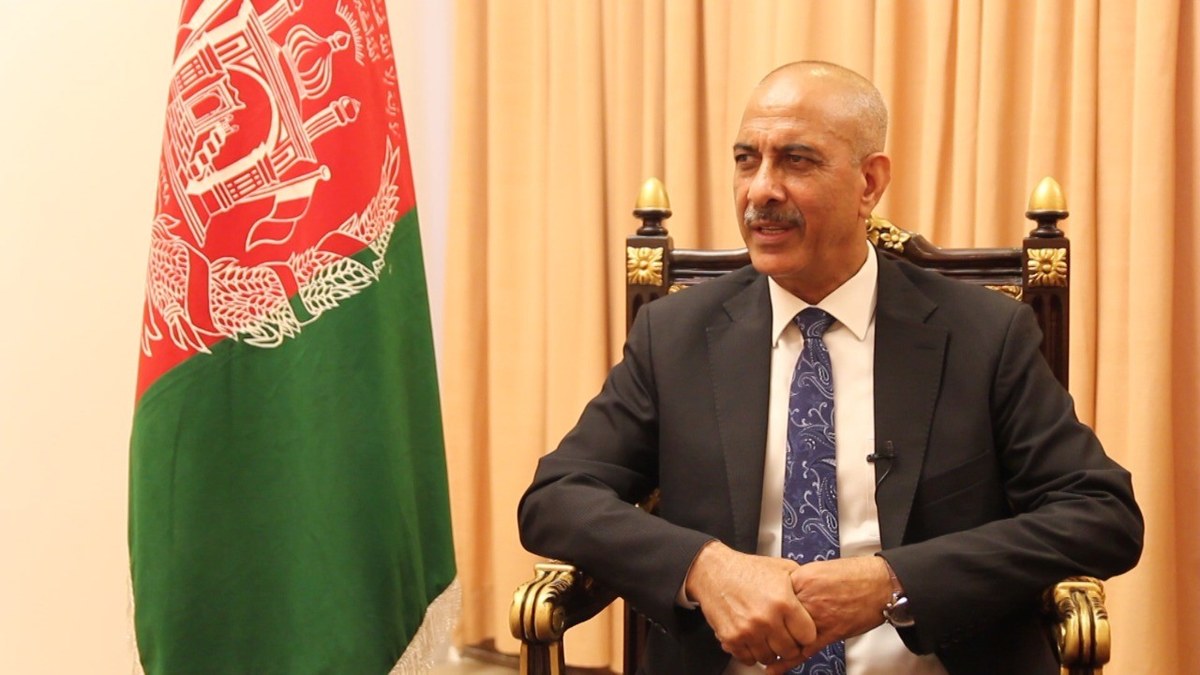


Afghanistan's ambassador to Pakistan, Najibullah Alikhil, speaks to Arab News at the Afghan embassy in Islamabad on Wednesday, May 5, 2021. (AN photo) 

Pakistan was key in bringing the Taliban to the negotiating table when intra-Afghan peace talks began in Doha, Qatar, in September last year.
“We praise Pakistan’s role for paving the way for the start of the Doha peace process,” Najibullah said. “As now we are reaching another phase in the peace process there is a need for Pakistan’s constructive role as a brotherly and neighboring country.”
Last week, US, Chinese, Russian and Pakistani officials met with Taliban representatives in Doha to encourage them to join the Istanbul conference that is expected to be held after Eid Al-Fitr.
“Peace and stability in Afghanistan are in the interests of Pakistan and war in Afghanistan is detrimental for Pakistan,” Najibullah said, adding that Islamabad’s steps for the Afghan peace process over the past eight months have led to improvement in its ties with Kabul.
“The atmosphere of trust has been created to some extent,” he said. “We want to take more steps in this regard.”


Pakistan says it is targeting militant infrastructure in Afghanistan as Kabul threatens to hit Islamabad

Updated 07 March 2026
Follow

Pakistan says it is targeting militant infrastructure in Afghanistan as Kabul threatens to hit Islamabad

  • Ata Tarar says Pakistan is carrying out ‘precise intelligence-based operations’ to avoid civilian casualties
  • Afghan defense minister says the underlying dispute between the two sides is over the ‘Durand Line’ border

ISLAMABAD: Pakistan said on Saturday it was conducting intelligence-based operations against militant infrastructure inside Afghanistan while attempting to avoid civilian casualties, as a senior Afghan Taliban official warned Kabul could retaliate by targeting Islamabad if Pakistani forces struck the Afghan capital.

The escalating rhetoric comes as cross-border fighting between the two neighbors intensifies following clashes that began last month when Afghan forces launched attacks on Pakistani military installations along the frontier. Kabul said the assault was retaliation for Pakistani airstrikes targeting what Islamabad called militant camps inside Afghanistan.

Pakistan’s defense minister Khawaja Muhammad Asif said last week the situation had effectively become “open war” between the two countries.

“Pakistan is only targeting terrorist infrastructures and support system with precise intelligence based operations ensuring no collateral damage takes place,” Pakistan’s Information Minister Ataullah Tarar said in a statement.

He challenged the recent claims made by an Afghan defense ministry spokesperson earlier this week who said his country was making significant battlefield gains against Pakistan including the killing of 109 soldiers and the capture or destruction of 14 military posts in large scale attacks.

“These so called attacks by Afghan Taliban in coordination with FAK [Fitna Al Khawarij] Terrorists once again confirm the nexus of Afghan Taliban regime and multiple terrorist organizations operating from within their territory,” Tarar continued. “All such attempts are responded to, immediately and effectively with severe retributive punishment that is swift, precise and effective.”

“The imaginary numbers being floated by Afghan Taliban regime are however not worth any serious comment,” he added.

Tarar said Pakistan’s military campaign — described as Operation Ghazb Lil Haq — had inflicted heavy losses on Afghan Taliban forces.

According to figures shared by the minister, 527 Taliban fighters had been killed and more than 755 injured since the clashes began, while 237 check posts were destroyed and 38 captured and destroyed. He said 205 tanks, armored vehicles and artillery guns were destroyed and 62 locations across Afghanistan had been targeted by air strikes.

Arab News could not independently verify the claims made by either side.

CIVILIAN CASUALTIES

Earlier this week, the United Nations raised concern over the toll of the escalating conflict on civilians.

UN human rights chief Volker Turk said on Friday that 56 Afghan civilians — nearly half of them children — had been killed since hostilities between Pakistan and Afghanistan intensified.

However, Tarar questioned the UN findings, saying its assertions appeared to rely heavily on information provided by Taliban authorities and did not adequately reflect independently verified intelligence.

“Pakistan categorically reiterates that all counter-terrorism operations conducted by its security forces are carried out with the highest degree of precision, professionalism, and responsibility,” he said.

Islamabad has long accused the Taliban government of allowing militant groups, including the Tehreek-e-Taliban Pakistan (TTP), to operate from Afghan soil, a charge Kabul denies.

“Operations are meticulously planned so that civilian areas remain completely safe,” the minister said. “The locations targeted are remote terrorist hideouts and facilities far removed from populated zones, including sensitive areas such as Kabul’s Green Zone.”

AFGHAN WARNING

Meanwhile, Afghanistan’s Defense Minister Mullah Yaqoob issued a warning to Pakistan in remarks circulated by Afghan broadcaster TOLOnews.

“If Kabul lacks peace, there will be no peace in Islamabad. If Kabul is attacked, Islamabad will be attacked,” Yaqoob said in a promotional clip of an interview shared on social media.

Yaqoob rejected Pakistan’s justification that the presence of the TTP in Afghanistan warranted military action and suggested the underlying dispute was over the contested “Durand Line” border between the two countries.

So far, there has been no official response from Pakistan to Yaqoob’s remarks.