

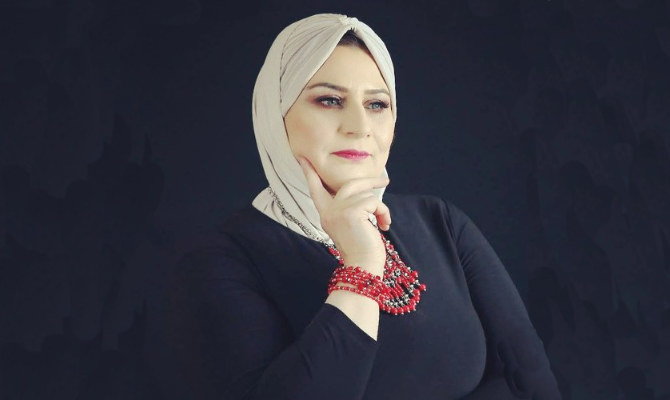
Laila Alhusini among most influential Arab Americans in marketing and media

Short Url
Updated 29 April 2021
Follow

Laila Alhusini among most influential Arab Americans in marketing and media

LONDON: Syrian-American journalist Laila Alhusini has been named as one of the six most influential Arab Americans in marketing and media. 

Alhusini, an award-winning journalist, radio host and content creator, is the founder and CEO of US Arab Radio. The radio program reaches more than 3 million affluent listeners in North America and also delivers radio and television coverage linking Arab-Americans in the Middle East with programming in English and Arabic.

A former reporter for the BBC World Service and the Associated Press, Alhusini hosted three US Arab Radio programs.

With more than 20 years of experience in print and broadcast journalism, Alhusini has earned several awards, including the Broadcaster Award from the Arab American Magazine’s Today, the Community Leadership Award from Life for Relief and Development and the Arab American Business Woman of the Year Award.


Paris exhibition marks 200 years of Le Figaro and the enduring power of the press

Updated 17 January 2026
Follow

Paris exhibition marks 200 years of Le Figaro and the enduring power of the press

  • The exhibition celebrated the bicentennial of Le Figaro, offering visitors a rare opportunity to step inside the newspaper’s vast historical archive

PARIS: One of France’s most influential newspapers marked a major milestone this month with a landmark exhibition beneath the soaring glass nave of the Grand Palais, tracing two centuries of journalism, literature and political debate.
Titled 1826–2026: 200 years of freedom, the exhibition celebrated the bicentennial of Le Figaro, offering visitors a rare opportunity to step inside the newspaper’s vast historical archive. Held over three days in mid-January, the free exhibition drew large crowds eager to explore how the title has both chronicled and shaped modern French history.
More than 300 original items were displayed, including historic front pages, photographs, illustrations and handwritten manuscripts. Together, they charted Le Figaro’s evolution from a 19th-century satirical publication into a leading national daily, reflecting eras of revolution, war, cultural change and technological disruption.
The exhibition unfolded across a series of thematic spaces, guiding visitors through defining moments in the paper’s past — from its literary golden age to its role in political debate and its transition into the digital era. Particular attention was paid to the newspaper’s long association with prominent writers and intellectuals, underscoring the close relationship between journalism and cultural life in France.
Beyond the displays, the program extended into live journalism. Public editorial meetings, panel discussions and film screenings invited audiences to engage directly with editors, writers and media figures, turning the exhibition into a forum for debate about the future of the press and freedom of expression.
Hosted at the Grand Palais, the setting itself reinforced the exhibition’s ambition: to place journalism firmly within the country’s cultural heritage. While the exhibition has now concluded, the bicentennial celebrations continue through special publications and broadcasts, reaffirming Le Figaro’s place in France’s public life — and the enduring relevance of a free and questioning press in an age of rapid change.