

EU preparing legal case against AstraZeneca over vaccine shortfalls — sources

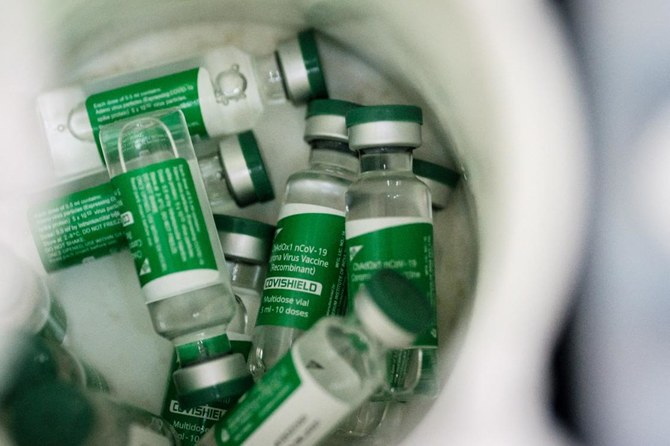
Vials of the Oxford/AstraZeneca Covid-19 vaccine are seen in a cool box during the launch of the vaccination campaign for 5000 frontline workers in the tourism and hospitality sector in Nairobi. (File/AFP)
Short Url
Updated 22 April 2021
Follow

EU preparing legal case against AstraZeneca over vaccine shortfalls — sources

  • The drugmaker cut COVID-19 vaccine deliveries to the European Union
  • Under the contract, the company had committed to making its “best reasonable efforts” to deliver to the EU 180 million vaccine doses in the second quarter

BRUSSELS: The European Commission is working on legal proceedings against AstraZeneca after the drugmaker cut COVID-19 vaccine deliveries to the European Union, sources familiar with the matter said.

The move would mark a further step in an EU plan to sever ties with the Anglo-Swedish drugmaker after the company repeatedly cut supplies to the bloc, contributing to major delays in Europe’s vaccine rollout.

The news about the legal case was first reported on Thursday by Politico. An EU official involved in talks with drugmakers confirmed the EU was preparing to sue the company.

“EU states have to decide if they (will) participate. It is about fulfillment of deliveries by the end of the second quarter,” the official said.

The matter was discussed on Wednesday at a meeting with EU diplomats, the official and a diplomat said. Politico, citing five unnamed European diplomats, reported that a majority of EU countries at the meeting said they would support suing the company.

“What matters is that we ensure the delivery of a sufficient number of doses in line with the company’s earlier commitments,” a spokesman for the EU Commission said. “Together with the member States, we are looking at all options to make this happen.”

There was no immediate response from AstraZeneca on Thursday to a request for comment.

Brussels in March sent a legal letter to the company in the first step of a potential legal procedure.

When the deadline for a reply expired this month, a spokesman for the Commission said the matter was discussed in a meeting with AstraZeneca but the EU was still seeking further clarification from the company on “a number of outstanding points.”

The spokesman did not elaborate, but details of the letter published by Italian newspaper Corriere della Sera show the EU was seeking clarification on what it deemed a delayed application to the EU regulator for approval of the vaccine.

Brussels also questioned how AstraZeneca spent over 224 million euros ($270 million) granted by the EU in September to buy vaccine ingredients and for which the company had not provided sufficient documents confirming the purchases.

Under the contract, the company had committed to making its “best reasonable efforts” to deliver to the EU 180 million vaccine doses in the second quarter, for a total of 300 million in the period from December to June.

But the company said in a statement on March 12 it would aim to deliver only one third of that. The EU letter was sent a week after that statement.

Under the contract, the parties agreed that Belgian courts would be responsible to settle unresolved disputes.

The EU has already decided not to take up an option to buy 100 million extra doses of AstraZeneca under the contract, an EU official said, after supply delays and safety concerns about very rare cases of blood clots linked to the vaccine.


Hundreds rally in Paris to support Ukraine after four years of war

Updated 5 sec ago
Follow

Hundreds rally in Paris to support Ukraine after four years of war

  • Demonstrators chanted: “We support Ukraine against Putin, who is killing it“
  • “Frozen Russian assets must be confiscated, they belong to Ukraine“

PARIS: Around one thousand took to the streets of Paris on Saturday to show their “massive support” for Ukraine, just days before the fourth anniversary of Russia’s invasion.
Demonstrators marching through the French capital chanted: “We support Ukraine against Putin, who is killing it,” and “Frozen Russian assets must be confiscated, they belong to Ukraine.”
“In public opinion, there is massive support for Ukraine that has not wavered since the first day of the full-scale invasion” by the Russian army on February 24, 2022, European Parliament member Raphael Glucksmann, told AFP.
“On the other hand, in the French political class, sounds of giving up are starting to emerge. On both the far left and the far right, voices of capitulation are getting louder and louder,” he added.
In the crowd, Irina Kryvosheia, a Ukrainian who arrived in France several years ago, “thanked with all her heart the people present.”
She said they reminded “everyone that what has been happening for four years is not normal, it is not right.”
Kryvosheia said she remains in daily contact with her parents in Kyiv, who told her how they were deprived “for several days” of heating, electricity and running water following intense bombardments by the Russian army.
Francois Grunewald, head of “Comite d’Aide Medicale Ukraine,” had just returned from a one-month mission in the country, where the humanitarian organization has delivered around forty generators since the beginning of the year.
Russia’s full-scale invasion sent shockwaves around the world and triggered the bloodiest and most destructive conflict in Europe since World War II.
The war has seen tens of thousands of civilians and hundreds of thousands of military personnel killed on both sides. Millions of refugees have fled Ukraine, where vast areas have been devastated by fighting.
Russia occupies nearly 20 percent of Ukrainian territory and its heavy attacks on the country’s energy sites have sparked a major energy crisis.