

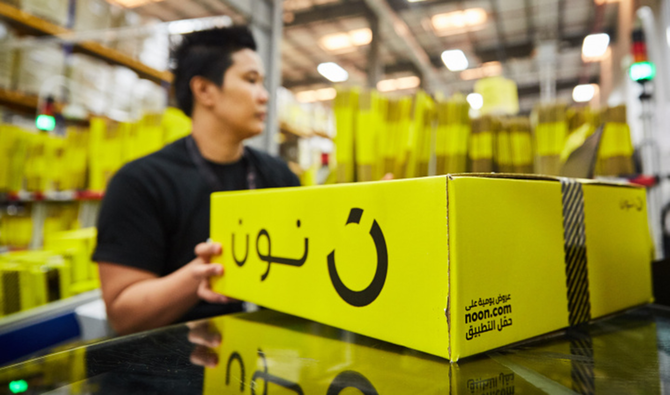
PIF’s Noon launches Ramadan drive to help poor families

Short Url
Updated 19 April 2021
Follow

PIF’s Noon launches Ramadan drive to help poor families

  • The project runs until May 12

RIYADH: Noon, an online platform backed by Saudi Arabia’s Public Investment Fund (PIF) and Dubai businessman Mohamed Alabbar, have teamed up with a charity to let online shoppers donate food to needy families during Ramadan.

Noon Daily, which is Noon.com’s grocery website, will partner with Bunyan Women’s Charitable Association for the initiative. 

The project runs until May 12.

Kaushik Mukherjee, senior vice president of customer experience and seller operations at Noon, said: “We’re proud to work with Bunyan to help our customers and team more easily contribute to people in need. Noon Daily will pack and ship Ramadan donation bundles purchased by customers and our own employees to Bunyan throughout the holy month. Thousands of families and frontline workers across the country will benefit from the food parcels distributed by the charity, and we couldn’t be happier to provide a service that helps bridge the donation process between customers and the community.”

Bunyan Women’s Charitable Association was established in 2011 with the aim of improving the physical and social conditions of poor families by assisting them through significant charity initiatives.

Noon was launched in the UAE and Saudi Arabia in Dec. 2017, and in Egypt in Feb. 2019. 

With an initial investment of $1 billion and working from headquarters in Riyadh, Noon said in 2016 that it aimed to expand online sales in the region from 2 percent of the total retail market ($3 billion) to 15 percent ($70 billion) within a decade.


Free trade negotiations between GCC, India mark new phase of partnership, says sec-gen

Updated 24 February 2026
Follow

Free trade negotiations between GCC, India mark new phase of partnership, says sec-gen

RIYADH: The Gulf Cooperation Council’s secretary-general affirmed that the negotiations for a free trade agreement between the GCC and India, and the signing of the joint statement, represents a new phase of strategic partnership.

Jasem Mohamed Al-Budaiwi said that this contributes to enhancing close cooperation and strengthening economic and trade ties, according to the Saudi Press Agency.

This came during the signing ceremony of the joint statement on launching the free trade agreement negotiations between the Al-Budaiwi and India’s Minister of Commerce and Industry, Piyush Goyal, which took place in New Delhi, on Tuesday.

During the signing ceremony, Al-Budaiwi said that the Terms of Reference, signed on Feb. 5, provide a comprehensive and clear framework for these negotiations. The two nations agreed to discuss enhancing cooperation in vital strategic areas, including trade in goods, customs procedures, and services.

Additionally, the framework covers Sanitary and Phytosanitary measures, intellectual property rights, cooperation on Micro, Small, and Medium Enterprises, along with other topics of mutual interest. This reflects the comprehensive nature of the agreement and its ability to keep pace with the future economy.

Al-Budaiwi expressed hope that these negotiations would lead to a comprehensive and ambitious free trade agreement that works to remove customs and non-customs barriers, enhance the flow of quality investments in both directions, and achieve further liberalization in trade and investment cooperation between the GCC and India for mutual benefit. 

This would provide a stimulating economic environment and an investment climate that opens broad horizons for the business sector, supports supply chains, and accelerates the pace of economic growth in line with the ambitious developmental visions of the GCC states. 

The top official affirmed the full readiness of the General Secretariat to host the first round of negotiations at its headquarters in Riyadh during the second half of this year.

The two sides held a meeting during which they reviewed the existing cooperation relations between the GCC and India and discussed ways to develop and elevate them to broader horizons, serving mutual interests and enhancing opportunities for strategic partnership between the two sides, particularly in the economic, investment, and trade fields.

They praised the role undertaken by the negotiating teams from both sides, appreciating the efforts contributing to reaching a comprehensive agreement that enhances economic integration and supports the smooth flow of trade between the two nations.