ISLAMABAD: Protests erupted in major Pakistani cities, causing massive traffic snarls, while main intercity highways remained blocked as police arrested the leader of a religious political party, the Tehreek-e-Labaik Pakistan (TLP), on Monday, a day after he threatened the government with protests if it did not expel France’s envoy to Islamabad over caricatures of Prophet Muhammad (peace be upon him).
Saad Rizvi was arrested in the eastern city of Lahore to “maintain law and order,” Ghulam Mohammad Dogar, chief of Lahore police, told AP.
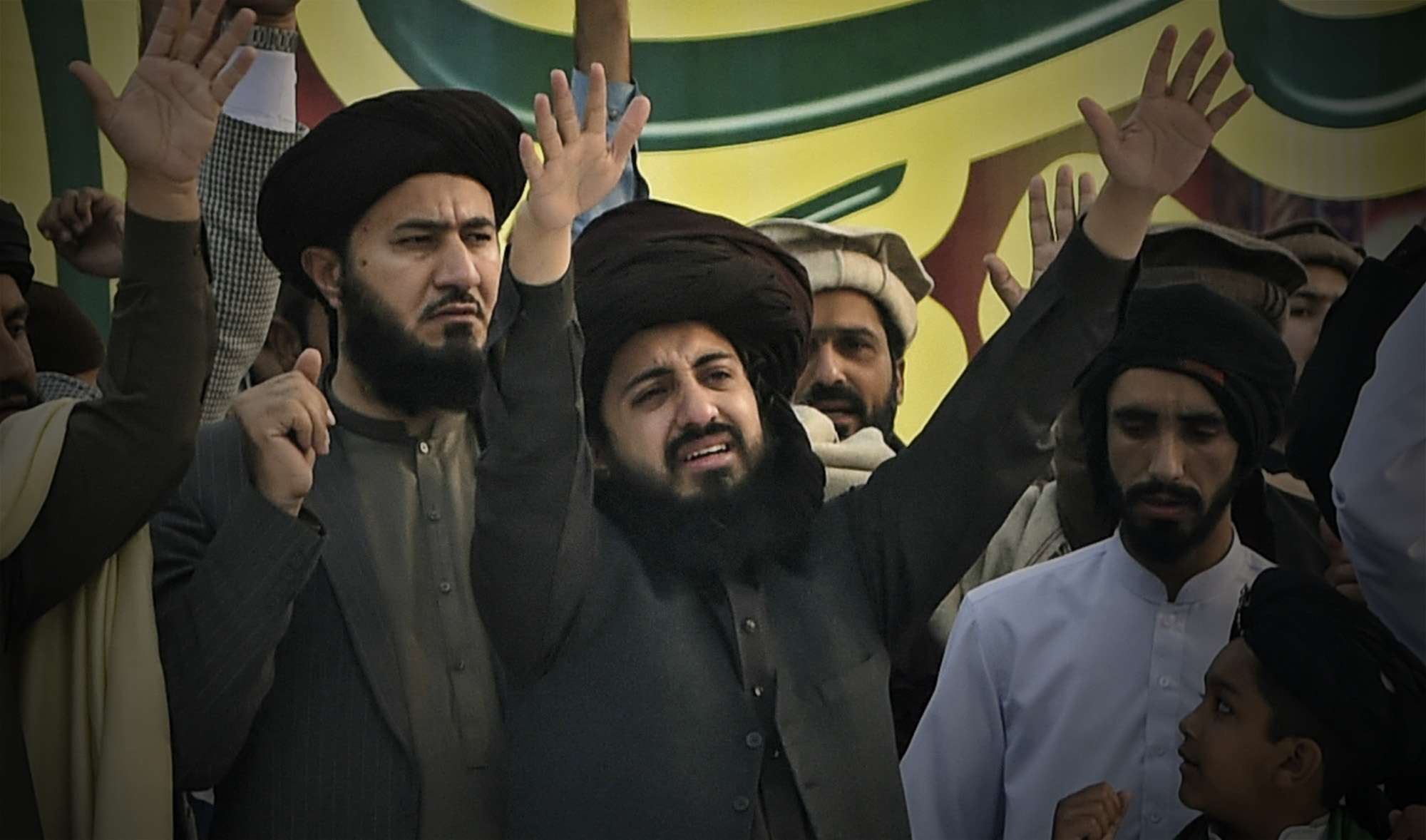
Hafiz Saad Hussain Rizvi, center, son of late Khadim Hussain Rizvi, founder of Tehreek-e-Labbaik party, gestures with party leaders during a gathering in Lahore on January 3, 2021. (AFP/File)
Rizvi called on the government to honor what he said was a commitment it made in February to his party to expel the French envoy before April 20 over the publication in France of depictions of the Prophet (pbuh).
The government of Prime Minister Imran Khan says it had only committed to debating the matter in Parliament.
“Protests broke out at numerous places in Karachi and other major cities following the development,” Pakistan’s Dawn newspaper reported.
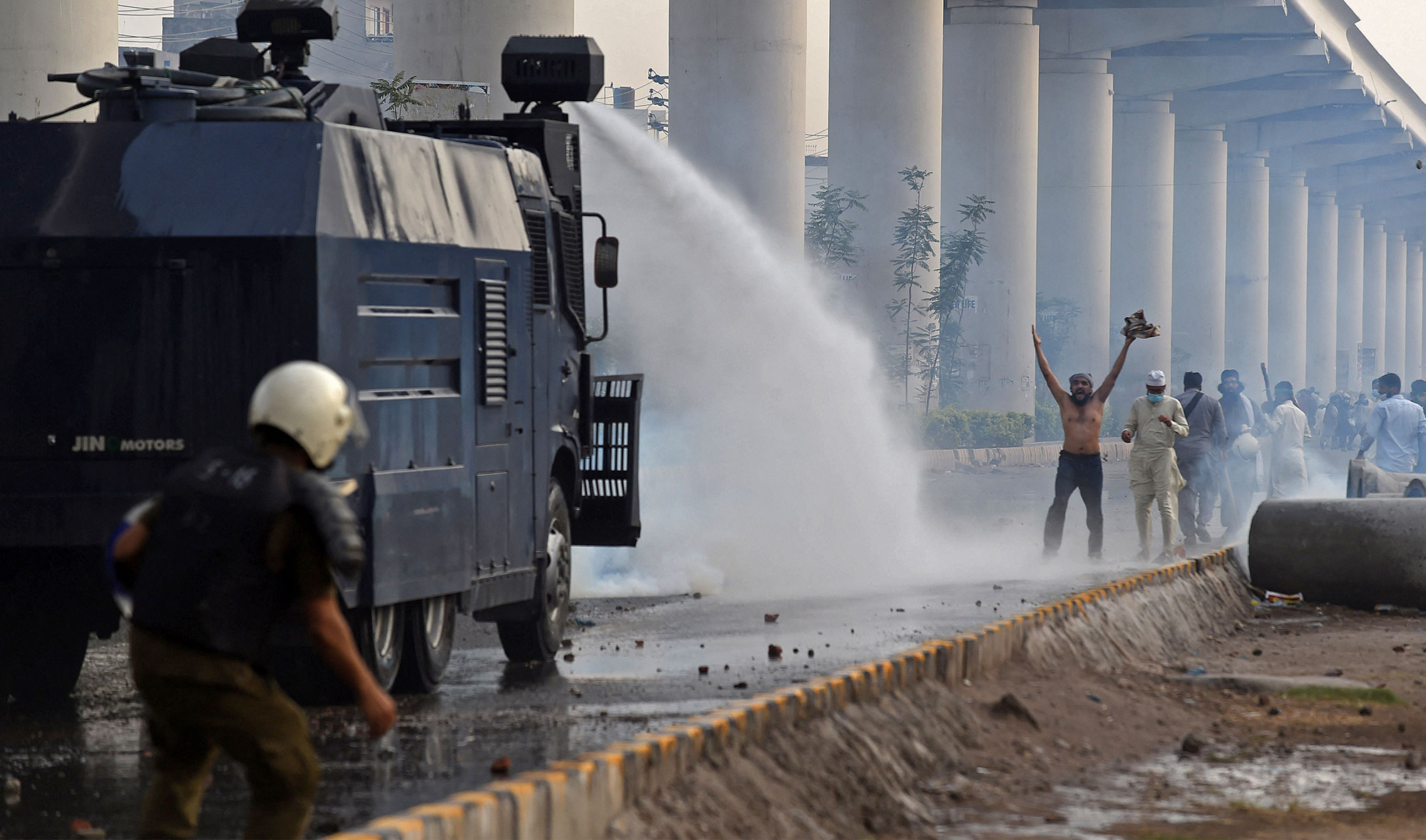
Police use water cannon to disperse supporters of Tehreek-e-Labbaik Pakistan (TLP) during a protest in Lahore on April 12, 2021, after the arrest of their leader, who has called for the expulsion of the French ambassador. (AFP)
In a video message, another TLP leader, Syed Zaheerul Hassan Shah, called on supporters to come out in the streets in protest, saying the government had "completely deviated from" the agreement it had reached with the TLP.
“Carry out protest demonstrations on roads and wherever you are, jam the entire country," Shah said.
Rizvi became the leader of the Tehreek-e-Labiak Pakistan party in November after the sudden death of his father, Khadim Hussein Rizvi.
Rizvi’s party wants the government to boycott French products and expel the French ambassador under an agreement signed by the government with Rizvi’s party in February.
Tehreek-e-Labiak and other religious parties denounced French President Emmanuel Macron since October last year, saying he tried to defend caricatures of the Prophet Muhammad (pbuh) as freedom of expression. Macron’s comments came after a young Muslim beheaded a French school teacher who had shown caricatures of the Prophet Muhammad (pbuh) in class. The images had been republished by the satirical magazine Charlie Hebdo to mark the opening of the trial over the deadly 2015 attack against the publication for the original caricatures. That enraged many Muslims in Pakistan and elsewhere who believe those depictions are blasphemous.
Rizvi’s party gained prominence in Pakistan’s 2018 federal elections, campaigning to defend the country’s blasphemy law, which calls for the death penalty for anyone who insults Islam.
It also has a history of staging protests and sit-ins to pressure the government to accept its demands.
In November 2017, Rizvi’s followers staged a 21-day protest and sit-in after a reference to the sanctity of the Prophet Muhammad (pbuh) was removed from the text of a government form.