

Pakistan's current $16 billion forex reserves will make import payments ‘easy’ — experts

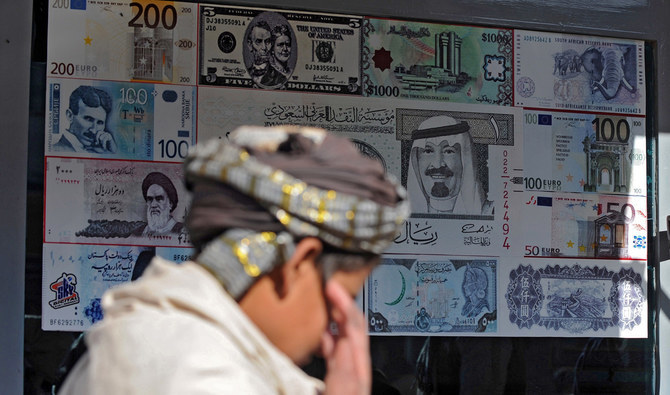
A pedestrian walks past a foreign currency exchange shop in Quetta on Dec. 8, 2011. (AFP/File)
Short Url
Updated 02 August 2021
Follow

Pakistan's current $16 billion forex reserves will make import payments ‘easy’ — experts

  • The country's foreign currency reserves increased to $22.18 billion after four years, following significant Eurobond inflows
  • The situation has not done much for the national currency that may come under pressure in the long term due to debt servicing

KARACHI: Pakistan's foreign exchange reserves have reached $22.18 billion, with more than $16 billion held by the central bank, after a span of four years, as the country raised $2.5 billion by issuing Eurobonds, said an official statement released on Thursday.

"The State Bank of Pakistan (SBP) has received the proceeds of government's $2.5 billion Eurobond issuance in its account," said the statement circulated on Thursday night. "As a result, SBP's foreign exchange reserves closed above $16 billion, their highest level since July 2017."

According to economic analysts, the inflows have brought the government in a more comfortable position to pay for its imports, including any COVID-19 vaccines.

"The inflow of $2.5 billion has raised the cushion of the State Bank and it will also improve the country's current account position," Dr. Abid Qaiyum Suleri, member of the government's Economic Advisory Council (EAC), told Arab News on Friday.

"The inflows have made it easy for the country to make payments for imports of COVID-19 vaccine, wheat or sugar due to an improved reserves position," he continued. "This is also the right time to tap international market."

Some economists also suggested that Pakistan should utilize the Eurobond proceeds to pay off some of its debts.

"The country has arranged the liquidity to pay off previous external debts because time to make these payments is due and the prices of oil are also increasing with the ease of lockdown," Dr. Vaqar Ahmed, joint executive director at the Sustainable Development Policy Institute (SDPI), said.

"For the payment of external debts and oil imports the Eurobond proceeds can be utilized," he added.

The inflows did not generate any major fluctuations in the currency and interbank markets as the rupee only appreciated 0.05 percent to close at Rs152.94 against the greenback on Friday.

"Going forward the rupee can come under pressure due to debt servicing since the country is availing G20 debt relief at present," Samiullah Tariq, head of research at the Pakistan-Kuwait Investment, told Arab News. "Only strong and enduring inflows can resist the fall of rupee. Otherwise, we expect three to four percent depreciation in the long run."

Despite its limited impact on the national currency, an official statement announced that the country had returned to the international market for the first time by issuing securities since 2017.

"Pakistan has entered the international capital market after a gap of over three years by successfully raising $2.5 billion through a multi-tranche transaction of 5, 10 and 30-year Eurobonds," the finance ministry said on Thursday.

"The transaction generated great interest as leading global investors from Asia, the Middle East, Europe and the US participated in the global investor calls and the order book," it added.

This is for the first time that Pakistan has adopted a program-based approach with registration of Global Medium-Term Note program.

"The program will allow Pakistan to tap the market at short notice," the ministry continued in its statement. "The government intends to make full use of this program and become a regular issuer in the International Capital Markets."


Pakistan’s deputy PM says country will not send forces to Gaza to disarm Hamas

Updated 27 December 2025
Follow

Pakistan’s deputy PM says country will not send forces to Gaza to disarm Hamas

  • Ishaq Dar says Pakistan open to peacekeeping but Gaza’s internal security is Palestinian responsibility
  • Pakistan’s top religious clerics from different schools have warned against sending forces to Palestine

ISLAMABAD: Deputy Prime Minister Ishaq Dar said on Saturday Pakistan was willing to contribute to an international peacekeeping force in Gaza, though it would not deploy troops to disarm or de-weaponize Hamas.

The statement follows media reports saying Washington views Pakistan as a potentially significant contributor given its battle-hardened military and wants it to be part of International Stabilization Force (ISF), which is part of United States President Donald Trump’s 20-point framework for a Gaza peace plan.

The plan announced by Trump at the White House on September 29 was formally adopted at the Sharm El-Sheikh Peace Summit in October. Co-chaired by Trump and Egyptian President Abdel Fattah El-Sisi, the summit brought together leaders from 27 countries to sign the “Trump Declaration for Enduring Peace and Prosperity.”

Deployment of troops from Muslim-majority countries during a transitional stabilization phase is a key part of the plan before the war-ravaged Palestinian territory moves toward reconstruction and a longer-term political settlement.

“If they say that we should go and start fighting, disarm Hamas, de-weaponize them, and go and destroy the tunnels that Hamas has built until now, that is not our job,” Dar, who is also the country’s foreign minister, told reporters during a year-end briefing in Islamabad.

He emphasized there was clarity between Pakistan’s civil and military leadership over the matter.

“We have a very complete understanding on this matter that we cannot do that kind of work,” he added.

The deputy prime minister said Pakistan had been using the term “peacekeeping” and had never used the phrase “peace enforcement” while discussing the force.

“I have been very clear: Pakistan will be happy to join if the mandate is not peace enforcement and disarming and de-weaponizing Hamas.”

The government’s stance comes amid growing domestic pressure over the issue.

On Monday, a group of Pakistan’s top religious leaders, chaired by prominent scholar Mufti Taqi Usmani, warned the government against yielding to what they described as international pressure to send forces to Gaza.

In a joint statement from Karachi, the clerics — representing Deobandi, Barelvi, Ahl-e-Hadees and Shia schools of thought — said that Washington wanted Muslim countries to send their forces to Gaza to disarm Hamas.

“Several Muslim governments have already refused this, and pressure is being increased on Pakistan,” it added.

Addressing such concerns, Dar said Pakistan would not land its forces in Palestine to “fight Muslims.”

Israel has repeatedly called for the disarmament of Hamas as a precondition for any long-term settlement, and the United Nations Security Council has also endorsed the ISF framework in November.

However, Dar maintained during the media briefing the internal security of Gaza was the Palestinian responsibility.

“The Palestinian Authority, their government, it is their job, it is the job of their law enforcement agency,” he said

The deputy prime minister also highlighted Pakistan’s involvement in the “Arab Islamic Group of Eight,” including Saudi Arabia, Jordan, Egypt, the United Arab Emirates, Qatar, Turkiye and Indonesia, which has been coordinating on the crisis.

He said the efforts of these countries had brought some peace to Palestine and reduced bloodshed.

“Our declared policy is that there should be an independent two-state solution,” he continued while calling for pre-1967 borders.