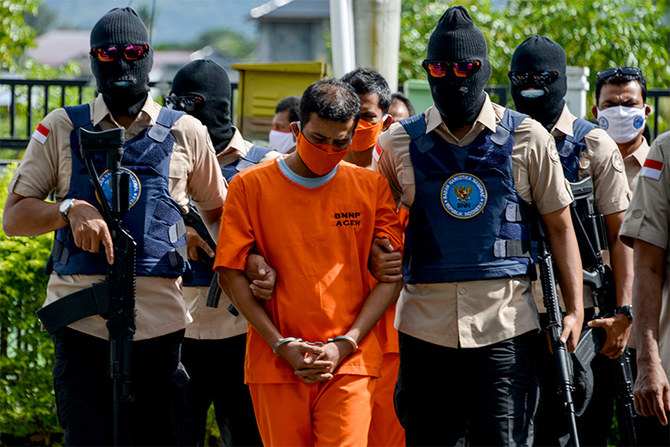
BANDUNG: Indonesia has handed death sentences to a gang of more than a dozen drug traffickers, including an Iranian couple and a Pakistani man, the prosecutor’s office said.
A total of 13 suspects — three Iranians, a Pakistani and nine Indonesians — were ordered to be executed by firing squad for the gang’s role in smuggling about 400 kilograms of methamphetamine, according to authorities.
The ruling was delivered by video link in West Java’s Sukabumi city, where members of the ring were caught last June, due to Covid-19 restrictions.
Iranian Hossein Salari Rashid led the smuggling plot, said Bambang Yunianto, head of the Sukabumi prosecutor’s office.
“There are four foreigners in the group with (Rashid) the mastermind of the crime. He was sentenced together with his wife,” Yunianto said.
Tuesday’s ruling was a record for the number of drug traffickers sentenced to death at one time in Indonesia, Amnesty International said.
It brought to 30 the number of people given the death penalty in the Southeast Asian nation this year, including several foreigners, the rights group said. Most were drug trafficking cases, it added.
Indonesia has some of the world’s toughest anti-drug laws, but it has held off conducting executions for several years.
In 2019, a French drug trafficker briefly on death row saw his sentence reduced to a long prison term on appeal.
A year earlier, eight Taiwanese smugglers were sentenced to death by an Indonesian court after being caught with around a ton of crystal methamphetamine.
Several foreign traffickers have been executed by firing squad, including Australians Andrew Chan and Myuran Sukumaran in 2015, a case that sparked diplomatic outrage and a call to abolish the death penalty.


![]()

Pakistani man, Iranian couple get death sentence in Indonesia in drug trafficking case
Short Url
https://arab.news/bkemu
Pakistani man, Iranian couple get death sentence in Indonesia in drug trafficking case
- A total of 13 suspects ordered to be executed by firing squad for role in smuggling about 400 kilograms of methamphetamine
- Tuesday’s ruling a record for number of drug traffickers sentenced to death at one time in Indonesia, Amnesty International says
Latest updates


Recommended


© 2026 SAUDI RESEARCH & PUBLISHING COMPANY, All Rights Reserved And subject to Terms of Use Agreement.