RIYADH: Saudi Arabia stressed it stands in “full solidarity” with Jordan and supports all decisions and measures taken by King Abdullah II and his crown prince to preserve the country’s security and stability.
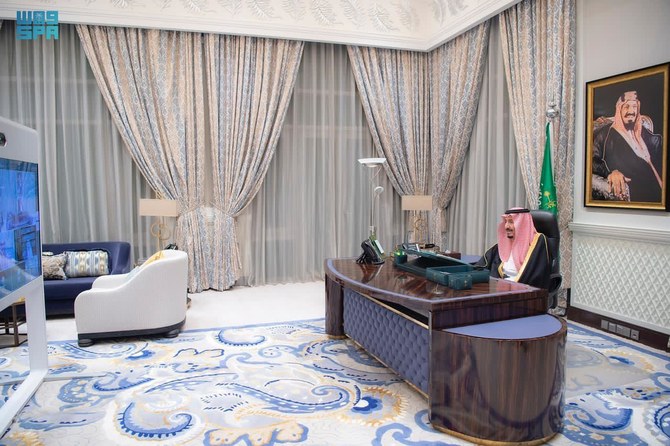
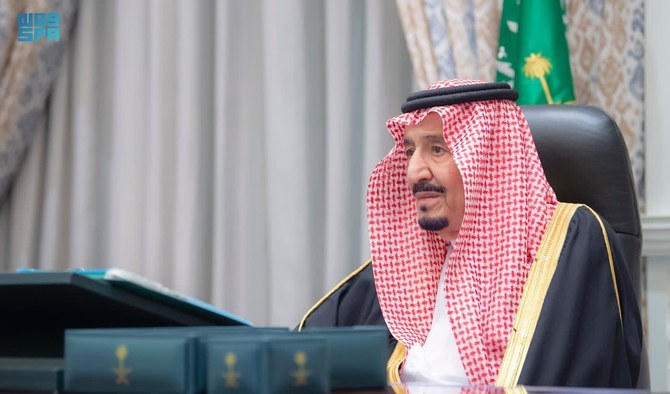
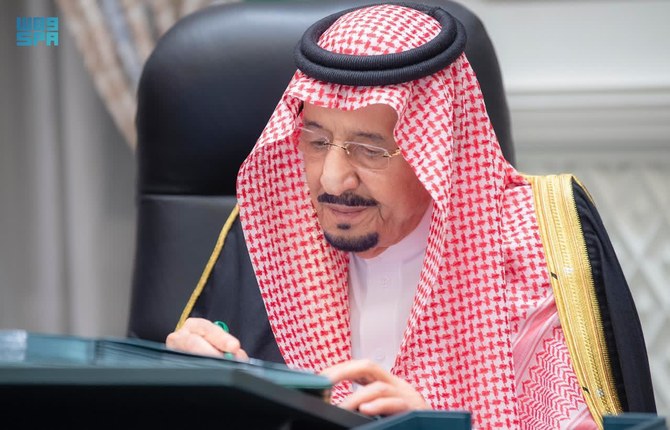
The comments came following a weekly council of ministers meeting chaired by King Salman, who spoke with the Jordanian king on Friday and relayed a similar message.
At the beginning of the meeting, King Salman briefed the cabinet on consultations and talks that took place during the past days between the Kingdom and a number of countries on the recently announced Middle East Green Initiative and the work needed to achieve its environmental goals in the region and the world.
The ministers were also briefed on the outcome of talks between Crown Prince Mohammed bin Salman and Iraqi Prime Minister Mustafa Al-Kadhimi on Wednesday, where both sides agreed to deepen aspects of cooperation to allow optimal investment, strengthen integration, and contribute to enhancing security and stability in the region.
The cabinet also renewed Saudi Arabia’s support for Egypt and Sudan and any efforts that contribute to ending the Grand Ethiopian Renaissance Dam issue and reach a fair and binding agreement that preserves the rights of all the Nile Basin countries
The cabinet also reiterated the Kingdom’s call at the 5th Brussels conference on “Supporting the future of Syria and the region” demanding a halt to Iran’s sectarian project, which contributes to prolonging and complicating the crisis, its exit and all its affiliated forces with it, the cessation of its criminal practices aimed at changing the country’s Arab identity, and the importance of combating terrorist organizations in all their forms.
The cabinet said the Kingdom’s grant to operate power stations in Yemen comes “as a continuation of its support for the Yemeni government, alleviating the suffering of the people, and its efforts to achieve lasting peace and establish security and stability.”
On the domestic front, the council said the new Shareek program that was launched by the crown prince, “establishes a new phase of cooperation and partnership between the government and private sectors” and will develop the sustainable growth contribution to the national economy.
They also reviewed the preparations and arrangements to welcome pilgrims at the Two Holy Mosques during the month of Ramadan.
The council of ministers authorized the energy minister — or his representative — to negotiate with Singapore regarding a draft memorandum of understanding between the Kingdom’s Ministry of Energy and Singaporean Ministry of Trade and Industry in the field of energy.
The ministers approved an agreement between the Saudi government and the Union of Arab Banks regarding establishing their regional office in the Kingdom, and approved the license for Banque Misr to open a branch in the Kingdom as well.
The ministers also reviewed the latest developments in the coronavirus pandemic, including statistics and data from the national vaccination campaign, and efforts made by the concerned authorities to “preserve public health and build a comprehensively immune society.”


Saudi cabinet stresses full solidarity with Jordan
https://arab.news/jjeyd
Saudi cabinet stresses full solidarity with Jordan

- Cabinet renews Saudi Arabia’s support for Egypt and Sudan to resolve GERD issue
- Ministers reviewed preparations to welcome pilgrims during Ramadan, and latest COBID-19 developments
Related


Ramadan in Madinah: A blend of tradition and modernity
- Ramadan iftar tables in the neighborhoods have evolved into a community initiative that promotes solidarity and neighborliness
MADINAH: In the holy city of Madinah, Ramadan highlights a seamless blend of ancestral traditions and modern celebrations, as residents decorate homes and streets with lanterns.
Women play a central role in creating this spiritual atmosphere, transitioning from handmade ornaments to curated prayer spaces and Ramadan diaries for children.
Social solidarity remains the city’ cornerstone, manifested through the exchange of Ramadan baskets and the organization of massive communal iftar meals at the Prophet’s Mosque and in local neighborhoods.
Ramadan iftar tables in the neighborhoods have evolved into a community initiative that promotes solidarity and neighborliness.
The project has been undertaken by “Mujtamaei,” the Neighborhood Centers Association in Madinah Region, in partnership with the Madinah Regional Municipality, and covers 97 locations across residential districts.
The initiative organizes daily iftar gatherings that bring together residents, volunteers, and partner entities, reflecting strong community cohesion and fostering volunteerism and social connection among neighborhood residents and visitors during the holy month.
The program provides more than 80,000 iftar and sahoor meals, benefiting over 40,000 individuals, with 1,600 volunteers overseeing site organization and service delivery in accordance with quality and safety standards.
The project is part of a community development system that expands annually, focusing on increasing volunteer participation and strengthening partnerships, thereby reinforcing social values and revitalizing the spirit of neighborliness in Madinah.