ANKARA: Turkey on Friday began administering Pfizer and BioNTech’s COVID-19 shots, introducing a second vaccine in its campaign that began in mid-January, as new cases reached record highs.
Turkey has so far delivered 16.5 million vaccine doses nationwide, including more than 7 million people who have received a second dose of the shots developed by China’s Sinovac Biotech.
The rollout has so far included those over 60 years of age, health personnel and other priority groups.
A total of 2.8 million doses of the Pfizer vaccine have arrived in Turkey, with that number expected to reach 4.5 million in the coming days, Health Minister Fahrettin Koca said on Wednesday.
People can choose which vaccine they would like to receive when their turn comes, Koca said, adding that the aim is to vaccinate a majority of the population by June.
Emre Yavuz said he and his wife received the Pfizer/BioNTech vaccine because their daughter studies in Europe, which he said may not allow in those who receive the Sinovac vaccine.
“There is a debate in the European Union about whether to accept this (Sinovac) or not. Therefore, I chose this to be on the safe side,” he said, after receiving his first shot at the Ankara City Hospital.
Turkey recently imposed new weekend lockdowns in most provinces, as cases reached all-time highs nationwide. On Thursday, 40,806 new cases were recorded, the highest level since the beginning of the pandemic.
The total number of cases stood at 3.358 million as of Thursday, with the death toll at 31,713.
Turkey currently ranks fifth globally for daily cases based on a seven-day average, according to a Reuters tally.


Turkey begins administering Pfizer/BioNTech COVID-19 shots

https://arab.news/97jvv
Turkey begins administering Pfizer/BioNTech COVID-19 shots

- Rollout has so far included those over 60 years of age, health personnel and other priority group
- Turkey recently imposed new weekend lockdowns in most provinces, as cases reached all-time highs nationwide


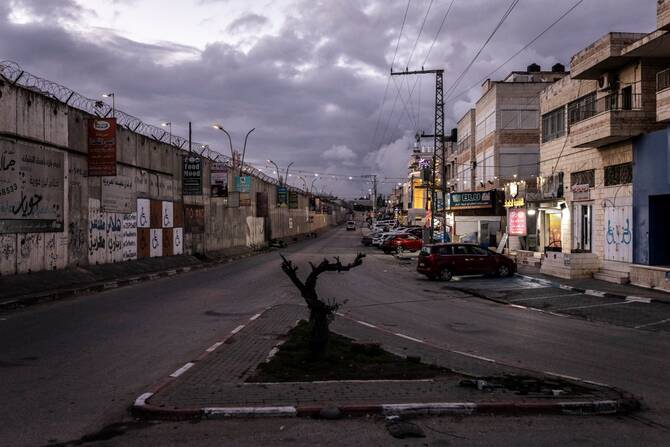
1,965 Israeli violations recorded against Palestinians in February
- Head of Wall and Settlement Resistance Commission condemns attacks as a continuation of ‘terror’ against Palestinians
- Violations included assaults, uprooting trees, burning fields and preventing olive pickers from accessing their lands
LONDON: Israeli forces and settlers carried out 1,965 attacks across Palestinian towns in the occupied West Bank in February, according to a report by the Palestinian Authority.
Muayyad Shaaban, head of the Wall and Settlement Resistance Commission, condemned the attacks as a continuation of the “terror” against the Palestinian people, their land and property.
The commission documented 1,454 attacks by Israeli forces and 511 by settlers, most of which were concentrated in the governorates of Hebron with 421 attacks, followed by Nablus with 340, Ramallah and Al-Bireh with 320, and East Jerusalem with 210 attacks.
Violations have included direct beatings of Palestinians, uprooting trees, burning fields, and preventing olive pickers from accessing their lands.
Israeli forces have seized land and demolished homes and agricultural facilities under the pretext of “security,” which has enabled settlers to expand their settlements, according to Wafa news agency.
Shaaban said: “What is taking place represents an organized methodology aimed at emptying the land of its owners and imposing an integrated racist colonial system.”
Israeli settlers have poisoned and uprooted a total of 1,314 trees, including 1,054 olive trees, in the areas of Ramallah, Bethlehem, Hebron, Nablus and Tulkarm. The olive groves have been a lifeline for Palestinians in the West Bank, with an estimated 80,000 to 100,000 families relying on the olive harvest for their livelihoods, according to the UN Human Rights Council.
In February, Israeli forces demolished 122 structures belonging to Palestinians, including 56 inhabited homes, nine uninhabited homes, 34 agricultural facilities and 18 sources of livelihood. More than one-third of these demolitions took place in Jerusalem, totaling 46 structures.