KARACHI: A senior government functionary, who wrote a letter to the country’s privatization commission earlier this month to raise objections against the arbitration terms of reference (TORs) to resolve payment issues of K-Electric before its sale to Shanghai Electric Power (SEP), told Arab News he had acted in the interest of “protecting public money.”
Former K-Electric chairman Tabish Gauhar was appointed Special Assistant to the Prime Minister on Power last October.
Earlier this month, Abdulaziz Hamad Aljomaih, managing director investments at Saudi business group Aljomaih Holdings, was in Pakistan to complete a deal held up since 2016 and expedite the removal of impediments to conclude Shanghai Electric Power’s bid to acquire 66.4% controlling stakes in K-Electric Limited.
Dubai-based, now collapsed, private equity firm Abraaj Group and Aljomaih/National Industries Group (NIG) of Kuwait have a 66.4% stake in K-Electric, formerly known as Karachi Electric Supply Company (KESC), while the government of Pakistan holds 24.36% shares.
Soon after Aljomiah’s visit, Gauhar wrote a letter to the Privatization Commission, highlighting objections to the under-consideration arbitration terms of reference (TORs). The letter was widely viewed by the local press as an attempt to scuttle the SEP deal.
“My internal letter on the arbitration TORs is self-explanatory, and it was written to protect public money,” Gauhar told Arab News, denying any conflict of interest. “I have no current conflict of interest with KE since I left that organization in October 2015.”
Gauhar said it was his responsibility to address public interest issues as a member of the inter-ministerial committee set up by the government to resolve the K-Electric deal — already delayed due to pending payment issues related to payables and receivables among K-Electric, Sui Southern Gas Company, National Transmission and Dispatch Company, and the Ministry of Finance.
But analysts say the letter written by the prime minister’s adviser would not have much impact on K-Electric’s sale to the SEP.
“I don’t think this letter would make any major impact on progress made so far,” Samiullah Tariq, Director Research at the Pakistan Kuwait Investment, said. “For the sustainability of the power company and its future projects, the only way out is to resolve this issue.”


![]()
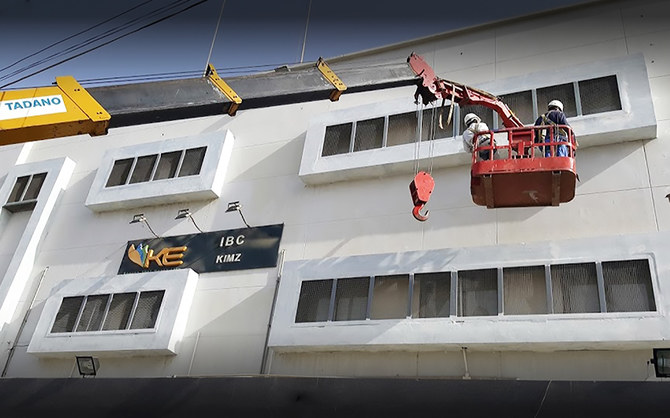
PM’s adviser defends opposition to terms of sale of K-Electric to Chinese company

Short Url
https://arab.news/pygq7
PM’s adviser defends opposition to terms of sale of K-Electric to Chinese company
- Saudi business tycoon was in Pakistan earlier this month to complete a deal held up since 2016 for the sale of K-Electric to Shanghai Electric
- Soon after Aljomiah’s visit, Gauhar wrote a letter to Privatization Commission highlighting objections to under-consideration arbitration TORs
Latest updates


© 2026 SAUDI RESEARCH & PUBLISHING COMPANY, All Rights Reserved And subject to Terms of Use Agreement.