

Busiest airline routes in Arab world revealed

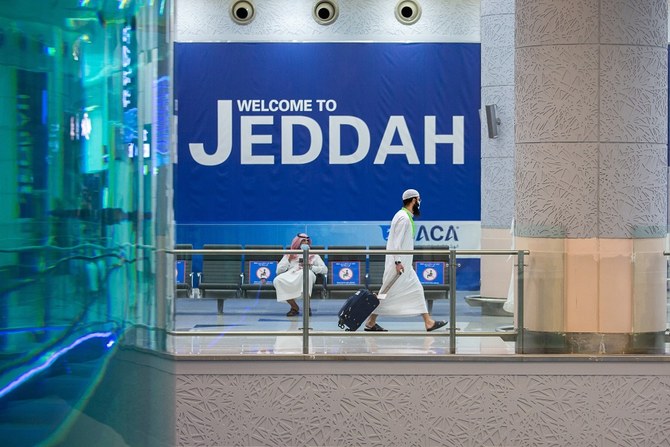
Air travel in the region is still reeling from the blows of the COVID-19 pandemic. (File/AFP)
Short Url
Updated 28 March 2021
Follow

Busiest airline routes in Arab world revealed

  • The Cairo-Jeddah route recorded around 67,000 flight seats in March
  • The data showed Bahrain-Dubai topping Middle East routes with seating capacity of 80,468

DUBAI: Airline routes between Saudi Arabia and Egypt were among the busiest in the Middle East and Africa this month.

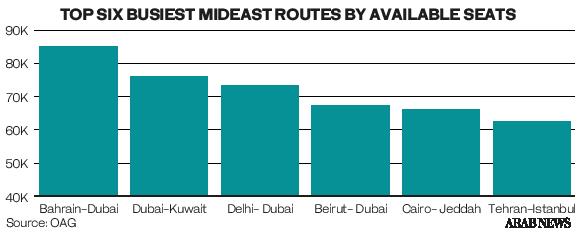
The Cairo-Jeddah route recorded around 67,000 flight seats in March, while 53,800 seats were booked on the Cairo-Riyadh route, according to flight intelligence company OAG.

The data showed Bahrain-Dubai topping Middle East routes with seating capacity of 80,468.
Air travel in the region is still reeling from the blows of the COVID-19 pandemic, which has hit Gulf-based carriers particularly hard due to their small domestic markets.

Middle East airlines depend on connecting traffic between continents, which remains heavily crimped by restrictions to control the spread of COVID-19.

However, major regional carriers “are doing OK considering their respective network structures and market characteristics,” John Grant, a spokesperson for OAG, told Arab News.

Doha-based Qatar Airways recorded around 2.6 billion available seat kilometers (ASK) – an industry measurement of passenger carrying capacity – in March, the AOG report said, making it the largest airline globally during that period.
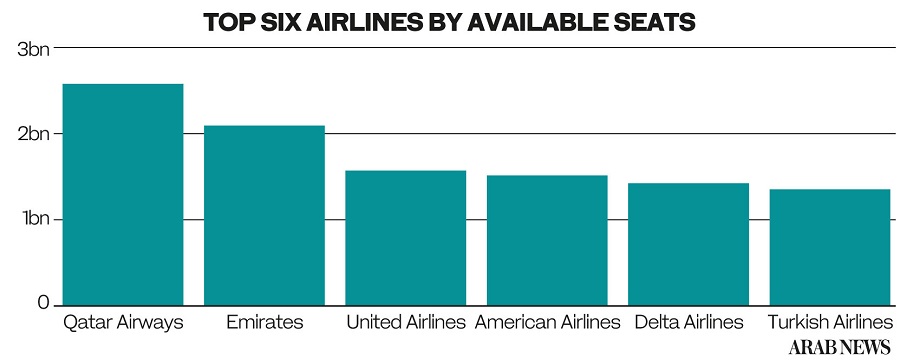
Dubai’s Emirates came in second at 2.1 billion ASK, while Etihad stood at around 758 million ASK.

Major airlines have seen their revenues supported by their cargo operations, which has received considerable investment to counter lower passenger numbers, Grant said.


Citi shuts most UAE branches temporarily as banks evacuate offices in region

Updated 12 March 2026
Follow

Citi shuts most UAE branches temporarily as banks evacuate offices in region

DUBAI: ​Citibank will close most of its UAE branches and financial centers until March 14 as a precaution, its website showed on Thursday, as banks in the region sent staff home in response to a deepening Middle East conflict.

The US financial group’s measures are the latest sign of growing concern among banks after Iran threatened Gulf banking interests linked to the ‌US and Israel.

The ‌Citi branch in the Mall ​of ‌the ⁠Emirates in ​central ⁠Dubai is exempted from the closure, the bank said on its website, adding it plans to reopen all affected branches on March 16.

Citi had moved to a fully remote model for all UAE-based staff and was continuing to serve clients without interruption, a spokesperson for the bank told Reuters.

The US-Israeli war on Iran ⁠has so far killed around 2,000 people and ‌thrown global energy markets and transport ‌into chaos as the conflict has spread ​across the Middle East, ‌with Iranian strikes against Israel, US bases and Gulf states.

Citi told ‌its staff to evacuate offices in the Dubai International Financial Center and Dubai’s Oud Metha district this week and to work from home until further notice.

“The decision to evacuate three of our buildings and ‌to close branches in the UAE was responsive to information we received and is consistent with ⁠our commitment ⁠to prioritize the safety of our colleagues,” the spokesperson said.

HSBC, another major global bank, has closed all branches in Qatar until further notice, a customer notice said, to ensure the safety of staff and customers.

The war has dented Dubai’s sales pitch to international businesses as the region’s most reliable economic hub, prompting concerns of capital flight, layoffs and firms relocating elsewhere, Reuters reported last week.

Citi said on its website that its phone banking service in the UAE was currently operating at a ​limited capacity and the processing ​of cheques would experience delays.