ISLAMABAD: Pakistan’s Commissioner for Indus Waters, Syed Mohammad Mehr Ali Shah, has said India had provided “some information” on the planned Pakal Dul and Lower Kalnai hydroelectric plants whose design has been opposed by Islamabad, Pakistani media reported on Friday, adding that the next meeting of the water commissioners would be held in Pakistan after April.
This week India and Pakistan held the first meeting in three years of the commission on water rights from the Indus River in a sign of rapprochement in relations frozen since 2019 during disputes over the Himalayan Kashmir valley.
“Pakistan will invite Indian officials for a meeting after April 1,” Shah told media at the Wahga border upon his return from India. “India has expressed willingness for the visit.”
Speaking about this week’s talks, Shah said: “It was a good but difficult meeting but, finally, we succeeded in making headway by raising and reiterating our objections to the design of Pakal Dul and Lower Kalnai hydropower projects being constructed at the Chenab basin by India.”
“And finally, they provided some information, in writing, duly signed and stamped by them regarding the design of the aforementioned two projects. We may seek more information regarding the design as our engineering experts will examine the information provided to us.”
He said India had also agreed to provide flood-related data to Pakistan on a timely basis and allow the controversial Kishanganga hydropower project to be inspected by Pakistani experts “soon.” Pakistan would also allow India to inspect its Kotri barrage over the Indus.
“We have asked them [Indians] to schedule their tour program for Pakistan in this regard. Similarly, they also asked us to schedule visit to inspect KishanGanga project,” Shah said, saying Indian officials assured the Pakistani team that they would fulfill all their obligations under the Indus water Treaty.
The Indus Waters Treaty between Pakistan and India was brokered by the World Bank and signed in Karachi in 1960. The treaty gives control over the waters of the three eastern rivers — the Beas, Ravi and Sutlej — to India, while control over the waters of the three western rivers — the Indus, Chenab and Jhelum — lies with Pakistan.
Under the treaty, both countries can approach the World Bank for arbitration in case of disputes over the use of water resources. Pakistan approached the World Bank in August 2016 to constitute a court of arbitration over two disputed Indian projects: the 330 megawatts Kishanganga and 850 megawatts Ratle hydropower projects.
The Bank has not yet set up the court as India has sought the appointment of a neutral expert to resolve the conflict. Pakistan is also taking up two ongoing disputes with India – over the 1000MW Pakal Dul and 40MW Lower Kalnai – at the Indus commissioners’ level. Islamabad says it will take the issues to the World Bank for mediation if it fails to resolve them at the bilateral level.
In recent years India has also begun ambitious irrigation plans and construction of many upstream dams, saying its use of upstream water is strictly in line with the treaty.
Pakistan has opposed some of these projects saying they violate the World Bank-mediated treaty on the sharing of the Indus waters, upon which 80 percent of its irrigated agriculture depends.
Shortly after the partition of the sub-continent into Pakistan and India in August 1947, tensions soared over water rights of the rivers flowing between them. Since the ratification of the treaty after nine years of negotiations, both neighbors have not engaged in any water wars, despite waging full-scale wars over the Muslim majority Kashmir valley, which both claim in full and rule in part.


![]()
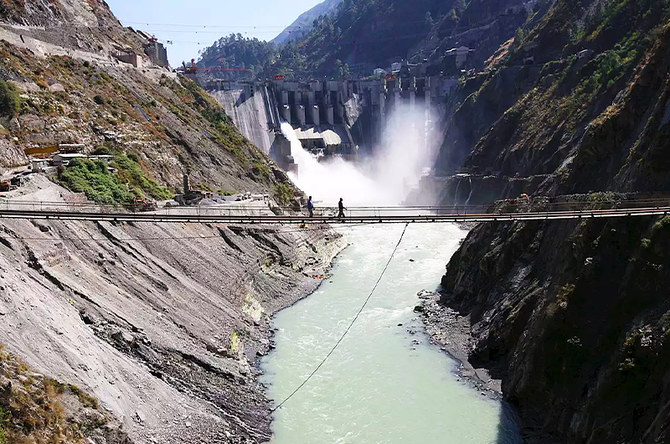
Indian officials to visit Pakistan for Indus water commissioners' meeting after April
Short Url
https://arab.news/9xw8c
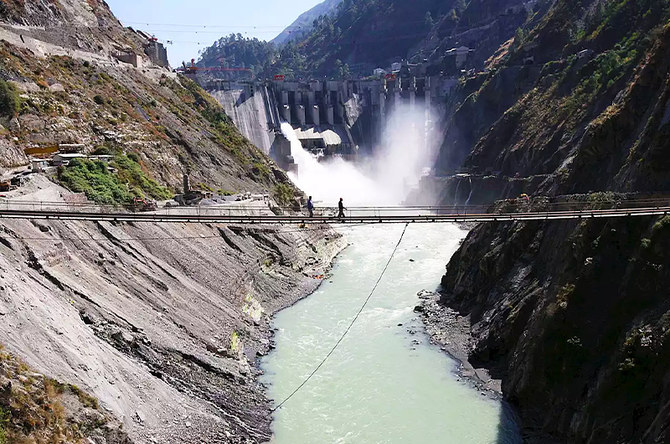
Indian officials to visit Pakistan for Indus water commissioners' meeting after April
- Pakistan says India has shared information on two power projects opposed by Islamabad, will allow Kishanganga hydro project to be inspected by Pakistani experts
- This week India and Pakistan held the first meeting in three years of the commission on water rights from the Indus River
Latest updates


© 2026 SAUDI RESEARCH & PUBLISHING COMPANY, All Rights Reserved And subject to Terms of Use Agreement.