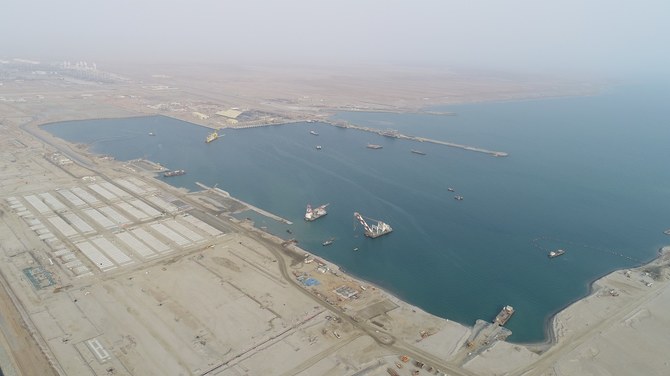

RIYADH: Saudi Arabia’s Ministry of Energy on Thursday condemned an attack on a vital oil installation in Jazan, which resulted in a fire in one of the tanks.
The ministry said “these acts of sabotage target the security of energy supplies.”
The Arab coalition and Saudi air defenses intercepted and destroyed several explosive-laden drones launched by Yemen’s Houthi militia toward the Kingdom earlier on Thursday, state TV reported.
“Today at 9:08 p.m. an attack with projectile was made on the petroleum products distribution terminal in Jazan,” an official ministry spokesperson said, adding the attack resulted in a fire in one of the terminal’s tanks, and left no casualties.
“The attack does not target the Kingdom alone, but also petroleum exports, the stability of energy supply to the world, freedom of the world trade, as well as the global economy,” the spokesperson said.
He also said such attacks “affect maritime traffic and expose coasts and territorial waters to grave environmental catastrophes.”
The Ministry of Defense also condemned the attack and said it proved the Houthi rejection of the peace initiative and Iran’s interference in the militia’s decision-making process.
Two other drones intercepted were targeting the southwestern city of Khamis Mushait, while another targeted Najran near the Yemeni border. The rest targeted civilians and residential areas in other parts of southern Saudi Arabia.
The coalition said that the Iran-backed Houthi militia tried to target universities in Jazan and Najran.
The attacks come only days after Saudi Arabia announced a new peace plan to end the crisis in Yemen, which included a comprehensive cease-fire, the reopening of Sanaa airport, easing restrictions on Hodeidah port, and restarting the political process in the country.
The Gulf Cooperation Council (GCC) condemned the attacks and said they reflect the Houthis’ flagrant defiance to the international community and its disregard for all international laws.
GCC Chief Nayef Al-Hajjraf called on the international community to “take an immediate and decisive stance to stop these frequent terrorist attacks targeting vital and civilian installations.”
The Arab Parliament denounced the attack targeting the petroleum station, the universities in Jazan and Najran and the other civilian areas in the southern region.
It warned that these repeated “cowardly attacks” carried out by the Iran-backed Houthis “threaten global trade and undermine security and stability in the entire region,” and are part of the Iranian regime’s plans to destabilize the region.
The UAE, Bahrain and Jordan also condemned the attacks and the continued targeting of populated areas and vital installations, and said they supported the Kingdom in all measures it takes to preserve its security and the safety of its people and its territory.
The Organization of Islamic Cooperation praised the coalition’s “vigilance and skill” in thwarting the drones.
Meanwhile, the coalition said the Houthis also fired a ballistic missile from Sanaa which landed in the Yemeni city of Al-Jouf.
Coalition fighters targeted warehouses and armored vehicles belonging to the militia in Hajjah, Al Arabiya reported.