

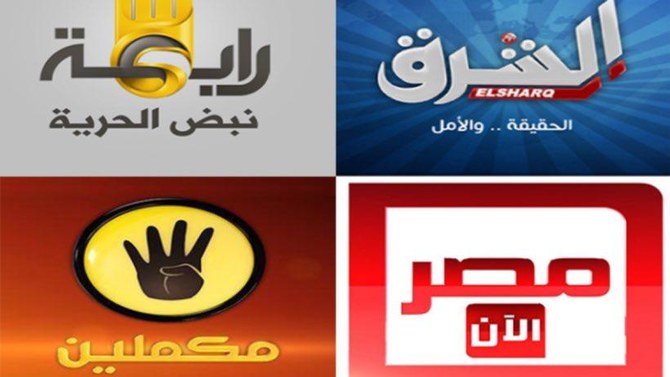


DUBAI/LONDON: Muslim Brotherhood affiliated TV channels in Ankara were ordered to stop airing criticisms against Egypt with penalties to be imposed on those who defy the order, Al- Arabiya TV reported, citing knowledge sources.
The step came following statements by Turkey aimed at easing tensions with Egypt after eight years of disputes between the two countries.
Egypt’s Minister of Information Osama Heikal said he welcomed news of Turkey’s decision to ban anti-Egyptian Muslim Brotherhood channels, referring to it as “a good initiative.”
Heikal said the decision “creates an appropriate atmosphere for discussing controversial issues.”\
And he said Egypt’s position was constant and worked to “develop relations with everyone according to common interests.”
The conflict between Ankara and Cairo began after the Egyptian army ousted Muslim Brotherhood President Mohammed Morsi, who was an ally of Turkish President Recep Tayyip Erdogan.

Translation: From trusted sources, official Turkish orders released calls on Egyptian “opposition” channels in Istanbul to stop mentioning [Egyptian President] El-Sisi and to change into a channel of varieties in art and culture and family, far from the current events or politics.
Egypt later recognized the group as an extremist organization which caused multiple Brotherhood members and their supporters to flee to Turkey after their activities were banned in in the country.
Ankara’s relations with the country deteriorated following the election of President Abdel Fattah El-Sisi as president of the republic in 2013.
Sources told Al Arabiya that Ankara ordered El-Sharq TV – a Muslim Brotherhood-sympathetic channel based in Turkey (not to be confused with “Asharq News Channel” which is part of SRMG, based in Dubai and has a cooperation deal with Bloomberg) in addition to Watan TV and Mekameleen channels to immediately halt airing political shows critical of Egypt, the report said.
متابعينا الاعزاء
نعتذر لحضراتكم عن عرض حلقة الليلة من برنامج الشارع المصري— قناة الشرق (@ElsharqTV) March 18, 2021
A tweet from El-Sharq TV’s official account said: “To our dear followers, we apologize [for not airing] tonight’s episode of ‘The Streets of Egypt’.”
Qatari-backed, MB-leaning Middle East Eye based in London also reported the news, which served as confirmation that Turkey did curb the Muslim Brotherhood channels.
Earlier in March, Turkey said it is ready to normalize ties with Egypt and Gulf countries, following disputes over Ankara’s support for extremist-rooted governments.

Translation: The Turkish government officially asks El-Sharq, Mekameleen and Watan TV channels to either shut down their stations or change into a varieties channel and stop their political shows and stop any commentary on [Egyptian President] El-Sisi. And Mekameleen is currently in a meeting to discuss shutting down or changing its reporting.
“A new chapter can be opened, a new page can be turned in our relationship with Egypt as well as other Gulf countries to help regional peace and stability,” Spokesman of the Turkish President, Ibrahim Kalin, told Bloomberg.
Later, the Egyptian foreign ministry denied claims by the Turkish government that there has been resumption and restoration of ties with Cairo and Gulf states.
“There is no such thing of ‘resuming diplomatic contacts’,” a number of Egyptian and Arab media outlets reported, citing an unnamed official.


