RIO DE JANEIRO: While Pakistan and New Zealand have included nature protection in stimulus packages offered during the coronavirus pandemic, at least 22 countries have enacted or proposed changes in this period that weaken environmental regulation, endangering protected areas around the globe, according to a research paper published on Thursday.
Brazil, India and the United States are the hotspots of COVID-era rollbacks, said the paper, part of a wider report published by the International Union for Conservation of Nature (IUCN) on how protected areas were affected by the pandemic.
“During a time when all eyes were obviously on COVID ... you had governments reducing budgets or weakening environmental protection,” said Mariana Napolitano Ferreira, head of science at WWF Brazil and one of 150 researchers who wrote the report.
The report showed that the pandemic significantly impacted protected areas around the globe beyond just rollbacks, with the crisis leading to job losses among protected area rangers, reduced anti-poaching patrols, and deaths among indigenous communities living in those lands.
Ferreira said it was expected that President Joe Biden’s administration would stop rollbacks enacted by the previous administration during the pandemic, but in Brazil and India the situation was not as clear.
The paper cited a proposal sent by Brazilian President Jair Bolsonaro to Congress that would allow mining and oil and gas extraction within indigenous reserves.
In a video made public last May, Brazilian Environment Minister Ricardo Salles argued for deregulation of environmental protection while Brazilians were distracted by the pandemic.
Regarding India, the paper cited at least 31 proposals to open up national parks and sanctuaries for infrastructure, extraction and development projects, including coal mining.
A survey of more than 60 countries found that more than one in four rangers saw their salary reduced or delayed, while 20% reported losing jobs due to budget cuts related to the pandemic.
Rangers in Central America and the Caribbean, South America, Africa and Asia were the most badly affected, said the report.
Eight countries in the European Union have earmarked funding to expand or strengthen protected areas in the past year, the report said.
Seventeen countries have maintained or increased their support to protected areas despite the crisis.
Researchers argued that to diminish the risk of a new pandemic, countries should create new protected areas and make existing ones economically sustainable as new diseases can arise when forests and other wild areas are converted for human use.
“In this moment of economic and humanitarian crisis, we have an unique opportunity to stop and think on how to rebuild,” said Ferreira.


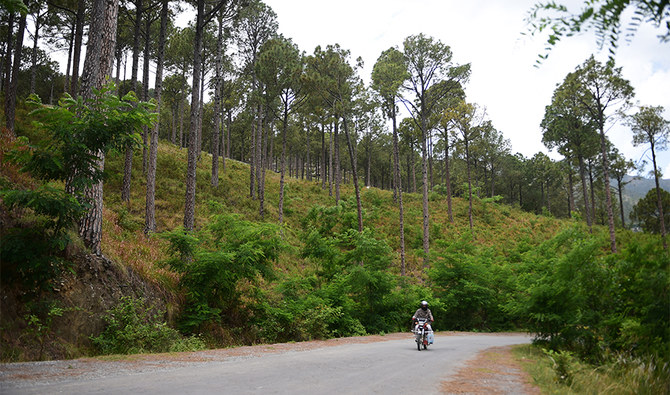
Pakistan pushes nature protection during pandemic as over 20 countries found weakening environment
https://arab.news/53pw9
Pakistan pushes nature protection during pandemic as over 20 countries found weakening environment

- At least 22 countries enacted or proposed changes during coronavirus that weaken environmental regulation, endangering protected areas around the globe
- Brazil, India and the United States are hotspots of COVID-era rollbacks, a report by International Union for Conservation of Nature says

Pakistan passes Virtual Assets Act 2026, empowers regulator to combat money laundering
- Legislation introduces licensing for virtual asset service providers, market surveillance mechanisms
- Pakistan is one of the world’s top cryptocurrency markets, with millions actively using virtual assets
KARACHI: Pakistan’s parliament on Friday passed the Virtual Assets Act 2026, granting the Pakistan Virtual Assets Regulatory Authority (PVARA) powers to combat money laundering, militant financing and other illicit activities, the regulator said.
The legislation introduces regulatory provisions including mandatory licensing for virtual asset service providers, market surveillance mechanisms, anti-money laundering and counter-terrorism financing compliance, and coordination with Pakistani financial regulators including the State Bank of Pakistan and the Securities and Exchange Commission of Pakistan.
Pakistan has in recent months stepped up efforts to draft rules for regulating the fast-expanding market for digital coins and tokens, requiring virtual asset service providers to secure government approval. Islamabad’s move to embrace digital currency marks a significant policy shift as it had banned cryptocurrency in 2018, citing financial risks.
“A year ago, Pakistan’s digital asset landscape was defined by uncertainty and grey areas. Today, we have the country’s first Act of Parliament establishing a regulatory body for virtual assets, building on the Presidential Ordinance introduced in 2025,” PVARA Chairman Bilal bin Saqib said in a post on X.
“With NOCs [no objection certificates] already issued and banking rails being developed in coordination with the State Bank of Pakistan, we are now moving toward a comprehensive licensing framework aligned with global AML [anti-money laundering] and financial integrity standards.”
Meanwhile, PVARA said the framework aims to boost transparency, protect investors, and ensure a stable, trustworthy virtual asset market while supporting responsible fintech innovation.
“The legislation also equips the Authority with powers to address money laundering, terrorist financing, and other illicit activities associated with virtual assets, bringing Pakistan’s regulatory approach in line with international standards,” it added.
Pakistan ranks among the world’s largest cryptocurrency markets by adoption, with millions of citizens actively engaged in virtual assets.
In February, Dr. Afnanullah Khan, a Pakistani senator from the ruling party, had said major crypto coins such as Bitcoin, Ethereum and XRP will soon be traded in Pakistan through crypto exchanges.
Pakistan earlier launched a “regulatory sandbox” for firms to trial crypto services under PVARA’s supervision before full approval.
In January, Pakistan signed a memorandum of understanding with a World Liberty Financial-linked firm, tied to US President Donald Trump’s family, to explore a dollar-backed stablecoin for cross-border payments.


