



RIYADH: Arab women today play an essential role in moving the economy and social development of the region towards a more prosperous future.
Mona Almoayyed and Ahdeya Ahmed have been avid proponents of women’s empowerment, and it is large in part due to their efforts women are now at the frontlines of advancement in the region.
Almoayyed is an internationally recognised businesswoman, philanthropist, environmentalist and women’s rights campaigner, as well as a member of the Bahraini Shura Council.
“I was chosen by His Majesty the King in 2018 to be a member of the Shura Council, which is a big honour and, I think, was because of my knowledge in business, and also because of my social activities with the environment and migrant workers,” Almoayyed said.
Almoayyed most recently worked on the introduction of a law regarding the study and use of stem cells.
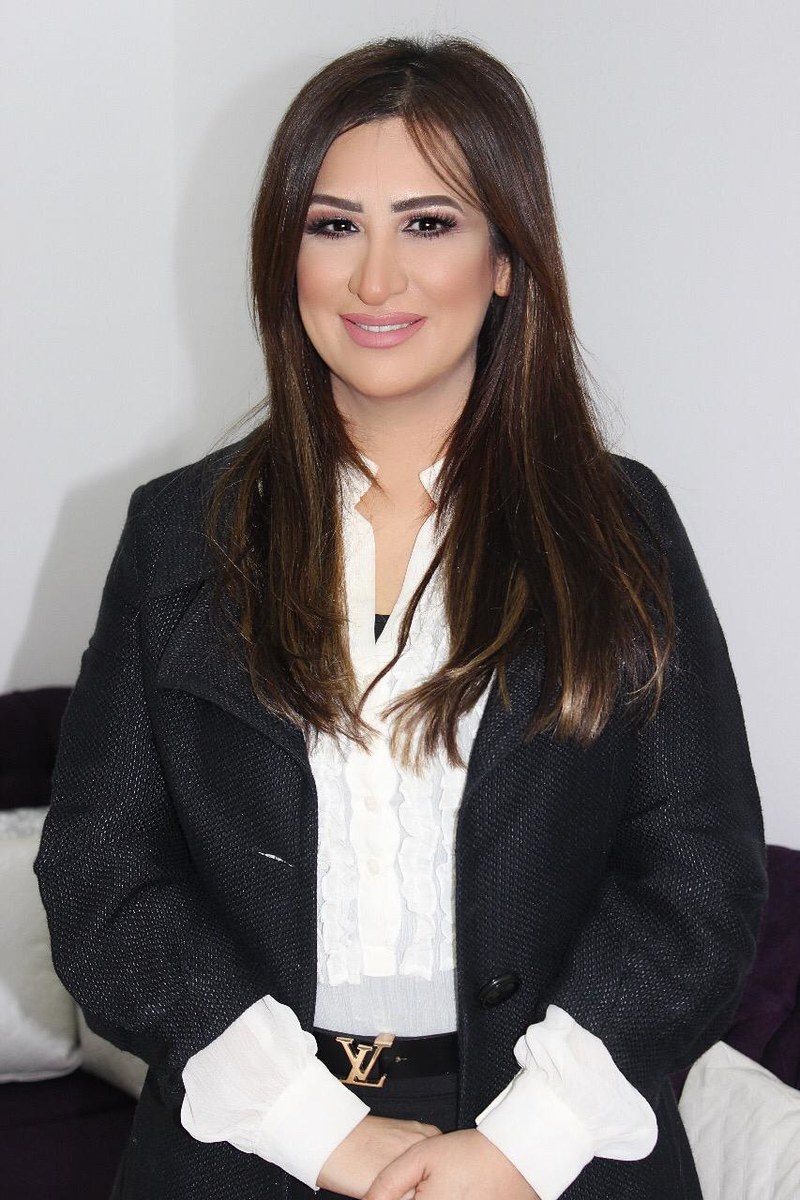
Ahmed made history in 2019 when she became the first woman elected president of the Bahrain Journalists’ Association (BJA), beating her male rival by four votes.
“Working in the Shura Council has been an education for me, it’s like going to university,” she said.
Along with her political role in the Kingdom, Almoayyed is also the managing director of Y.K. Almoayyed & Sons — one of the prominent family businesses in the Kingdom — where she defied social norms by inheriting the entire enterprise from her late father.
“For a woman in the 1970s it was all full of challenges. To start with, your father doesn’t look at you the way he looks at his sons,” the mother of four said. “He always referred to my brothers, that they were going to run the business, so it was a big challenge for me to prove to him that I’m as good as my brothers. Finally I succeeded and he was always praising me.”
Almoayyed currently leads the Bahrain Businesswomen’s Society and was ranked number 10 by Forbes in its Middle East’s Power Businesswomen 2021 category.
“I have been very active in the Bahrain Businesswomen’s Society. We started this society in 2000 and I was the third president there, and it’s still strongly supporting women in all fields,” she said.
Her achievements include the successful nomination of two ladies in the Chamber of Commerce, dealing with issues of gender discrimination in the workplace and aiding migrant labourers during the nationalization of domestic jobs.
Ahmed made history in 2019 when she became the first woman elected president of the Bahrain Journalists’ Association (BJA), beating her male rival by four votes. She is the editor-in-chief of Almaraa (The Woman) newspaper, which has been published out of Dubai since the start of 2021.
“Where we are today is somewhere we never expected to be,” she said. “Today, I’m proud to say, as I run the Bahrain Journalists’ Association, that more than 50 percent of journalists in Bahrain are women. Before, it was uncommon to see a lot of women in this field.”
Her journey in journalism began at the age of 18. She went on to be a member of the founding editorial team for the Bahrain Tribune, before setting a new benchmark for women in the GCC as president of the BJA.
Today Ahmed is working closely with the government of Bahrain on amendments to the 2002 Press Law, which will empower journalists and help them financially.
“We know that a lot of our colleagues who are passionate about journalism choose to go and work for private companies as public relations just because they need a source of income,” she said.
“This Press Law is going to make a wide and positive contribution toward saving the media industry and saving the jobs of our colleagues.”
The BJA president said that, as a woman, she did not face challenges of the kind that Almoayyad had. She took every opportunity that came her way with the support of her male superiors—believing women are already empowered.
“The reality is today, we can’t even use the word empowerment, we’re asking for advancement,” she said.
The BJA president hailed Saudi Arabia for having supported the cause of females in journalism for 30 years.
“Saudi newspapers were embracing Bahraini journalists,” she said. “I have my name in print, I was covering stories and when I look at these things I feel ‘this is great,’ because at that time in 1991-1992 there was a vision to support women and to encourage them.”
When dealing with criticism, Ahmed firmly believes one must accept it fondly.
“If you are not criticised, there is no way you can improve. I want to see more women in leading positions in the press, in the newspaper industry.”


