

Dubai-based Pakistani promotes self-love after years of being body shamed

In this picture taken on October 8, 2020, Arfa Shahid poses for a picture in Dubai. (Photo courtesy: Arfa Shahid/Twitter)
Short Url
Updated 09 March 2021
Follow

Dubai-based Pakistani promotes self-love after years of being body shamed

  • 28-year-old Arfa Shahid was bullied for being plus-sized for much of her life and remained in depression for about seven years
  • Today she is a freelance journalist and model whose aim is to teach people acceptance and how to be the best version of themselves

DUBAI: After being bullied most of her life for being plus-sized, a Dubai-based Pakistani TV reporter decided to fight the social stigmas she had faced by educating others on self-love and body positivity.
Born and raised in Dubai, 28-year-old Arfa Shahid is now a freelance journalist and model who says it is her mission to teach people the meaning of acceptance and self-love after suffering from depression for seven years due to her weight. 
“Self-love to me is being the best version of yourself,” she told Arab News on Monday. “It’s being kind to yourself and being self-aware. It’s an ongoing journey and a choice you make every single day.”
Shahid, who claims to be the first Pakistani plus-sized TV reporter, formerly working with ARY News, often hosts motivational talks in Dubai. She has also set up an Instagram account, Hey, Arfa, where she coaches and motivates people on self-love.
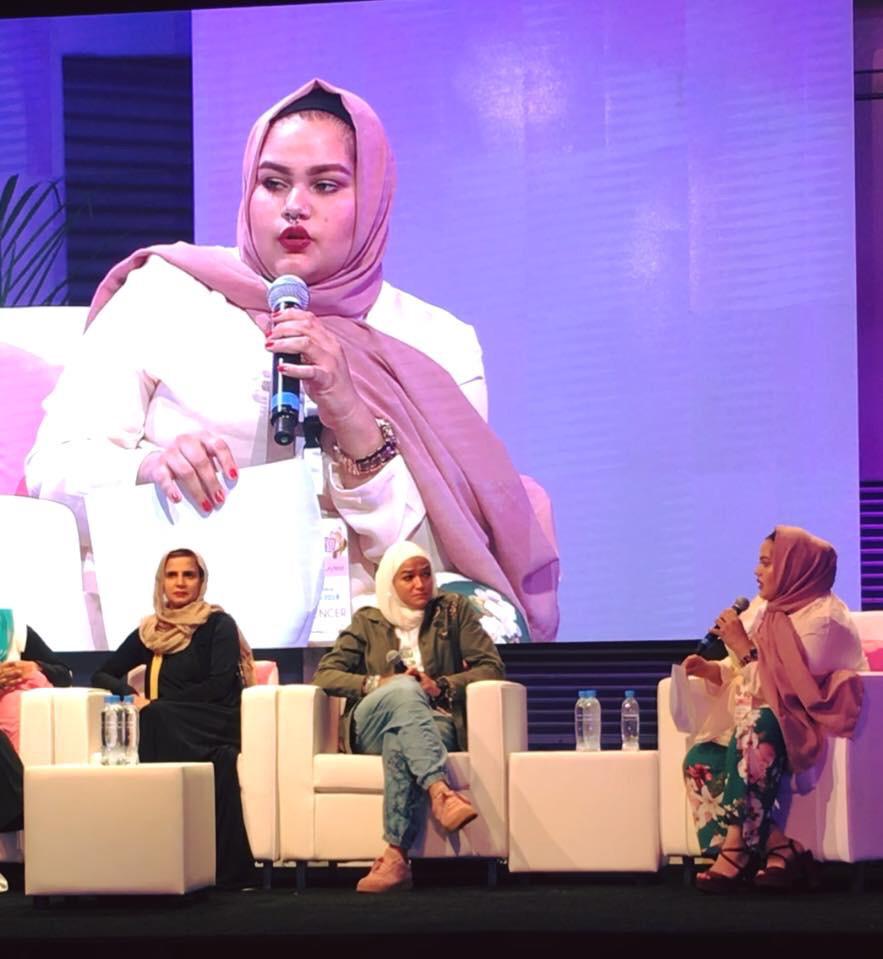


In this picture taken in 2017, Arfa Shahid, a self-love coach, speaks during a fashion event in Dubai. (Photo courtesy: Arfa Shahid)

“This is where I first started my journey and here I teach people to apply the principles of self-love and value themselves to reach their goals and be the best person themselves,” she added. 
Shahid is also a model who has been critical of the lack of ready-to-wear plus-size clothing available in stores. 
“I resorted to fashion blogging by sharing things I wear as a plus sized person,” she said. “I realized that as a result of being bullied all life long, people, such as myself, do not love themselves enough and suffer from confidence issues. This is also the reason why I decided to take my journey.”
Recalling a childhood incident, Shahid said: “I was always a chubby kid and soon from being called a cute kid, the comments started becoming mean. I was still four or five when women in parties started shaming my mother, asking why she overfed me.” 
“I remember an Eid when I was just five,” she continued. “All women at a party were only discussing my weight, and I locked myself up in a bathroom and cried my eyes out the entire day.” 
Shahid also recounted incidents in school where teachers body-shamed her.
“Incidents like these really impacted me,” she said. “I felt people were unkind, and I also started being unkind to myself.”
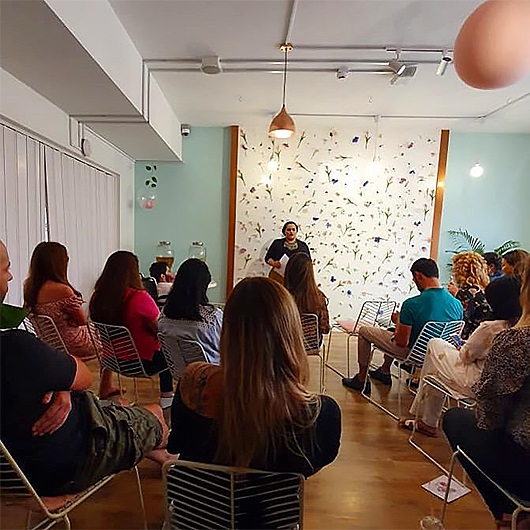


In this picture taken in 2019, Arfa Shahid, a self-love coach, can be seen at one of her motivational workshops held in Dubai. (Photo courtesy: Arfa Shahid) 

Such incidents also impacted her mental health and resulted in depression, but she ultimately promised to fight the victim mindset. 
Shahid has interviewed Pakistani celebrities and asked them to share their self-love journeys. Hira Mani, Mohib Mirza, Adnan Malik and Hareem Farooq are some of the celebrities who have opened up to Shahid and discussed body positivity issues. 
“I think it will be inspiring to see people whom we take as our role models,” she said. “Even famous people who we think are perfect in every way have their insecurities.”


Pakistan highlights Gwadar transshipment role as shipping routes face disruption over regional tensions

Updated 7 sec ago
Follow

Pakistan highlights Gwadar transshipment role as shipping routes face disruption over regional tensions

  • Pakistani ports possess “untapped potential” to attract global shipping lines for transshipment operations, says minister
  • Pakistan eyes leveraging Gwadar as regional transshipment hub as Iran’s closure of Strait of Hormuz disrupts global maritime trade

KARACHI: Pakistan’s Maritime Affairs Minister Junaid Anwar Chaudhry on Thursday highlighted the importance of the port city of Gwadar’s transshipment role as major shipping routes, including the Strait of Hormuz, face disruption due to Iran’s ongoing conflict with the US and Israel in the Gulf. 

The meeting takes place as Iran has effectively closed the Strait of Hormuz, a strategic waterway that lies between it and Oman. It is one of the world’s most critical oil transit routes, with roughly 20 percent of global oil supplies passing through it. Iran has vowed it will attack any ship that enters the strait, causing energy prices to rise sharply on Monday amid disruptions to tanker traffic in the waterway.

Gwadar is a deep-sea port in Pakistan’s southwestern Balochistan province that lies close to the Strait of Hormuz. Pakistani officials have in the past highlighted Gwadar’s geostrategic position as the shortest trade route to the Gulf and Central Asia, stressing that it has the potential to become a regional transshipment hub.

Chaudhry chaired a high-level meeting of government officials to assess emerging logistical challenges facing Pakistan’s trade, particularly in the energy sector, amid tensions in the Gulf. 

“Special focus was placed on fully leveraging the potential of Gwadar Port as a regional transshipment hub and positioning it as an alternative of regional instability,” Pakistan’s maritime affairs ministry said in a statement. 

The minister said Pakistani ports possessed “significant untapped potential” to attract international shipping lines for transshipment operations, noting that it could also ensure long-term sustainability and growth of the country’s maritime sector.

Participants of the meeting discussed measures to strengthen Pakistan’s position as a viable alternative transit and transshipment destination, as key waterways are affected by the disruption. 

The committee also reviewed proposals to amend relevant rules and regulations to facilitate international transshipment operations through on-dock and off-dock terminals.

The chairmen of the Port Qasim Authority, Karachi Port Trust and Gwadar Port Authority attended the meeting, briefing committee members on the current operational readiness of their ports. They spoke about the available capacity for container transshipment, bulk cargo handling and refueling services at Pakistani ports. 

The port in Gwadar is a central part of the China-Pakistan Economic Corridor (CPEC), under which Beijing has funneled tens of billions of dollars into massive transport, energy and infrastructure projects in Pakistan.

Pakistan has long eyed the deep-sea port as a key asset that can help boost its trade with Central Asian states, the Gulf region and ensure the country earns valuable foreign exchange.