JERUSALEM: Israel reopened most of its economy Sunday as part of its final phase of lifting coronavirus lockdown restrictions, some of them in place since September.
The easing of restrictions comes after months of government-imposed shutdowns and less than three weeks before the country’s fourth parliamentary elections in two years. Israel, a world leader in vaccinations per capita, has surged forward with immunizing nearly 40% of its population in just over two months.
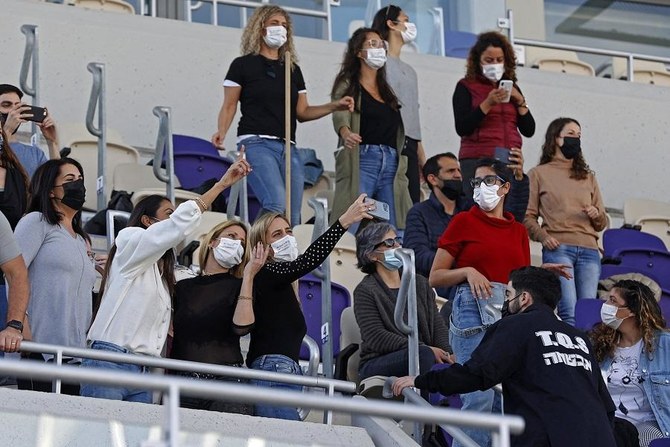
Bars and restaurants, event halls, sporting events, hotels and all primary and secondary schools that had been closed to the public for months could reopen with some restrictions in place on the number of people in attendance, and with certain places open to the vaccinated only.
Israeli Prime Minister Benjamin Netanyahu’s government approved the easing of limitations Saturday night, including the reopening of the main international airport to a limited number of incoming passengers each day.
Netanyahu is campaigning for reelection as Israel’s coronavirus vaccine champion at the same time that he is on trial for corruption.
Israel has sped ahead with its immunization campaign. Over 52% of its population of 9.3 million has received one dose and almost 40% two doses of the Pfizer vaccine, one of the highest rates per capita in the world. After striking a deal to obtain large quantities of Pfizer/BioNTech vaccines in exchange for medical data, Israel has distributed over 8.6 million doses since launching its vaccination campaign in late December.
While vaccination rates continue to steadily rise and the number of serious cases of COVID-19, the illness caused by the virus, drops, Israel’s unemployment rate remains high. As of January, 18.4% of the workforce was out of work because of the pandemic, according to Israel’s Central Bureau of Statistics.
At the same time that it has deployed vaccines to its own citizens, Israel has provided few vaccines for Palestinians in the West Bank and Gaza Strip, a move that has underscored global disparities. It has faced criticism for not sharing significant quantities of its vaccine stockpiles with the Palestinians. On Friday, Israel postponed plans to vaccinate Palestinians who work inside the country and its West Bank settlements until further notice.
Israeli officials have said that its priority is vaccinating its own population first, while the Palestinian Authority has said it would fend for itself in obtaining vaccines from the WHO-led partnership with humanitarian organizations known as COVAX.
Israel has confirmed at least 800,000 cases of COVID-19 since the start of the pandemic and 5,861 deaths, according to the Health Ministry.


With many vaccinated, Israel reopens economy before election
With many vaccinated, Israel reopens economy before election


Saudi POS spending climbs 11% to $4.3bn in early March as retail activity broadens
RIYADH: Saudi Arabia’s total point-of-sale transactions rose 11 percent to SR16.1 billion ($4.3 billion) in the week ending March 7, with most sectors seeing positive weekly change.
According to the latest data from Saudi Central Bank, the number of transactions increased 7.4 percent to 226.2 million.
Spending on education saw the biggest uptick at 39.4 percent to SR130.7 million, followed by jewelry, which increased by 35.8 percent to SR693.11 million.
Expenditure on clothing and apparel saw an rise of 31.7 percent to SR2.5 billion, and spending on pastries posted an 18 percent increase. Hotel outlays dropped by 11 percent to reach SR334.83 million.
Spending in pharmacies on medical supplies was up 2.6 percent to reach SR261.06 million, while spending on medical services saw a 9 percent increase to SR579.33 million.
Expenditure on food and beverages rose 7.5 percent to SR2.5 billion, while spending on restaurants and cafes increased by 14.7 percent to SR1.4 billion.

The sharpest drop in spending occurred in freight transport, postal and courier services, which fell by 30.9 percent. This decline followed major disruptions in the region after the closure of the Strait of Hormuz, triggered by the ongoing armed conflict involving the US, Israel, and Iran.
Prior to the hostilities, this category had seen a 50 percent increase in the week ending Feb. 28 — the last day before the hostilities began, leading to the strait’s shutdown, causing significant disruptions in logistics and oil shipments across the region.

The Kingdom’s key urban centers mirrored the weekly surge.
Riyadh, which accounted for the largest share of total POS spending, saw a 10 percent surge to SR5.35 billion, up from SR4.86 billion the previous week.
The number of transactions in the capital reached 69.6 million, up 5.9 percent week on week.
In Jeddah, transaction values increased 17.6 percent to SR2.34 billion, while Dammam reported a 7.9 percent increase to SR743.65 million.
POS data, tracked weekly by SAMA, provides an indicator of consumer spending trends and the ongoing growth of digital payments in Saudi Arabia.
The data also highlights the expanding reach of POS infrastructure, extending beyond major retail hubs to smaller cities and service sectors, supporting broader digital inclusion initiatives.
The growth of digital payment technologies aligns with Saudi Arabia’s Vision 2030 objectives, promoting electronic transactions and contributing to the Kingdom’s broader digital economy.