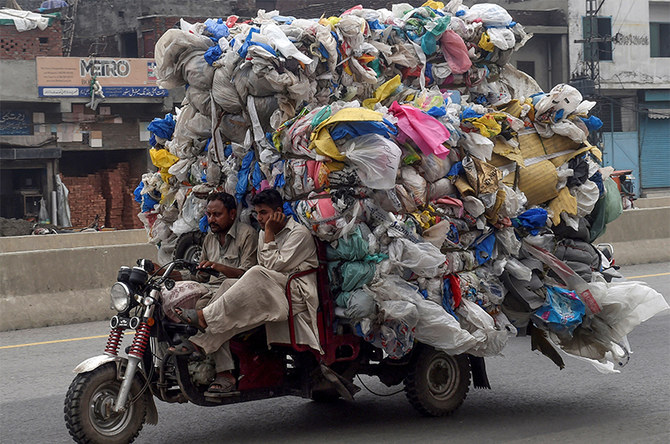
ISLAMABAD: Pakistan's plastic consumption is rising at an annual rate of 15 percent, and ends in landfills, unmanaged dumps or strewn about land and water bodies across the country, a statement from the Prime Minister's special advisor on climate change, Malik Amin Aslam, said on Sunday.
The defacto minister was directly addressing big producers of plastic products at a national dialogue on plastic waste management in Islamabad and said the country's total annual plastic waste in 2050 would surge to 6.12 million tons from its current level of 3.9 million tons every year if not managed.
Every year, 2.6 million tons of plastic waste is left unmanaged to stockpile in dumpsites, clogging drains and degrading fertile lands, he said.
Last year, the Global Climate Risk Index 2020, issued by think tank Germanwatch, ranked Pakistan fifth on a list of countries most affected by climate change and pollution over the last two decades-- even though the South Asian nation contributes only a fraction of global greenhouse gas emissions.
In 2019, Hunza was the first district in Pakistan to ban plastic shopping bags, followed by in August the same year by Islamabad where the local government banned the manufacture, sale and distribution of plastic carrier bags as part of Prime Minister Imran Khan’s “Clean, Green Pakistan” campaign.
But a United Nations report in March last year said the government's ban on single use plastic bags did not address the root of the problem.
"It has become clear that despite recognition of the problem, there is a dire need for increased levels of dedication, innovation and investment," the UNDP said in its report.
"A blanket ban of single use plastics by the government will not alone solve the problem."
The PM’s aide also said it was estimated around 1.3 million tons annually of the plastic could be recycled in currently present facilities.


![]()

Plastic use in Pakistan rising by 15 percent every year — climate minister
Short Url
https://arab.news/2zf67
Plastic use in Pakistan rising by 15 percent every year — climate minister
- Said Pakistan's total annual plastic waste in 2050 looked set to surge to 6.12 million tons from current levels of 3.9 million tons
- Said 1.3 million tons annually of the plastic could be recycled in currently present facilities
Latest updates


Recommended


© 2026 SAUDI RESEARCH & PUBLISHING COMPANY, All Rights Reserved And subject to Terms of Use Agreement.