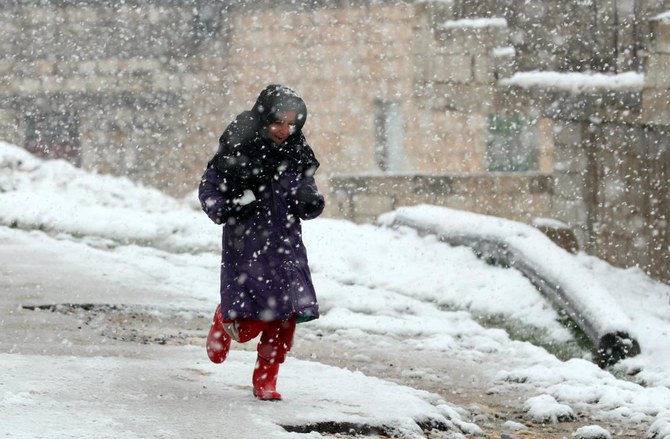
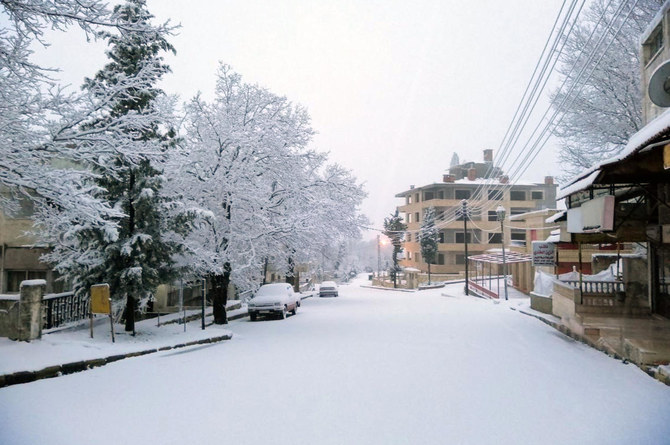
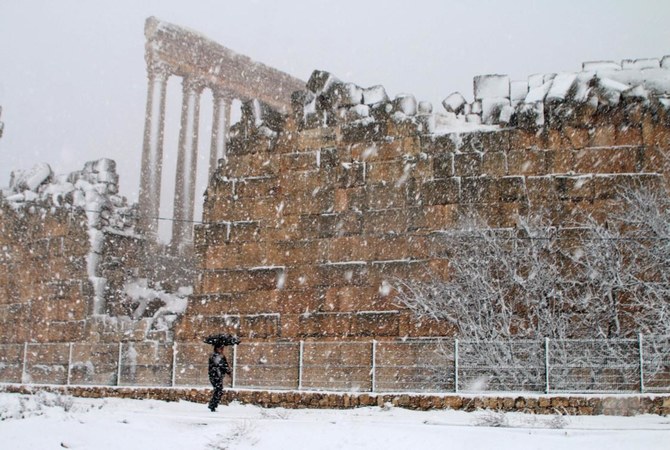
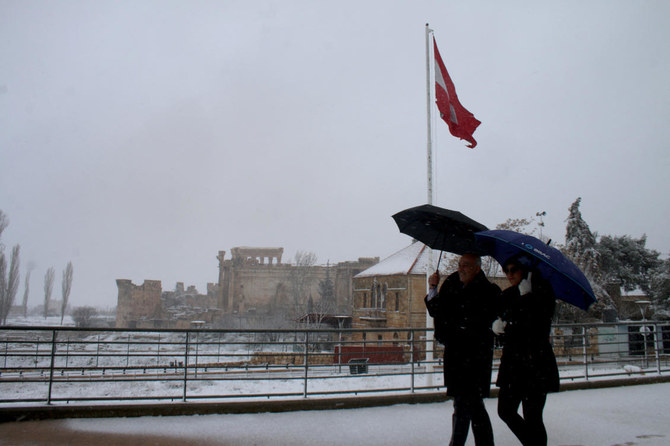
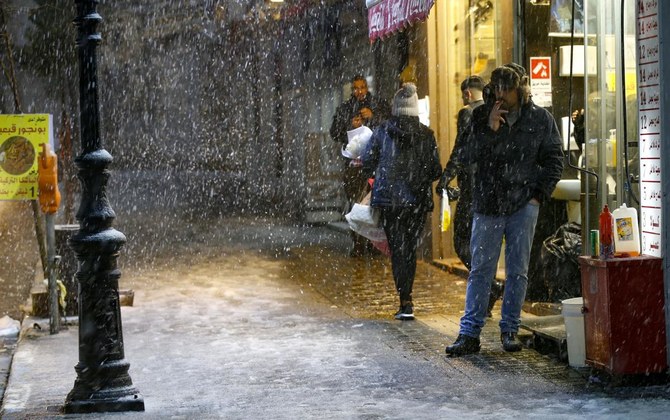
BEIRUT: Snow blanketed parts of Syria, Lebanon, Jordan and Israel on Wednesday, covering areas it has not reached in years, disrupting traffic and postponing vaccination campaigns against COVID-19 and even exams at some universities.
It snowed for the first time in years in Marjayoun in southern Lebanon, and in Bayda in northeast Libya.
Gale force winds knocked out electricity in vast parts of Lebanon, forcing many Lebanese, already used to power cuts, to rely on generators for longer hours. Rescuers pulled four motorists out of their snow-covered cars, the National News Agency said.
The first snow this winter in the Syrian capital, Damascus, did not prevent the Premier League soccer tournament from going ahead, as Army Sports Club and Al-Karamah faced off despite the snow that covered the pitch, the Syrian Al-Watan daily reported .
In the mountains of Syria’s Sweida province, snow was as high as 15 cm (6 inches), according to the official state news agency SANA. Roads in some provinces were blocked. In the central province of Hama, bulldozers shoveled snow to open roads while vehicles skidded on ice, causing traffic disruption.
The University of Damascus called off mid-term exams scheduled for Wednesday and Thursday in all its branches around Syria because of the extreme weather conditions. The country’s ports remained open. Later, local authorities in the provinces of Sweida, Quneitra, Daraa and Tartous suspend school on Thursday due to the storm and heavy snowfall.
In the opposition-held northwestern Syria, civil defense teams have been building dirt mounds since Tuesday around camps for the displaced to prevent rain from flooding the crowded areas. Nearly 3 million displaced people live in northwestern Syria, mostly in tents and temporary shelters. Heavy rainfall last month damaged over 190 displacement sites, destroying and damaging over 10,000 tents.
In neighboring Lebanon, Storm Joyce hit late Tuesday with gale force winds registering between 85 km/h (52 miles/h) and 100 km/h (62 miles/h). The storm is expected to get stronger Thursday.
Breaking a warm spell, the storm brought heavy rainfall, a sharp drop in temperatures and the heaviest snow fall in Lebanon this year. Snow is expected to cover areas of altitudes as low as 400 meters, according to the meteorological department. Nearly a dozen roads in eastern and northern Lebanon were closed to traffic because of the snow. A beachside club and restaurant were submerged in water as waves nearly 4 meters (13 feet) high slammed onto the shore.
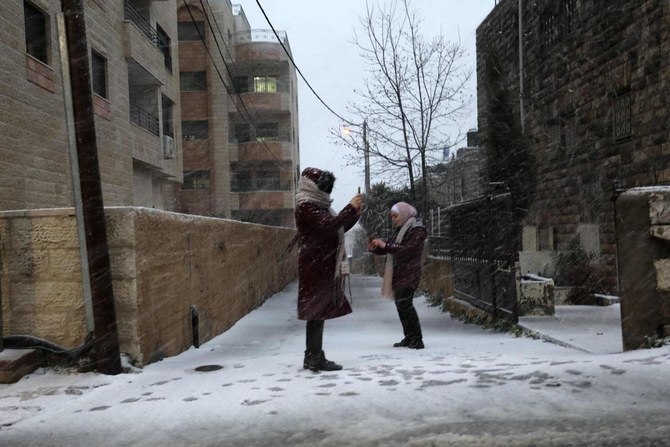
The Israeli Meteorological Service forecast heavy thunderstorms and cold temperatures across much of the country, with snowfall at higher altitudes expected later on Wednesday, including in Jerusalem. On Wednesday night, Israeli police closed the main road between Tel Aviv and Jerusalem due to snow.
Heavy snowfall covered the Israeli-annexed Golan Heights near the border with Syria.
In Jordan, the COVID-19 vaccination drive was suspended due to severe weather conditions. Schools and universities also put off classes. Jordan’s Prime Minister Bishr Al-Khasawneh announced that Thursday will be an official holiday for both the public and private sector due to the snow storm.
Osama Al-Tarifi, director of the operating room of the Arabia Weather site, said snow has reached 20 cm (8 inches) in the mountains of Ajloun in northern Jordan, where snowfall has been non-stop since Tuesday night. Heavy snow is expected in the capital, Amman, on Wednesday.
Wind exceeded 100 km/hour (62 miles/h) in some areas in Jordan.
In Libya, snow blanketed the country’s northeast mountains as snowfall continued since Tuesday, covering forests and roads in some areas in the North African country.
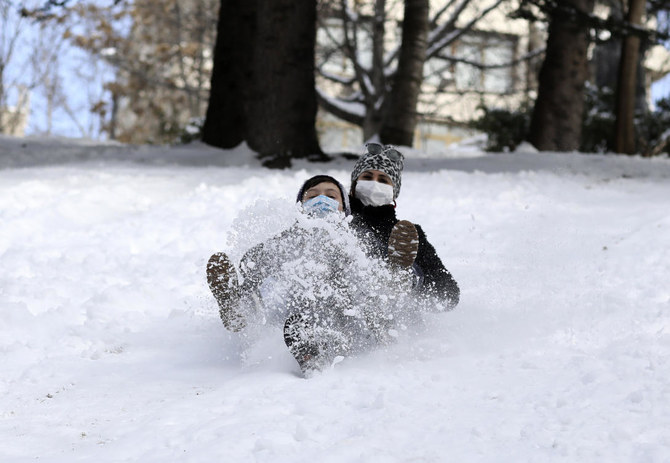
Residents of the Jabal Al-Akhdar area in the far northeast part of Libya took their children out for fun, some making snowmen and others starting snowball fights.
“I was surprised, actually, by the number of families who came here to take pictures to remember the snow,” said Ali Al-Shairi, an amateur photographer from the eastern city of Bayda, which is known for recurrent snow in Libya but has not seen any for a couple of years.
In neighboring Egypt, heavy rain and windy weather prevailed on Wednesday and was expected to last into Thursday, the country’s meteorological agency said. Authorities in South Sinai province, which includes touristic hubs, canceled touristic activities, including safaris and cruises to weather the storm.


![]()
![]()
![]()
![]()
![]()
![]()
![]()
![]()
![]()

Heavy snowfall, gales as winter storm hits Middle East


Short Url
https://arab.news/pr6rn
Heavy snowfall, gales as winter storm hits Middle East
- It snowed for the first time in years in Marjayoun in southern Lebanon, and in Bayda in northeast Libya


Latest updates






© 2026 SAUDI RESEARCH & PUBLISHING COMPANY, All Rights Reserved And subject to Terms of Use Agreement.