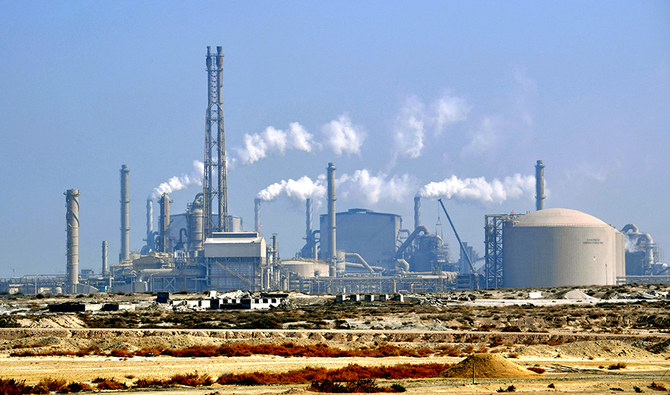

RIYADH: While some economies have struggled in the face of the coronavirus disease (COVID-19) pandemic, Saudi Arabia’s licensing of over a hundred new factories is evidence of its ambition to become “a leading industrial power” in the region and the growing importance of the local industrial sector, experts told Arab News.
Saudi Arabia licensed 115 new factories worth SR1.63 billion ($430 million) in January 2021, according to data issued by the Ministry of Industry and Mineral Resources.
A total of 66 new factories began production, bringing the number of existing and under-construction factories in the Kingdom to 9,783. The new licensed factories resulted in 4099 new jobs being created.
“The Ministry of Industry and Mineral Resources, through this licensure, is implementing the national industrial development and logistics vision realization program, which aims to transform Saudi Arabia into a leading industrial power,” Dr. Osama Ghanem Al-Obaidy, economic adviser and international economic law expert, told Arab News.
Al-Obaidy said the new factories help to generate “employment opportunities for Saudi workers” and will help “to enhance the efficiency of the Saudi industrial sector.” “Development of this sector is one of the pillars of Saudi Vision 2030 to create a competitive economy and sustainable development. Saudi Arabia aims at developing promising industries in food, medicine, and medical supplies, as well as military industries and industries relating to oil, gas and petrochemicals, mining as well as chemicals,” he added.
The ministry is providing incentives to local and foreign investors to invest in this sector to help increase the participation of small and medium-sized enterprises (SMEs) in the industrial sector, as well as increase local Saudi production, Al-Obaidy said, adding this is made in line with Vision 2030, which aims to diversify the Kingdom’s economy away from a dependency on hydrocarbons.
Dr Majed Al-Hedayan, a financial analyst, told Arab News that while some factories in other markets have closed or laid off staff, Saudi Arabia “still continues to build and develop, to invest material, financial and human resources in stimulating the private sector.”