Here’s a look at Alkhorayef Water IPO details

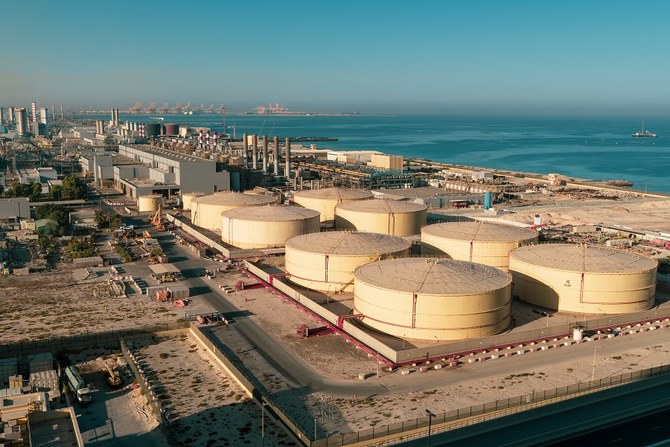
The water strategy targets a sustainable sector to develop and preserve water resources and environment. (File/Shutterstock)
Short Url
Updated 31 January 2021
Follow

Here’s a look at Alkhorayef Water IPO details

  • Alkhorayef confirmed that it is developing water and wastewater systems to preserve the environment
  • The company is also providing topnotch technology solutions for water and wastewater projects

Alkhorayef Water and Power Technologies Co. plans to offer 7.5 million shares, of 30 percent of its capital, in an initial public offering (IPO).

According to the prospectus, the company said it is one of the main actors in the Kingdom's water sector, especially as its main business includes several segments, such as water, wastewater, and integrated water solutions.

In light of the government's strategy to diversify economy and develop the public services, the Kingdom's Vision 2030, the National Transformation Program and National Water Strategy 2030 include clear directives to provide sustainable water resources.

The water strategy targets a sustainable sector to develop and preserve water resources and environment. It also aims to provide safe supply as well as high-quality and efficient services that contribute to the economic and social development.

Alkhorayef confirmed that it is developing water and wastewater systems to preserve the environment, in addition to using technology to reduce energy consumption. The company is also providing topnotch technology solutions for water and wastewater projects, which allows customers to increase production programs and reduce the implementation period within the industry's highest levels.

The average size of the water and wastewater sector and the integrated solutions sector in the Kingdom grew at a compound annual growth rate (CAGR) of 19.9% to reach SAR 20.2 billion from 2015 to 2019.

According to the prospectus, there are four factors that support the development of the water and wastewater sector in the Kingdom, including the economic, financial, demographic, and social factors, in addition to the government initiatives. The Ministry of Environment, Water and Agriculture (MEWA) has developed the National Water Strategy 2030, which is a unified strategic framework of reference for the water and wastewater sector.

The consumption of water in the Kingdom declined at a compound annual rate of 0.7% from 68.1 million cubic meters per day in 2015 to an estimated 66.3 million cubic meters per day in 2019.

However, the Kingdom remains at the top of the highest water-consuming countries in the world, with total per capita consumption of about 716 cubic meters annually, despite the decline in renewable water resources, which prompted the Kingdom to include the "water resources sustainability" among the main challenges in the National Transformation Program to solve the problem of high-water consumption.

The company said the private sector is a main actor in achieving the water and wastewater targets, as it is working as a partner to the government and industrial companies in implementing, operating, and maintaining water infrastructure such as water treatment plants and as well as water and wastewater networks.

The MEWA has developed two programs aimed at privatizing water distribution as well as the production and treatment of wastewater in the Kingdom, as part of the National Water Strategy 2030, Alkhorayef said.


Kuwait forecasts 54.7% rise in fiscal deficit as oil revenues weaken 

Updated 11 sec ago
Follow

Kuwait forecasts 54.7% rise in fiscal deficit as oil revenues weaken 

JEDDAH: Kuwait expects its fiscal deficit to widen sharply in the 2026–2027 budget year as lower oil income weighs on public finances, with the shortfall projected to rise 54.7 percent to 9.8 billion dinars ($31.9 billion). 

Announcing the draft budget, Finance Minister Yaqoub Al-Refaei estimated total expected revenues at 16.3 billion dinars, marking a 10.5 percent decline compared with the previous fiscal year. 

Kuwait is pushing Vision 2035 reforms to diversify its economy and boost non-oil growth but remains exposed to oil price volatility despite moderate inflation and strong non-oil expansion. 

“The minister disclosed that oil revenues were budgeted at 12.8 billion dinars, a 16.3 percent contraction compared to the current budget ending March 31, 2026,” the Kuwait News Agency, known as KUNA, reported. 

Highlighting a positive trend for fiscal diversification, non-oil revenues are projected to rise 19.6 percent to 3.5 billion dinars. 

He noted that total expenditure is expected to reach 26.1 billion dinars, with salaries and subsidies accounting for 76 percent, capital spending 11.8 percent, and other expenditures 12.2 percent. The FY 2026–2027 budget is based on a conservative oil price estimate of $57 per barrel. 

The minister, however, stressed that Kuwait’s fiscal break-even price — the price needed to balance the budget — is significantly higher, at $90.5 per barrel. 

The draft budget, covering April 1, 2026, to March 31, 2027, includes capital spending of 3.1 billion dinars, with significant allocations for infrastructure and strategic projects, according to a release by the Ministry of Finance. 

Of this, 318 million dinars will fund the Ministry of Public Works for developments such as Mubarak Al-Kabeer Port, the Umm Al-Hayman plant expansion, the North Kabd station, and the expansion of Kuwait International Airport’s Terminal 2. 

Additional allocations support the health ministry’s cancer control center, as well as the Defense and Interior ministries for military equipment. 

Higher spending is also driven by a 741.2 million-dinar increase in the public treasury’s contribution to social insurance to cover pension fund deficits. 

Conversely, support for fuel used in power generation and refined products declined by 449.2 million dinars due to falling global oil prices. 

The ministry highlighted that the budget would create 14,518 new positions, reflecting efforts to boost employment while continuing to diversify revenue sources.