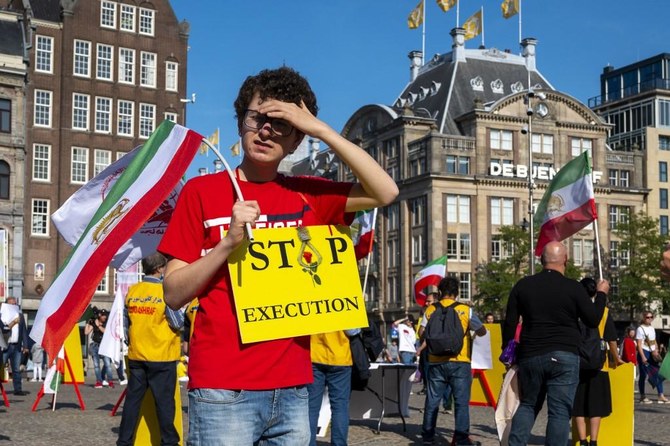
DUBAI: The United Nations human rights office on Friday condemned an alleged spree of 28 executions in Iran, including several prisoners from minority groups, and called on Tehran to halt the hanging of an ethnic Baluchi man.
Iran has often faced criticism from world bodies and Western human rights group for its rights record and high number of executions — the world’s highest after China, according to Amnesty International. Tehran has dismissed the criticism as baseless and due to a lack of understanding of its laws.
“#Iran: We strongly condemn the series of executions – at least 28 – since mid-December, including of people from minority groups,” the UN human rights office said on Twitter.
“We urge the authorities to halt the imminent execution of Javid Dehghan, to review his and other death penalty cases in line with human rights law,” it added.
There was no immediate official Iranian reaction to the UN statement on Friday, the weekend in the country.
Dehghan was sentenced to death after being convicted “following a grossly unfair trial” of belonging to an armed group and involvement in an ambush that killed two Revolutionary Guards, Amnesty International said.
“The court relied on torture-tainted ‘confessions’ and ignored the serious due process abuses committed by Revolutionary Guards agents and prosecution authorities during the investigation process,” Amnesty said.
Iran’s Sistan-Baluchestan province borders on Afghanistan, the world’s biggest producer of opium, and Pakistan. The area has long been plagued by unrest from drug smuggling gangs and separatist militants. The population of the province is mostly Sunni Muslim, while the majority of Iranians are Shi’ites.
On Thursday, state media said an Iranian member of Daesh was executed in southwestern Khuzestan province, home to many of Iran’s ethnic Arabs, for taking part in an attack that killed two paramilitary Basij militiamen.


![]()

UN condemns Iran execution spree, worried about minorities
Short Url
https://arab.news/4h2h3
UN condemns Iran execution spree, worried about minorities
- Iran has often faced criticism for its rights record and high number of executions
- “Iran: We strongly condemn the series of executions,” the UN human rights office said


Latest updates


Recommended


© 2026 SAUDI RESEARCH & PUBLISHING COMPANY, All Rights Reserved And subject to Terms of Use Agreement.