- Sindh province has filed review petition against Supreme Court order to release all four men charged with American journalist Daniel Pearl’s 2002 abduction and murder
- To a question about whether it was possible that Sheikh could be released, attorney general Khalid Javed Khan told Arab News Pakistan: “I doubt it”
ISLAMABAD/KARACHI: The government of Pakistan’s Sindh province has filed a review petition against a “split judgement” by the Supreme Court to order the release of all four men, including British-born Ahmad Saeed Omar Sheikh, originally arrested and charged with American journalist Daniel Pearl’s 2002 abduction and murder, the Sindh prosecutor general said on Friday, with the attorney general saying he doubted Sheikh would be set free.
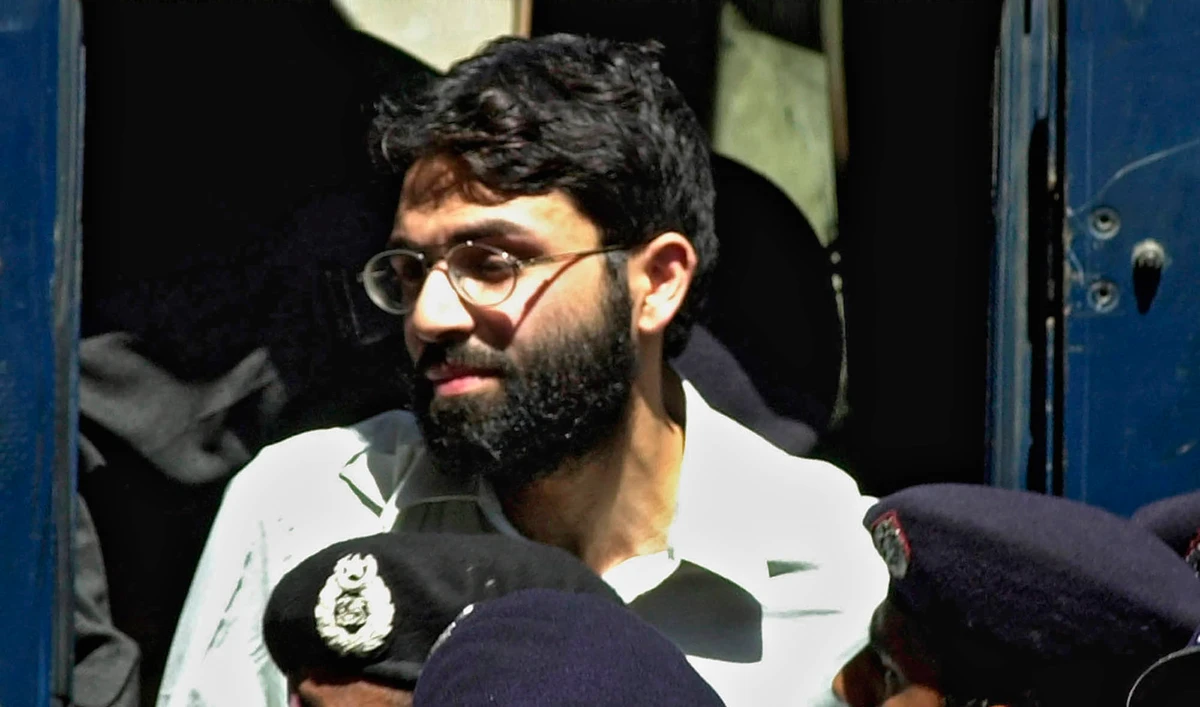
Sheikh was sentenced to death and three other suspects to life in prison in 2002 for their roles in the plot to kill Pearl, a 38-year-old Wall Street Journal journalist. Sheikh was convicted of helping lure Pearl to a meeting in Pakistan’s southern port city of Karachi in 2002, during which he was kidnapped.
Last April, however, a lower court acquitted all four men in a shocking turn in the 18-year-old case.
The acquittal was appealed separately in the Supreme Court by Pearl’s family and the Sindh government. Both appeals were rejected on Thursday by a three-judge bench, headed by Justice Mushir Alam, that also ordered Sheikh be released. The decision was two-to-one.
Sindh prosecutor general Syed Faiz Shah confirmed to Arab News that a review petition against Thursday's judgement had been filed by the provincial government.
“Sindh will be filing against the split two-one judgement of the supreme court in the Daniel Pearl case,” Murtaza Wahab, a Sindh government spokesperson and advisor on law told Arab News. “We will argue against the split decision.”
“The prosecutor general Sindh has filed the review against the apex court’s verdict and it’s up to the court now to decide on it,” the office of the attorney general for Pakistan told Arab News on Friday.
To a question about whether it was possible that Sheikh could be released, attorney general Khalid Javed Khan said: “I doubt it.”
Late on Thursday, the Pakistan government, through the office of the attorney general, had said it fully supported the Sindh government with regards the Pearl case and would file at the earliest a “petition seeking review and recall of the order of acquittal passed by the Supreme Court.”
US Secretary of State Antony Blinken has said the United States recognized past Pakistani actions to hold Sheikh accountable and appreciated that he currently remained detained under Pakistani law.
“We take note of the Attorney General’s statement that he intends to seek review and recall of the decision,” Blinken said in a statement. “We are also prepared to prosecute Sheikh in the United States for his horrific crimes against an American citizen.”
But Sheikh’s lawyer told Arab News there was no chance his client could be extradited to the US or tried there.
“Under what provision they [US] want him [Sheikh] extradited, for what offense and on what charge,” said Mahmood A. Sheikh, who is not related to his client. “This is not a trial which was done behind the back of the US government. The US participated in this trial by sending a contingent of FBI officers to Pakistan who along with the police investigated the case. They appeared as witnesses in the trial court.”
He also said there could be no “double jeopardy” under Pakistani law.
“If a person has been acquitted or convicted after a due trial in Pakistan, he cannot be charged and tried for that offense again,” the lawyer said. “Similar provision is available in the US constitution ... So the United States government may have a desire and wish to lay its hands on this person, but this won’t happen.”
Ashtar Ausaf Ali, a senior Supreme Court lawyer and former Attorney-General for Pakistan, said since one judge on the three-member bench had given a dissenting view, “there are chances of a legal remedy" for the petitioners.