

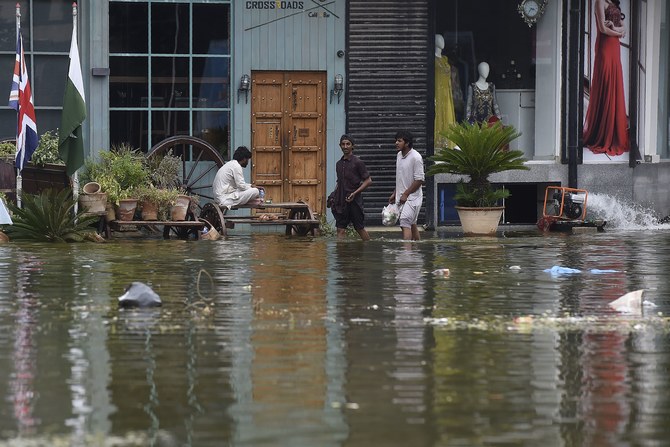

ISLAMABAD: A German think tank that works on environmental issues in its latest report has described Pakistan as the eighth most vulnerable country to climate change, having witnessed 173 extreme weather events and suffered an estimated loss of $3.8 billion as a consequence between 2000 and 2019.
Germanwatch, in its latest briefing paper, the Global Climate Risk Index 2021, released on Monday, warned that “impacts from extreme-weather events hit the poorest countries hardest as these are particularly vulnerable to the damaging effects of a hazard, have a lower coping capacity and may need more time to rebuild and recover.”
The report declared Pakistan as one of the countries that were “recurrently affected” by extreme weather patterns, while government functionaries in Islamabad said the international community should realize the climate threat Pakistan had been facing for the last several decades.
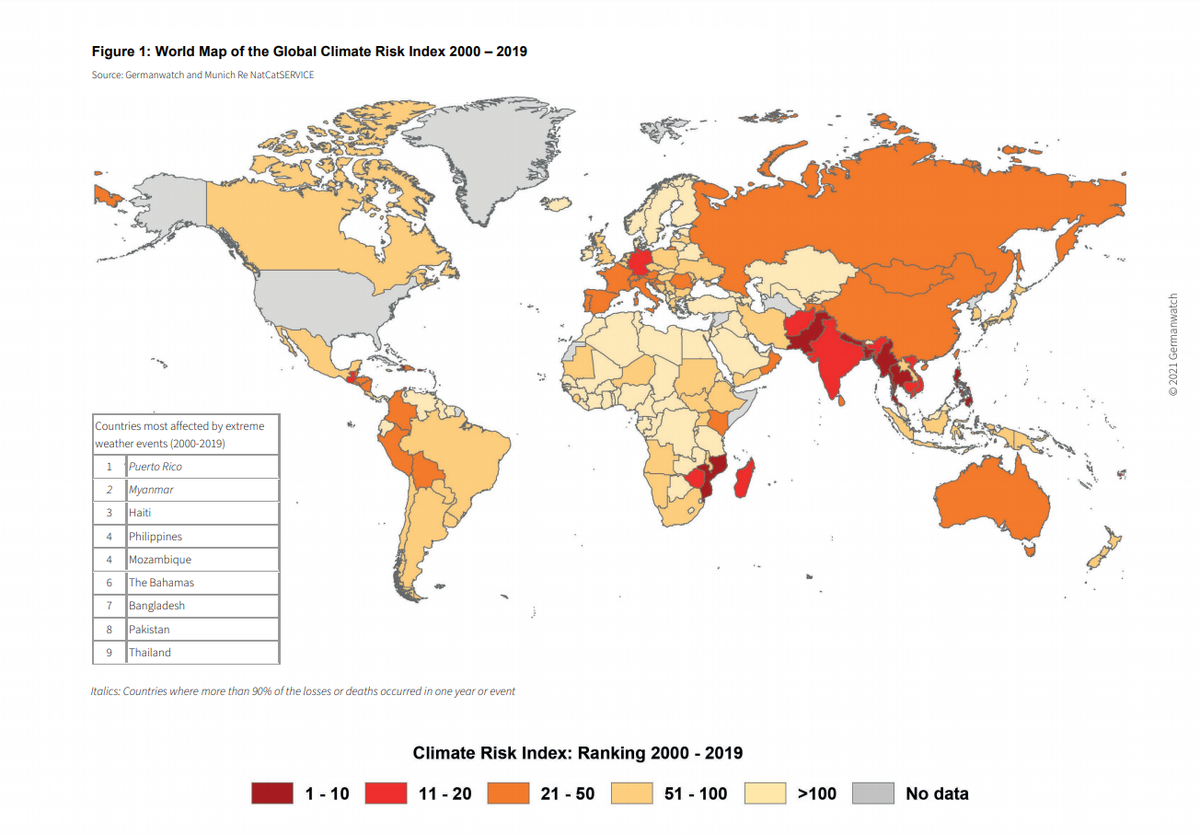
World Map of the Global Climate Risk Index 2000 - 2019. (Courtesy: Germanwatch)
With less than one percent of global carbon emissions, Pakistan has been consistently on the climate risk index and is now part of a unique category of countries — along with Haiti and the Philippines — which have been on the yearly as well as the long-term climate risk index.
“This just amplifies the climate threat that Pakistan faces — not just as a one-off catastrophe but as a continuously amplifying threat,” Malik Amin Aslam, who advises Prime Minister Imran Khan on climate change, told Arab News on Tuesday.
In terms of economic losses of $3.8 billion, Pakistan is ranked third over the last 20-year period.
“What this means is that our economy is constantly at risk of climate catastrophes,” Aslam said. “This is not just an environmental challenge but an issue impacting our economy, human health, agriculture and ecosystem.”
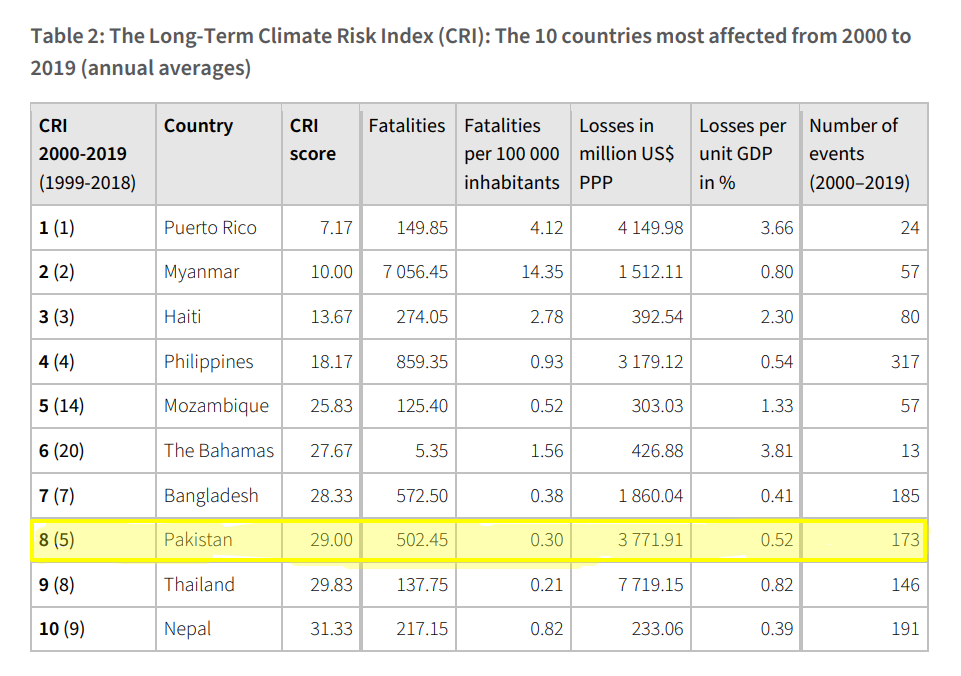
The long-term climate risk index. (Courtesy: Germanwatch)
Pakistan’s adaptation needs range between $7 billion and $14 billion per annum, Aslam said, adding that this proved a “realistic estimate” over the last decade with the increasingly adverse impacts of climate change.
He said the global climate finance infrastructure should make sufficient funds available to Pakistan to help the country “shift toward a low carbon trajectory growth” and meet adaptation requirements.
Under the 2015 Paris climate deal, wealthier nations are supposed to provide $100 billion every year to help poorer states mitigate temperature rises and adapt to changing climate. However, the recent study said the true amount of funding available to developing countries for climate action was vastly lower.
Listing the government’s initiatives to deal with the challenge, Aslam said it was investing a large amount for forestry under a ten billion tree "tsunami" project along with shifting 60 percent of the energy mix towards clean renewables and e-mobility transition targeting 30 percent by 2030.
“All of this is self-financed, and clearly shows the political commitment of our government to overcome the challenge,” he said.
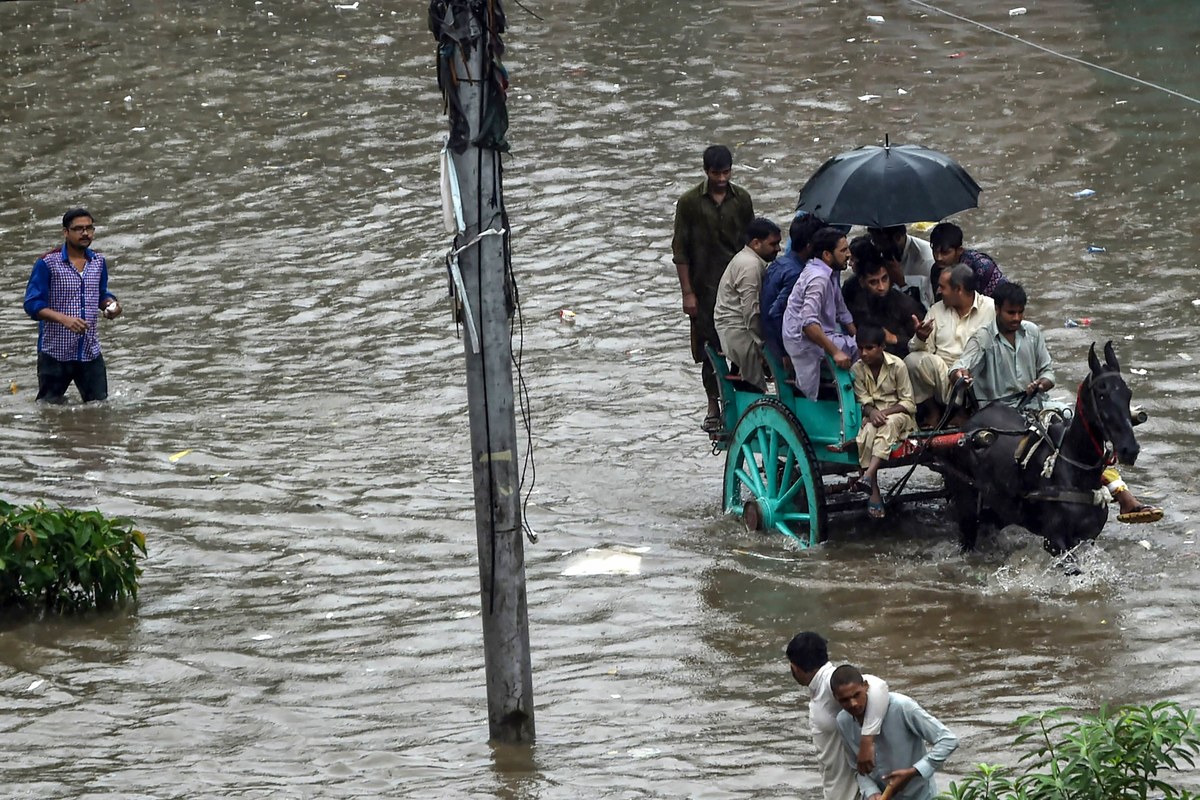
Men ride a horse-drawn cart on a flooded street during heavy monsoon rains in Lahore on September 4, 2020. (AFP)
However, climate change experts said Pakistan was happy using the “victim syndrome” and had hardly taken any practical measures to adapt to or mitigate the adverse impacts of climate change.
“This is the twentieth reminder to Pakistan that it should improve its climate resilience to protect its people and economy, but unfortunately the least is done so far,” Ali Tauqeer Sheikh, an expert on climate change, told Arab News.
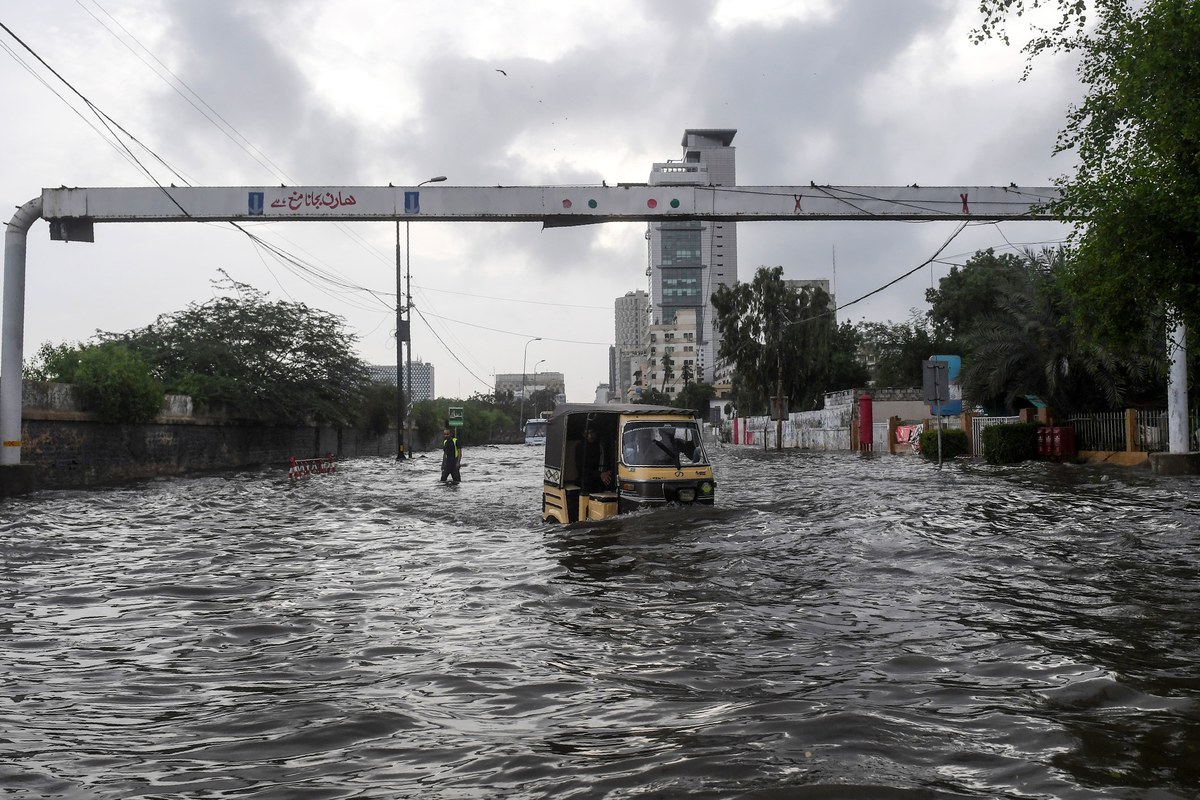
Pedestrians and motorists cross the main flooded I. I. Chundrigar Road is located in central business district of Karachi on August 28, 2020, after heavy monsoon rains triggered floods. (AFP)
He said Pakistan was seeking financial support from international institutions to deal with climate change, but was not prepared to come out of its comfort zone to formulate long-term adaptation and mitigation strategies at home.
“We have been using our ranking to play the victim card,” Sheikh added, “and just looking toward the developed world for financial support.”


