

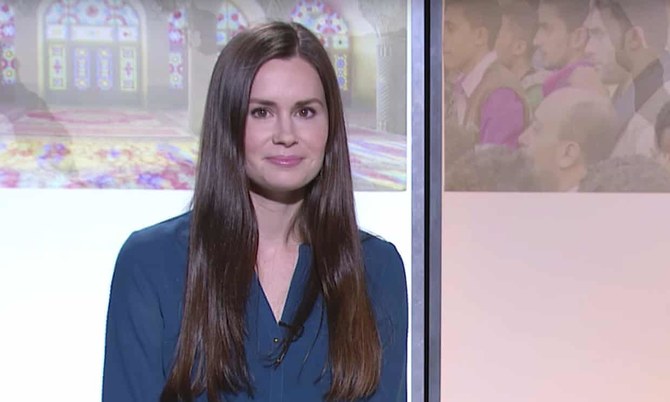

LONDON: A British-Australian academic detained in Iran for two years has spoken out two months after her release to call for freedom for other innocent people currently jailed by the Tehran regime.
Kylie Moore-Gilbert spent more than two years in jail in the Iranian capital on unsubstantiated charges of espionage, before being freed late last year.
She initially faced a 10-year sentence, but was released early as part of a prisoner swap with Iran.
Now, two months since she was released, she has highlighted the cases of a number of others who remain in Iranian detention.
She tweeted Monday: “I may be free, but there are countless innocent others still imprisoned in Iran whom deserve your support,” and tagged a number of individuals or campaigns related to Iranian detentions.
She also referenced the “many many Iranians” facing detention in the country — which, officially, has a prison population of quarter of a million people.
Among those Moore-Gilbert mentioned was Nazanin Zaghari-Ratcliffe, a British-Iranian woman who has been detained by Tehran since 2016 over highly contentious allegations of espionage and an attempt to overthrow the regime.
Moore-Gilbert also reflected on the time she spent in Iranian detention, and thanked those who had campaigned for her release.
“I can never regain the 2+ years which were stolen from me, but I am looking to the future with strength, positivity and an renewed appreciation for what I’d long taken for granted- justice and freedom,” she said.
Iran’s detention of foreigners — often on exaggerated charges relating to spying — has long been a bone of contention between the Islamic republic and the bulk of the international community.
Rights groups including Amnesty International frequently raise the issue, and in a rare joint-protest in September last year, the British, German and French governments — all of which have citizens currently detained in Iran — summoned their respective Iranian ambassadors to raise the issue.
In addition to protesting Iran’s policy of detaining foreigners, they also expressed concern about the repression of human rights activists in the country, and its harassment of media and cultural organizations.


