

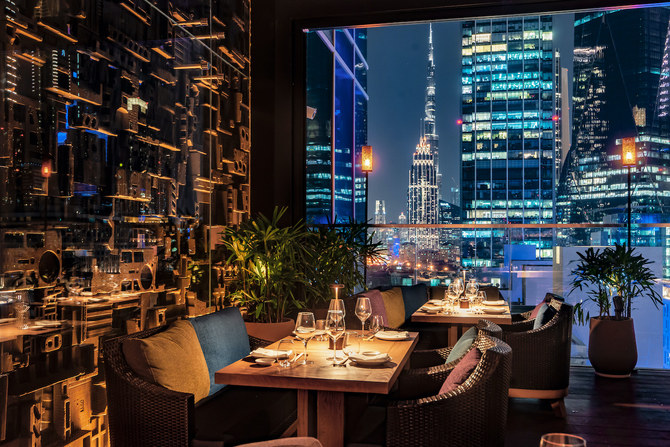
Clap arrives in Dubai from Beirut

Clap Dubai opened in Dubai International Financial Center. (Supplied)
Short Url
Updated 26 January 2021
Follow

Clap arrives in Dubai from Beirut

  • The popular upscale Japanese restaurant gets sleek new venue in DIFC

DUBAI: A quick glance through the warmly lit wooden archway that constitutes the entrance of Clap Dubai and guests might think they have arrived at a quirky, though high-end, bookstore.

Facing the elevator is a chaise longue made entirely of used paperback books save for its comfy musk-colored cushion top.

Behind it are rows of varied sake glasses, positioned as if they were prized exhibits. In the reception area on the second floor, books form the base of the reservation desk over which hangs a super-sized chandelier made of 2,100 toys — and these are just a few of the restaurant’s awe-inspiring design elements.

Walk through a short illuminated corridor and Clap Dubai, which opened in Dubai International Financial Center (DIFC) in December, extends across a sprawling rooftop terrace with stunning views across Dubai’s downtown skyline.
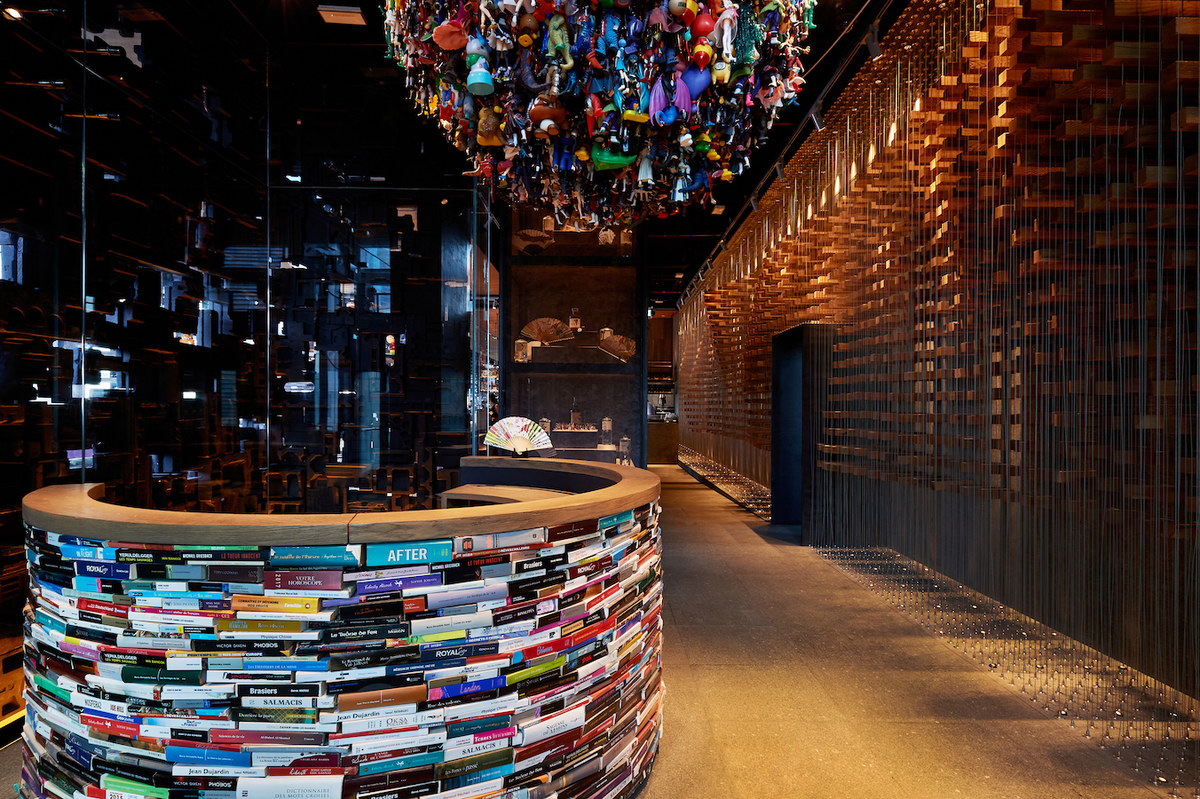


The restaurant is divided into four sections — the indoor dining area, the terrace, the bar, and ‘Ongaku,’ which means “music” in Japanese and is a separate bar area with a live DJ. (Supplied)

The restaurant is divided into four sections — the indoor dining area, the terrace, the bar, and ‘Ongaku,’ which means “music” in Japanese and is a separate bar area with a live DJ.

Each flows seamlessly into the next. In the indoor dining area guests who sit close enough can peer into Clap’s open kitchen where chefs prepare traditional Japanese dishes, while overhead is a suspended conveyer belt carrying toys and figurines, adding another playful touch to the otherwise refined venue, which is packed with solid stone and dark wood, both elements that dominate traditional Japanese architecture.
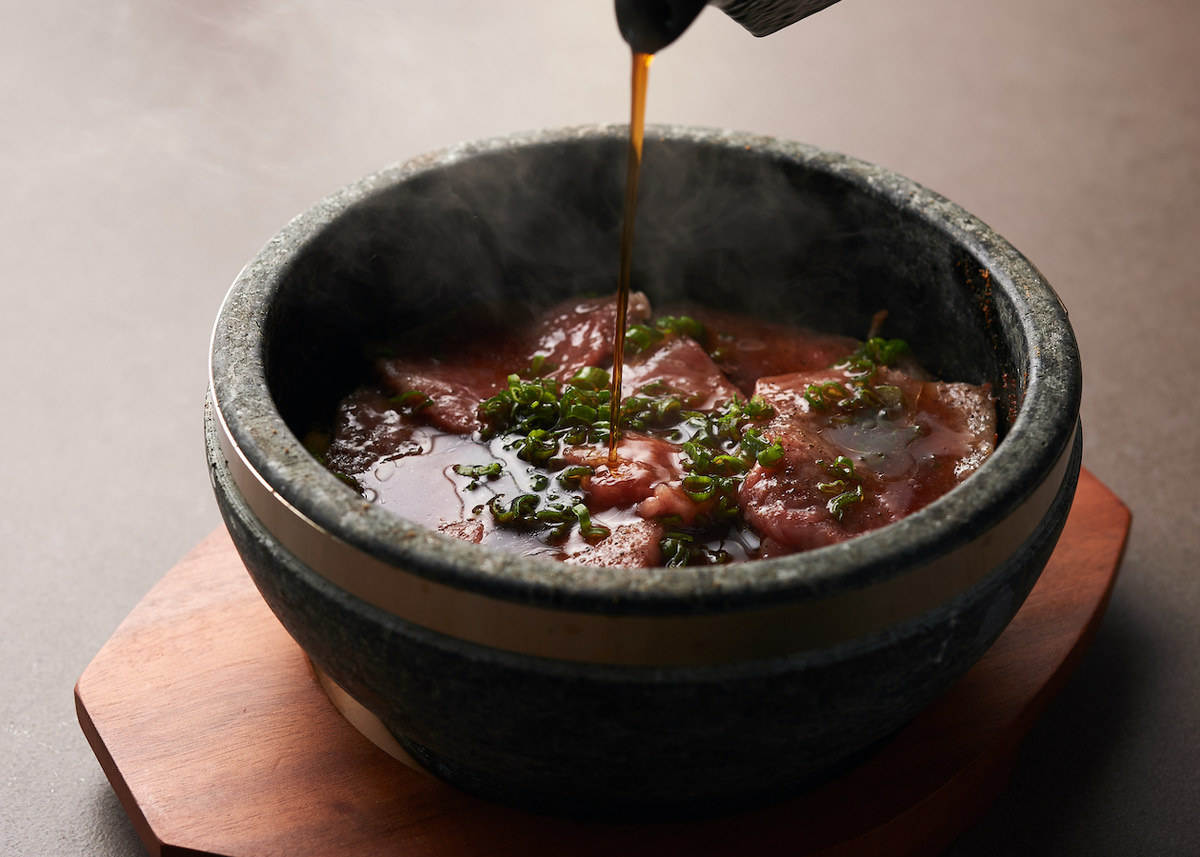


This is a stone bowl with Japanese Wagyu beef served at Clap Dubai. (Supplied)

In the weeks since its opening, Clap Dubai has quickly become one of the most popular restaurants in the area. Clap’s successful Beirut branch is temporarily closed due to the August 4th explosions and the pandemic. But the owners decided to bring its cutting-edge Japanese cuisine to Dubai on schedule anyway. Clap is scheduled to open another branch in Riyadh in the near future.

With 141 dishes on the menu, choosing what to eat isn’t easy. After whetting our appetites with some moreish spicy edamame, we selected several dishes from the ‘bites’ section of the menu: The grilled langoustine with its tangy sweet-and-sour tomato shiso salsa came with its split shell elegantly arranged, and the crispy rice topped with salmon — five bite-sized textural delights bursting with flavor thanks to the masago and spring-onion sauce, perfect for sharing. 

Next came a trio of raw dishes — scallop sashimi, sea bass sashimi, and wagyu beef tartare. The latter was the highlight; served on a bed of crispy nori chips and topped with gold leaf, the capers and the pickled cucumber added the perfect amount of acidity to cut through the buttery beef — a dish so flavorsome and diverse in texture it will have you returning to Clap for more.
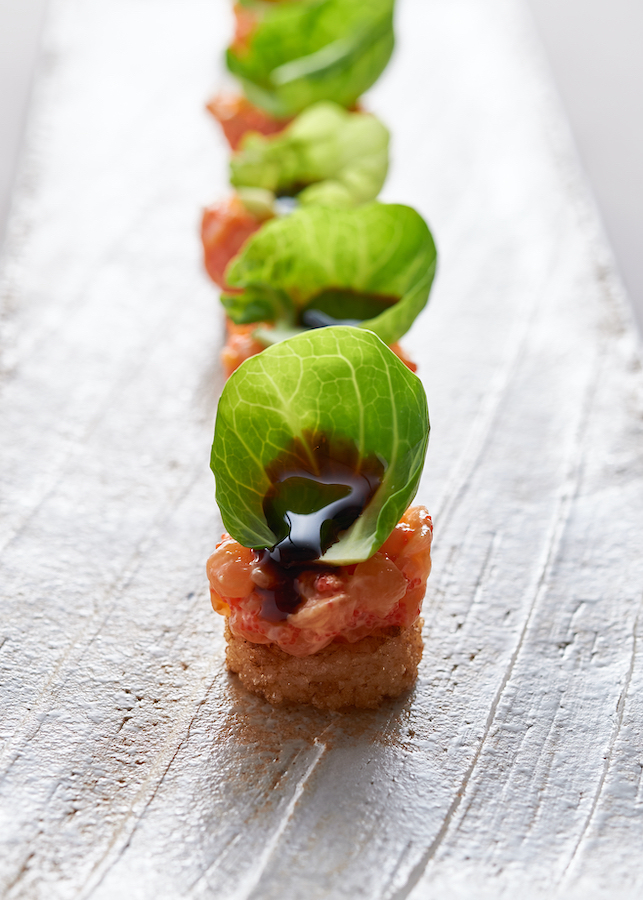


Salmon crispy rice is served at Clap Dubai. (Supplied)

The sashimi was also delicious and a prime example of allowing premium ingredients to shine. This was especially the case with the scallops, with the avocado purée garnish highlighting their natural sweetness. The shrimp gyoza came highly recommended.

The griddled and steamed parcels held a delicate filling that was perfectly complemented by the accompanying sweet-and-sour tomato salsa. We ended the meal with a hijiki spicy tuna roll and the “Black Garden,” — the restaurant's signature vegetarian roll. While the former is a well-executed classic, the latter is a great example of how dishes that cater to diners with plant-based or gluten-free dietary requirements can still be packed with flavor.

It may be located amidst an already glittering A-list line-up of restaurants in DIFC, but Clap Dubai still stands out for the quality of its food, its ambiance, and its magical rooftop.

Arabic calligraphy: Ancient craft, modern art
For the Saudi Ministry of Culture's Year of Arabic Calligraphy in 2020/21, we take an in-depth look at how the craft has developed from ancient to modern times.

Enter


keywords

Ramadan routines around the Kingdom 

Updated 26 February 2026
Follow

Ramadan routines around the Kingdom 

RIYADH: Saudi Arabia is home to a diverse array of Ramadan customs, with each region boasting time-honored traditions. Here  is how the holy month is celebrated in various parts of Saudi Arabia.

NAJD 

One of the most significant Ramadan traditions in parts of Najd is Isha Al-Walidayn (the ‘parents’ dinner’), in which families prepare meals that are shared with relatives, neighbors and those in need. Often organized by neighborhood groups, the gatherings take place during iftar or after taraweeh. Families either invite relatives, neighbors and passersby to share the meal at home or send dishes to surrounding households and those in need. 

While rooted in charity, the tradition is equally about memory and community, offering a way to honor loved ones while strengthening social ties.  

In places including Qassim, the practice may be repeated several times throughout the month. The custom has been passed down through generations and remains part of Najd’s social fabric, reflecting the family-centered rhythm of Ramadan in the area.  

Hajar Alqusayer 

HIJAZ 

For more than a century, the chant of “Sidi Shaheen” has echoed through the narrow alleys of Madinah, marking the approach of Ramadan and signaling one of Hijaz’s most cherished folk traditions. Observed in the second half of Sha’ban — the month preceding Ramadan — the custom sees groups of boys walking through neighborhoods, singing traditional verses in celebration of the holy month’s imminent arrival. The practice remains particularly strong in Madinah, though it is also known across the wider Hijaz region. 

As part of the tradition, children carry a small container known as a quff, used to collect sweets, nuts and coins offered by households they visit. Moving from door to door, they chant in unison, their songs met with open doors and generous smiles. 

In preparation, families stock up on treats — particularly nuts and traditional sweets such as mushabak (pictured) — ensuring they are ready to share in the joy. 

Nada Hameed 

EASTERN PROVINCE 

Gargee’an is a traditional festival which is primarily celebrated mid-Ramadan in Gulf countries; specifically Kuwait, Bahrain, Iraq, the UAE, and in Saudi Arabia’s Eastern Province. It is not commonly observed in other parts of the Kingdom.  

Traditionally, boys in crisp white thobes and girls adorned in intricate jalabiyas go door-to-door in their neighborhoods and collect sweets and goodies in their handwoven baskets. It is a chance for them to reconnect with the community and spread colorful cheer. 

In recent years, however, the King Abdulaziz Center for World Culture (Ithra) in Dhahran has staged its own Gargee’an, providing candies for the kids as well as numerous indoor and outdoor activities for youngsters of all ages — including the young at heart — alongside performances of traditional folk songs and other live shows. 

The main plaza at Ithra, the Library and Energy Exhibit will each have Instagram-worthy moments. Entry to the center is free, though certain events — such as those at The Children’s Museum — require you to purchase tickets on the premises. 

Jasmine Bager 

JAZAN 

In Jazan, Ramadan is scented with wood smoke and freshly baked bread. Across villages and coastal towns, families still use the traditional mifa — a clay oven — to prepare corn and millet breads to eat at iftar. A staple of the season is mafalt (pictured), a creamy mixture of flour and milk often eaten at suhoor, valued for its simplicity and ability to sustain you through long fasting hours.  

Another distinctive feature of Ramadan in Jazan is the communal spirit of preparation. Neighbors exchange dishes before sunset, ensuring no table is without the region’s signature flavors. Evenings often extend into open-air gatherings where stories are shared and elders recount how Ramadan was observed generations ago. In Jazan, the holy month is less about extravagance and more about preserving culinary heritage and close-knit community bonds.  

Rahaf Jambi 

HAIL 

Since Ramadan this year is taking place while the weather in Hail is still relatively cool, it has been common to see dozens of people gathering along the banks and beds of nearby valleys — particularly in Mashar, Tuwaren, and Naqbin in the late afternoon, setting up seating and making arrangements for iftar. 

Coffee and tea are typically brewed over a fire, and participants often bring homemade dishes including lamb or chicken soups, vegetable or meat pastries, and Hail-style keubaiba —square-folded vine leaves filled with rice and a blend of spices, including cumin, black pepper, and dried lime. Sometimes, participants pool resources to buy a young lamb to eat. The liver is seasoned and cooked with onions, while the rest of the meat is prepared with rice for consumption at suhoor. 

Between iftar and suhoor, people socialize or play volleyball — a favorite activity for many Saudis during Ramadan. 

Hebshi Alshammari 

QATIF 

On the fifteenth night of Sha’ban, and again in the middle of Ramadan, children run through the streets of Qatif in traditional dress, going from house to house in celebration of Nasfa, a holiday celebrated in cities across the Arab world, but, in Saudi Arabia, only in Qatif (although it is practically identical to Gargee’an).  

“This celebration is not a fleeting ritual; it is a collective memory, a bridge connecting past to present,” Ismail Hejles, a Saudi researcher of traditional architecture from Qatif, told Arab News. “It teaches that religion was never meant to be stern, and that joy can be part of worship when it is pure.” 

Historians suggest the custom of children going door to door to receive gifts developed in tightly knit urban neighborhoods, where strong community bonds allowed the practice to flourish. And Nasfa is not just a distribution of sweets; it is a distribution of joy.  

“On that night, homes are equal,” Hejles said. “The rich give, and the poor give. The child is not asked who they are or which family they belong to.” 

Tamara Aboalsaud