Pakistani man performs jaw-dropping stunts despite polio impairment

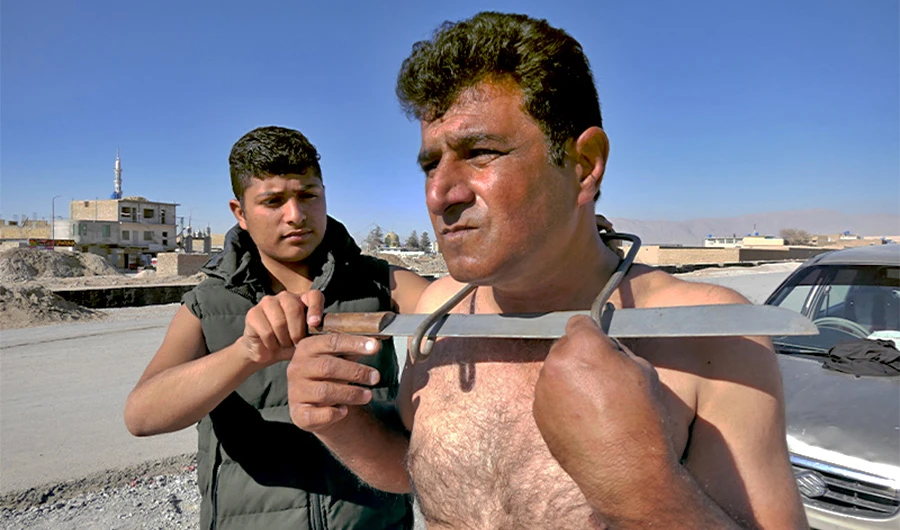
Stuntman Muhammad Usman, a polio sufferer, pictured with his son in Quetta, Pakistan, on January 17, 2021 (AN Photo by Saadullah Akhter)
Short Url
Updated 21 January 2021
Follow

Pakistani man performs jaw-dropping stunts despite polio impairment

  • Muhammad Usman was infected with polio when he was six years old which caused paralysis of his left leg
  • Not being able to walk properly has not deterred Usman from pursuing his dream of performing dangerous stunts at public festivals

QUETTA: Stuntman Muhammad Usman can jump over five cars on a motorcycle and pull a car with a chain tied to a sharp knife hung around his neck.
There are many showmen in Pakistan who can perform such stunts, but Usman, from Pakistan’s southwestern Balochistan province, is special: his left leg was virtually paralyzed after he contracted polio aged six years. Now the 38-year-old leads an active life as a stuntman, saying he never allowed the crippling virus to keep him from pursuing his dreams.
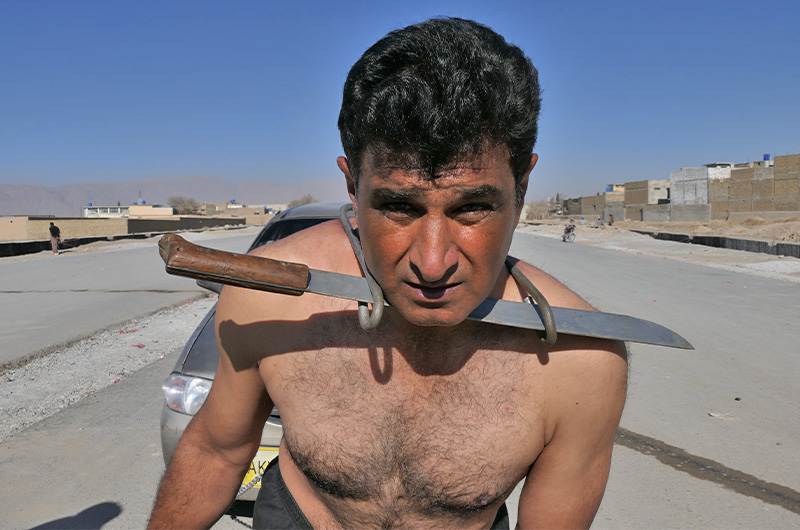


Stuntman Muhammad Usman, a polio sufferer, pulls a car with a chain tied to a sharp knife hanging around his neck in Quetta, Pakistan, on January 17, 2021 (AN Photo by Saadullah Akhter)

“One day I went with my friends to the historic Sibi Mela where I saw various stuntmen performing in the festival,” Usman told Arab News in Quetta. “I asked a man whether I could perform these stunts but he looked at me and replied sarcastically: how can a disabled man become a stuntman.”
That day, Usman said, he resolved to prove his detractors wrong, joined the ‘Power Show Club’ in Quetta’s Nawa Killi neighborhood, and began training under stunt master Shaira Bangulzai.
Pakistan last week launched a nationwide vaccination campaign against polio amid tight security, hoping to eradicate the crippling children’s disease this year. Pakistan had hoped to eliminate polio back in 2018, when only 12 cases were reported. But in the years since there has been an uptick in new cases.
Pakistan and neighboring Afghanistan are the only two remaining countries in the world where polio is endemic, after Nigeria was last year declared free of the wild polio virus.
Usman said he never received polio drops as a child because his illiterate parents were unaware of the dangers posed by the virus.
“But I have been vaccinating my six children with polio drops during every single anti-polio campaign in Quetta,” the stuntman said.
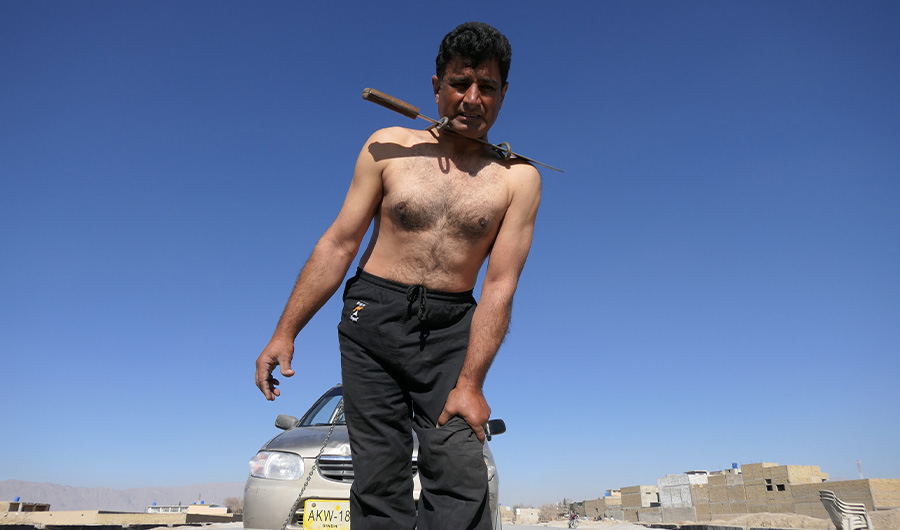


Stuntman Muhammad Usman, a polio sufferer, pulls a car with a chain tied to a sharp knife hanging around his neck in Quetta, Pakistan, on January 17, 2021. (AN Photo by Saadullah Akhter)

Bangulzai, who has been Usman’s teacher for around five years, said he had more than 190 students across Balochistan but Usman was the most “loyal and keen” among them. 
“When Usman joined my club and asked me to teach him, I couldn’t refuse him because I didn’t want to break his hopes,” the instructor told Arab News.
In one memorable instance in 2015, Bangulzai said Usman had to replace him at the Sibi Mela after he had to pull out of the event at the last minute to take care of an ailing relative.
“My student [Usman] performed ... with immense confidence and accuracy in what was his first public performance,” the teacher said.
Stunts is not all Usman does.
He is also the driver of a passenger coach and a rickshaw, a performing artist for TV and theater shows, and a comedian.
“What else could I wish from my god?” he said, expressing gratitude for the “full” life he had led despite being a polio sufferer.
Usman is now training his eldest son who at the age of sixteen is already performing at small festivals.
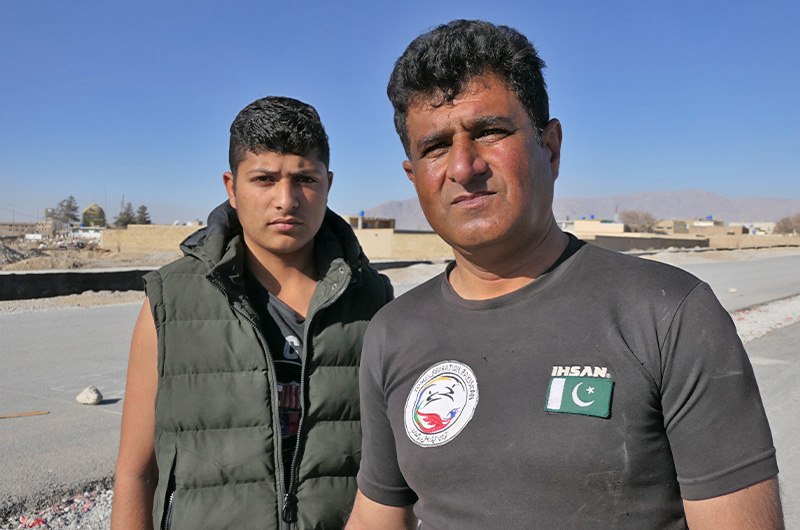


Stuntman Muhammad Usman, a polio sufferer, poses with his son in Quetta, Pakistan, on January 17, 2021 (AN Photo by Saadullah Akhter)

“I want my son to become a famous stuntman in Pakistan,” Usman said. “Because after my death, people will know him by my name.”

Pakistan says economy stabilizing as it looks to 2026 growth

Updated 4 sec ago
Follow

Pakistan says economy stabilizing as it looks to 2026 growth

  • Inflation averages 5 percent, remittances hit $16.1 billion as government cites signs of recovery
  • IT exports, industry and development spending highlighted as focus shifts to next year’s targets

ISLAMABAD: Pakistan’s economy has shown signs of stabilization in the first half of the current fiscal year, Planning Minister Ahsan Iqbal said on Thursday, as the government looks ahead to sustaining growth momentum into 2026 after several years of economic volatility.

Briefing the media on economic performance through November, Iqbal said key indicators including inflation, industrial output, exports, remittances and fiscal revenues had improved, creating what he described as a more stable base for forward planning.

Pakistan has spent much of the past two years navigating high inflation, external financing pressures and fiscal tightening under an IMF-backed reform program. While growth remains modest, officials say recent data suggests the economy has moved out of crisis mode and into a consolidation phase.

“During July to November of fiscal year 2025–26, stability has returned to Pakistan’s economy,” Iqbal said, adding that average inflation during the period stood at around 5 percent, compared with 7.9% last year, easing pressure on households and businesses.

Large-scale manufacturing posted growth of 4.1 percent, which Iqbal described as “clear evidence of recovery in industrial activity.”

The planning minister said government revenues also improved, with Federal Board of Revenue collections reaching Rs4,733 billion ($16.9 billion) during July–November, reflecting a 10.2% increase.

External inflows remained resilient, with workers’ remittances rising 9.3% to $16.1 billion, while IT services exports increased 19% to $1.8 billion over the same period, he said.

On the public investment side, Iqbal said Rs196 billion ($700 million) were released under the development budget during the quarter, of which Rs92 billion ($329 million) had already been spent. He added that cost rationalization in development projects between July and October saved Rs3.3 billion ($11.8 million) billion in public funds.

In November, the planning minister said, the Central Development Working Party approved 10 development projects, while six major schemes were referred to the Executive Committee of the National Economic Council.

Iqbal said the approved projects were expected to create 994 immediate jobs, with nearly 24,859 direct and 40,873 indirect employment opportunities projected overall.

Looking ahead, he said all future development schemes would be required to comply with green building codes to ensure environmental protection and sustainable growth.

He also highlighted skills and innovation initiatives, saying that under the “Uraan Pakistan” program, partnerships with Oxford and Cambridge universities were being pursued to promote research, technology and innovation.

Under an IT industry revival plan, he said more than 20,000 young people were being trained in advanced technologies, with over 14,000 new jobs expected to be created.

The government has said maintaining macroeconomic stability while gradually lifting growth remains its central challenge as Pakistan moves into 2026, with officials emphasising disciplined spending, export growth and job creation as key priorities.