KARACHI: When expecting parents Shaheen Bibi and Israr Ahmed went to a small government hospital in eastern Karachi for an ultrasound late in 2019, one of the doctors mentioned “two dots” on the scan but gave no further details.
Months later, in March last year, Shaheen Bibi gave birth to twins Aman and Ayan who had a rare congenital disorder: the boys were conjoined at the abdomen and shared several internal organs — a condition that affects only one in 250,000 births. Although there is no known cause for the conjoining, it can be diagnosed in early pregnancy through an ultrasound.
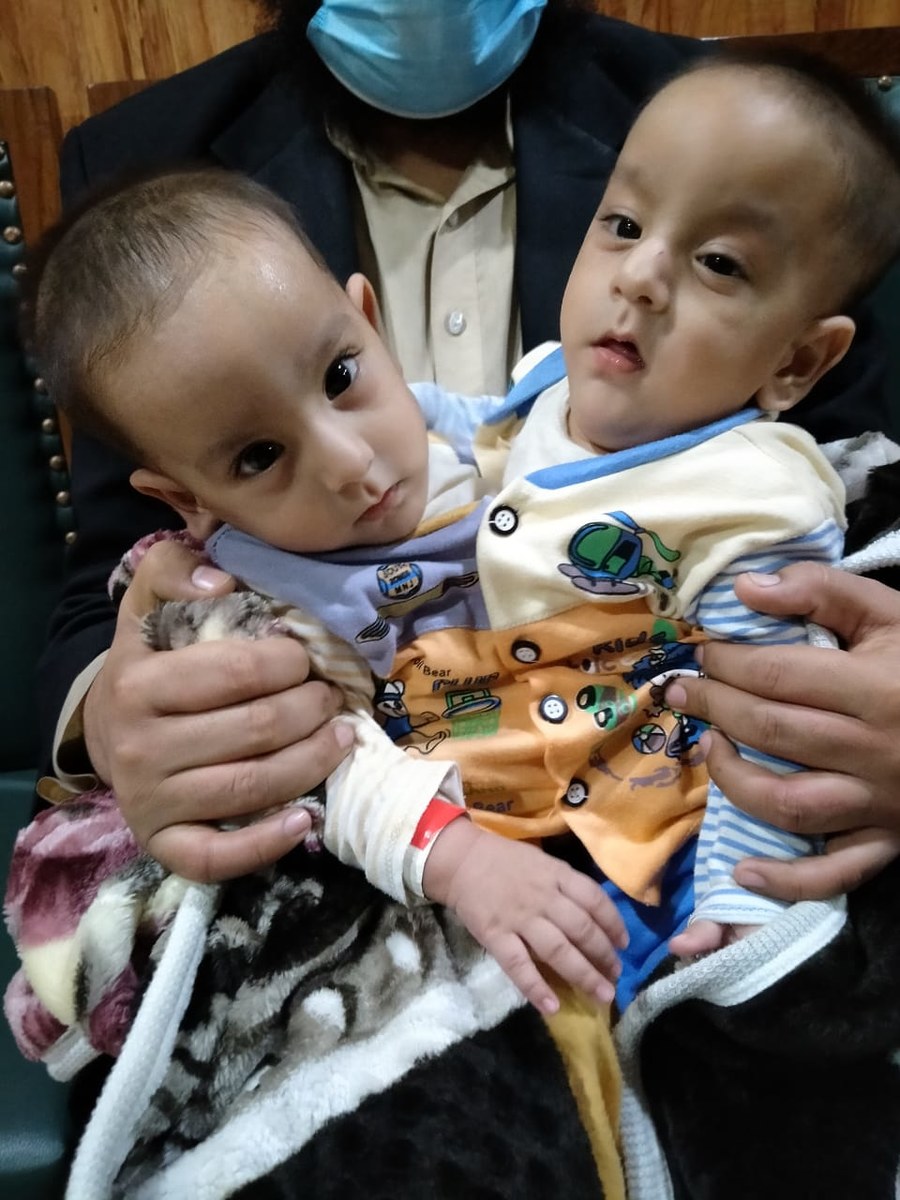
In this undated photo before their surgery, conjoined Pakistani twins, Muhammad Ayan and Muhammad Aman are held by their father. (Photo by Sarim Burney Trust)
The surgery to separate the boys would cost millions of rupees, the poor parents were told, a sum they had no hope of ever raising — were it not for a Dubai-based businessman who paid for the procedure after an appeal by the Sarim Burney Trust International.
Last month, in Karachi’s Aga Khan Hospital, 50 doctors and hospital staff workers worked eight hours to perform one of the world’s most difficult surgeries, successfully separating the boys.
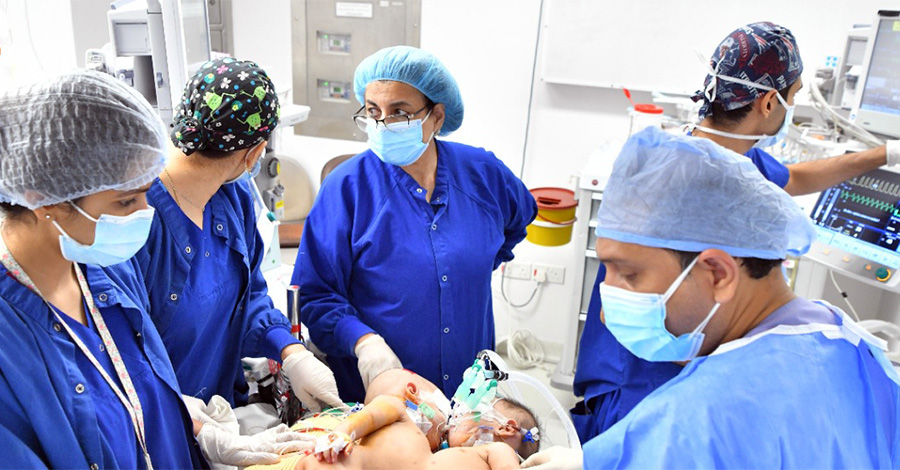
In this file photo, doctors perform surgery on Pakistani conjoined twins at Aga Khan University Hospital, Karachi on December 12, 2020 (Photo by AUHK)
“The parents were poor ... When we got to know that the treatment was possible in Aga Khan Hospital, we appealed on a television show and the appeal reached Nasser Hussain Abdullah Lootah,” Sarim Burney, chairman of the Trust, told Arab News, naming the Dubai-based businessman.
“Though I had faith my children would one day be separated, I knew I would never be able to afford such an expensive surgery,” the boys’ father, a low-paid mill worker, said.
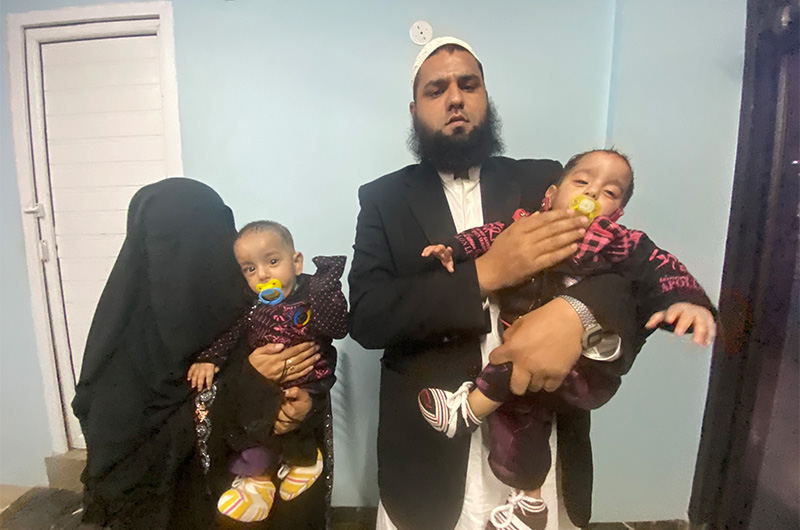
Israr Ahmed and Shaheen Bibi with their children, previously conjoined twins Muhammad Ayan and Muhammad Aman, who were separately successfully after a gruelling surgery in December last year. January 15, 2021 (AN Photo)
According to a press statement from the hospital, the twins were joined at the torso and faced each other, so a complete incision was required to flip them around.
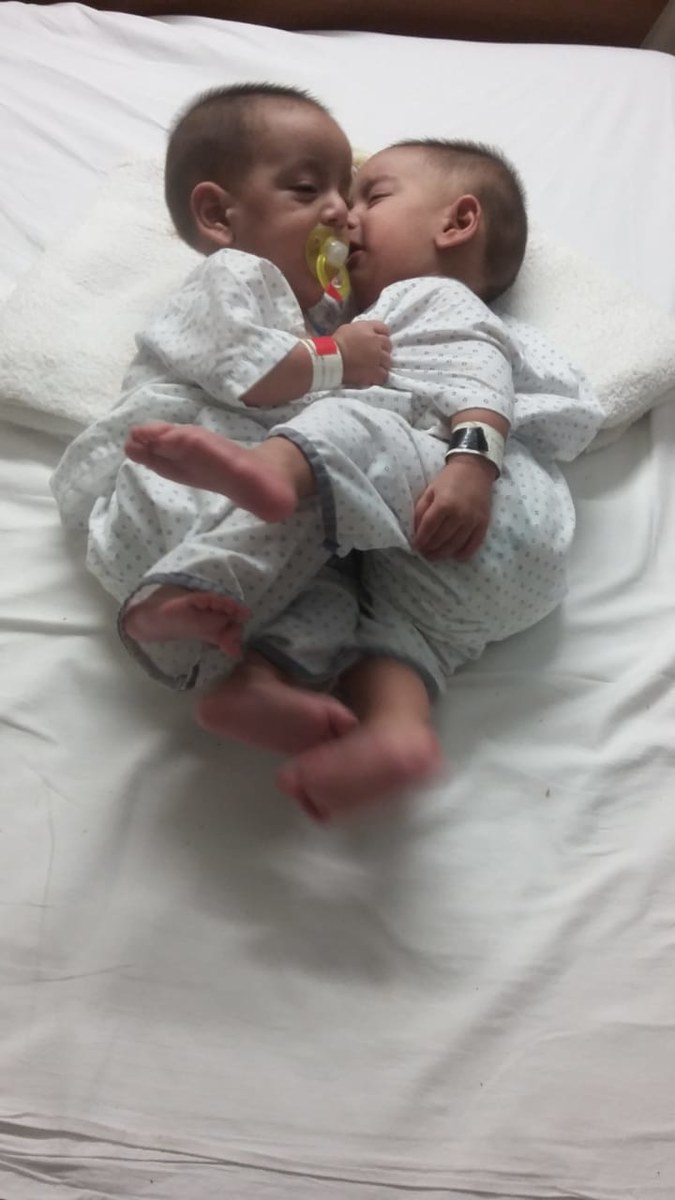
Conjoined Pakistani twins, Muhammad Ayan and Muhammad Ayan before their operation at Aga Khan Hospital (Photo by Sarim Burney Trust)
“This is a rare surgery that the hospital has performed for the second time,” Dr. Zafar Nazir, a senior pediatric surgeon at Aga Khan Hospital, told Arab News. “A tremendous amount of effort went into the rearrangement of the resources, both inside and outside the operating room. But at the end of this procedure, it was a joy to watch both the boys get a new life.”
Only 500 cases of this particular conjoining have been reported in the world to date, he said, and only 150 of them operated upon — with a 50 percent success rate.
“Such operations are very complex and the cost is very high so no parents and no hospitals can bear the cost alone,” Nazir said. “There is a great role of donors and welfare organizations, who make such surgeries possible.”
Ahmed and his wife say they are deeply grateful to the hospital, the charity and the donors for giving their boys, now 10 months old, a new life.
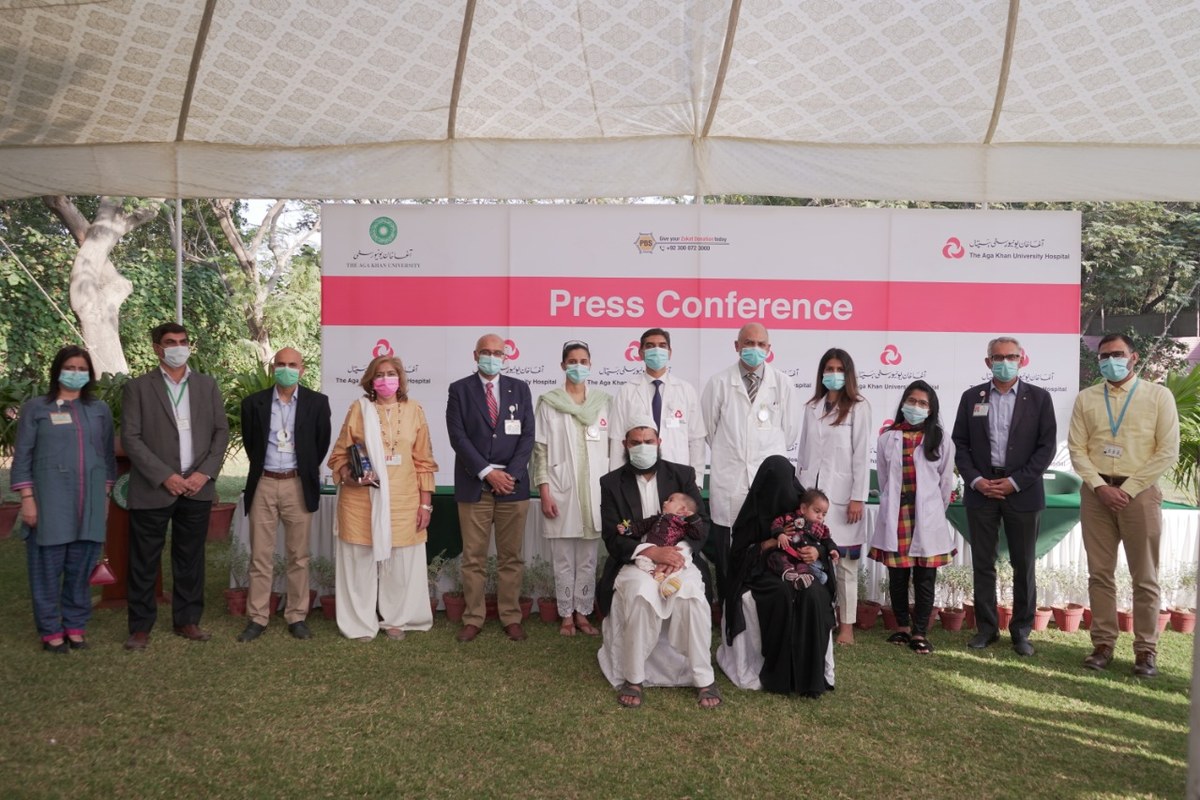
Muhammad Ayan and Muhammad Aman held by their parents in a group photo alongside the doctors of Aga Khan University Hospital on January 15, 2021 (AN Photo)
“When he [Lootah] saw my sons after the operation, he was very happy and announced that he would bear all the expenses of their education,” the father said. “My happiness knows no bounds.”
“Even happiness is too small a word,” he said, looking at his sons, his wife by his side. “When the hospital handed us our boys, I told those doctors: ‘I had brought you one body... and now I’m taking home two beautiful children.’”