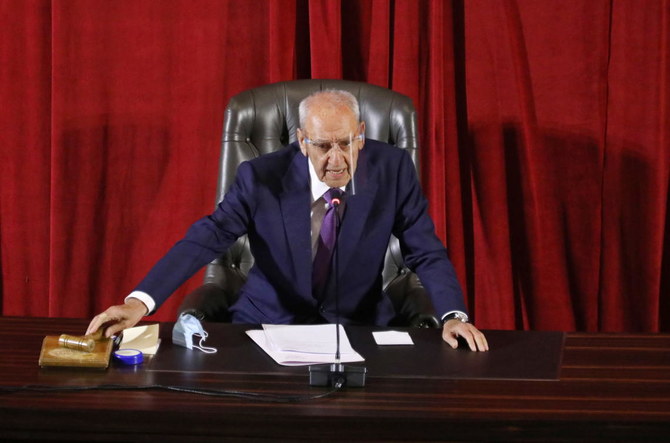
BEIRUT: Lebanon’s parliament approved a draft law allowing imports of coronavirus vaccines as the tiny nation hit a new record in case numbers Friday and more hospitals reported they were at full capacity.
The new daily toll of 6,154 cases and 44 deaths came on the second day of a nationwide 11-day curfew that the government and doctors hope will reign in the dramatic surge of the virus.
Lebanon, a country of about 6 million people, has witnessed a sharp increase of cases in recent weeks, after some 80,000 expatriates flew in to celebrate Christmas and New Year.
During the holiday season, restrictions were eased to encourage spending by expatriates amid a suffocating economic and financial crisis, the worst in Lebanon’s modern history.
On Friday, the American University Medical Center, one of Lebanon’s largest and most prestigious hospitals, said in a statement that its health care workers were overwhelmed. The hospital’s ICUs and regular coronavirus units have reached full capacity and so did the emergency room, it said.
“We are unable to find beds for even the most critical patients,” the hospital said, urging people in Lebanon to help by taking extreme precautionary measures to “overcome the catastrophe we are facing.”
Mazen El-Sayed, an associated professor in the department of emergency medicine, described the situation as “tragic,” anticipating that the next two weeks would be even more dire.
In southern Lebanon, the Ragheb Harb Hospital also said that its COVID-19 units were now. “We are working beyond our capacity. The situation is very dangerous,” the hospital said in a statement.
The curfew, which began Thursday, is the strictest measure Lebanon has taken since the start of the pandemic. But many have expressed concern the measures have come too late — many hospitals have already reached maximum capacity for coronavirus patients, some have run out of beds, oxygen tanks and ventilators while others have halted elective surgeries.
Lebanon was able to contain the virus in its early stages but the numbers started climbing after measures were eased in early July and following the massive deadly blast at Beirut’s port in August.
Following bureaucratic delays, the country now is putting hopes on vaccines that are expected to start arriving next month.
Parliament’s approval opens the way for imports of vaccines from around the world, including the Pfizer-BioNTech vaccine.
Health Minister Hamad Hassan, who is hospitalized with the coronavirus, had said that once the draft law is approved, the first deliveries of vaccines should start arriving in February.
Lebanon has reserved 2.7 million doses of vaccines from multiple international companies and 2.1 million to be provided by Pfizer, Diab’s office says.
Lebanon has registered nearly 243,000 coronavirus cases and some 1,825 confirmed deaths.


![]()

Lebanon approves law to import vaccines as coronavirus hits new record
Short Url
https://arab.news/b3d79
Lebanon approves law to import vaccines as coronavirus hits new record


Latest updates


Recommended


© 2026 SAUDI RESEARCH & PUBLISHING COMPANY, All Rights Reserved And subject to Terms of Use Agreement.