

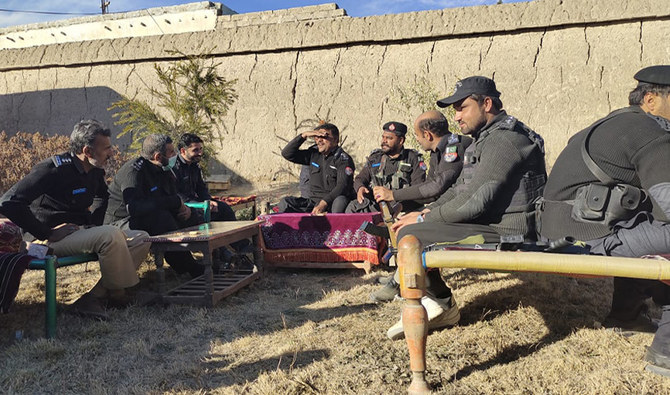

PESHAWAR: The razing of three houses in Pakistan’s northwestern tribal belt in recent weeks — a tradition abolished two years ago when the Pakistan government did away with colonial-era laws that had governed the area for over 150 years — has raised fresh questions about the state’s writ and the challenges of mainstreaming the volatile region.
In May 2018, Pakistan’s parliament voted to merge the borderlands with Afghanistan, once known as the Federally Administered Tribal Areas, into the country’s political and legal mainstream. The move gave the region’s five million residents, the vast majority of them ethnic Pashtuns, the same constitutional rights as Pakistanis living in the rest of the country.
This meant access to the civilian justice system for the tribes, and the end of the Frontier Crimes Regulation set up by British colonial masters that put each tribal region under the near-complete power of a single governor and allowed the use of collective punishment for the crimes of an individual, including destroying homes to settle disputes.
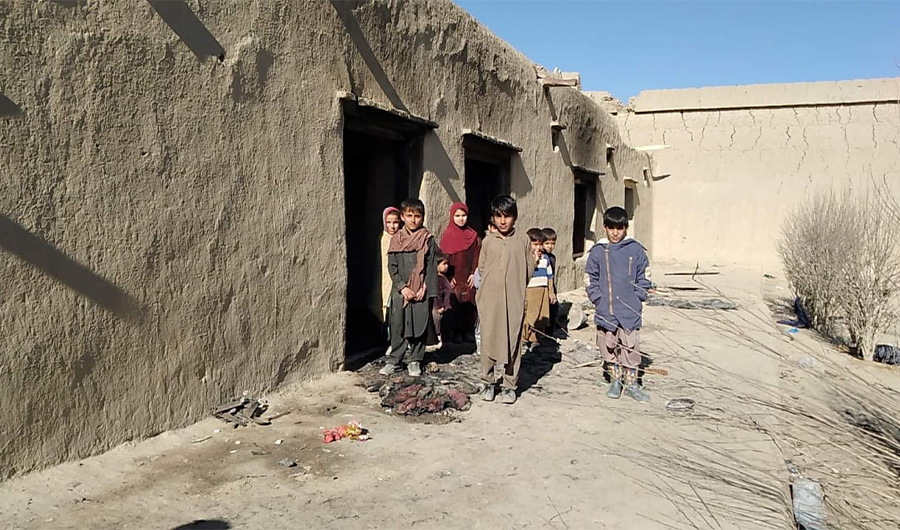
Children stand in front destroyed rooms of their house in the South Waziristan tribal district, Pakistan, on December 29, 2020. (Photo courtesy: Anwar Ali Wazir)
The changes were meant to bring relief to a region long caught between the militant groups that sheltered there, including the Pakistani Taliban and Al-Qaeda, and operations by the military to drive them out, which led to mass displacements and other abuses.
But while the region has been merged into Khyber Pakhtunkhwa, Anwar Ali Wazir, a tribal elder from the area, said “tribal traditions still dominate the law of the land” two years later.
Two incidents, one that took place in late December and another in early January, have made this all too clear.
In the first incident, after a land dispute between two tribes, a jirga ordered an armed militia to destroy two houses in Azam Warsak, a small town in South Waziristan district, on December 29, 2020.
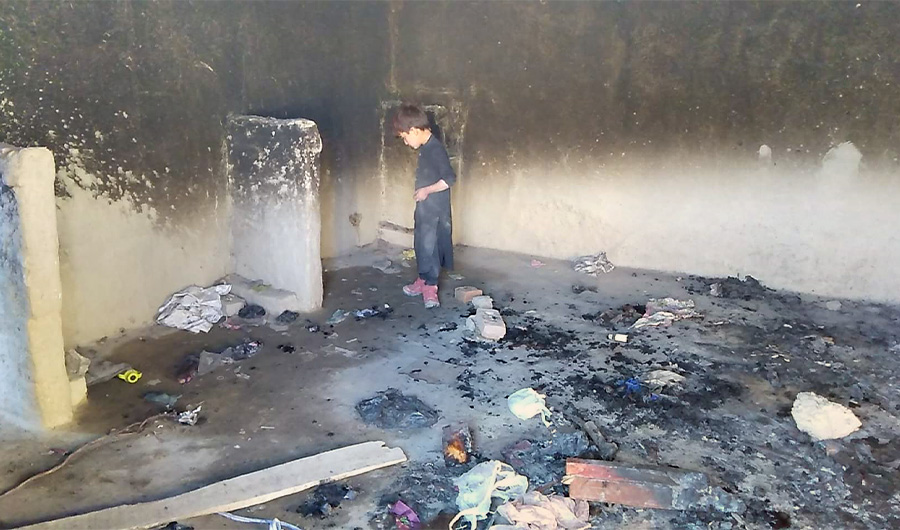
A child can be seen inside the torched room of a house in the South Waziristan tribal district, Pakistan, on December 29, 2020. (Photo courtesy: Anwar Ali Wazir)
Three days later, another tribal militia demolished a house in Mohmand district over a land dispute, leaving an entire extended family homeless.
Shaukat Ali, a top police official in the region, said officials were investigating the incidents, but it was important to abolish “archaic tribal practices.”
“While the police could not prevent these unfortunate incidents, it registered cases against individuals who led the attacks and torched the houses,” he said. “The police will also arrest all the culprits soon.”
Khan Badshah, one of the residents of a destroyed house in Azam Warsak, said he had informed the district administration and the police about the threats to his property, but they did not act in a timely manner.
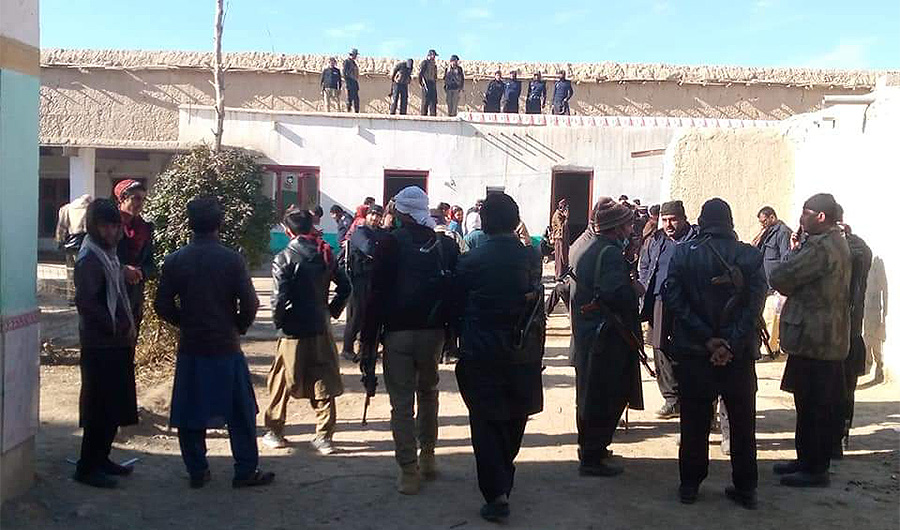
Police walks around inside the boundaries of a house destroyed by a tribal militia in the South Waziristan tribal district, Pakistan, on December 29, 2020. (Photo courtesy: Anwar Ali Wazir)
“The mob completely demolished my house and damaged my belongings, causing significant financial loss,” he said. “Luckily, my family and children were not hurt since they had taken refuge in a nearby building.”
Two decades of fallout from military operations against Taliban and other militants and more than a century of government neglect are unlikely to be undone quickly. But small steps toward progress are necessary, locals said, to end the area’s “governance nightmare.”
“After mainstreaming the tribal territories, the law of the land should be applied to these areas in letter and spirit,” Umar Wazir, a local journalist, said. “Otherwise, things will continue to get ugly.”


