

Pakistan’s Charlie Chaplin aims to spread happiness in tough times

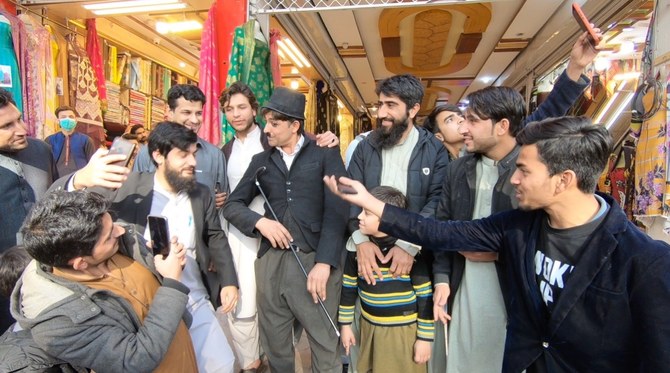
Comedian Usman Khan performs his Charlie Chaplin act outside a shop in Peshawar, Pakistan, on January 11, 2021 (AN Photo)
Short Url
Updated 15 January 2021
Follow

Pakistan’s Charlie Chaplin aims to spread happiness in tough times

  • Usman Khan performs across Peshawar in Chaplin’s trademark oversized shoes, baggy pants, cane and black bowler hat
  • He says he wants to bring smiles to a region long plagued by poverty, suicide attacks and threats from militants 

PESHAWAR: Usman Khan lives in an impoverished region of Pakistan that has witnessed decades of suicide attacks, explosions and threats from hard-line militant groups.
Now, the stand-up comedian wants to make people smile, performing across Peshawar, the provincial capital of the northwestern Khyber Pakhtunkhwa province, in Charlie Chaplin’s trademark oversized shoes, baggy pants, cane and black bowler hat.
“The sole purpose of this art is to bring a smile on the faces of people,” Khan, 30, told Arab News while roaming the streets of Peshawar. “For the past decades, Peshawar and Khyber Pakhtunkhwa have faced terrible times and I know I can’t execute as well as the great Charlie Chaplin, but with limited resources I am doing my best to spread happiness.”
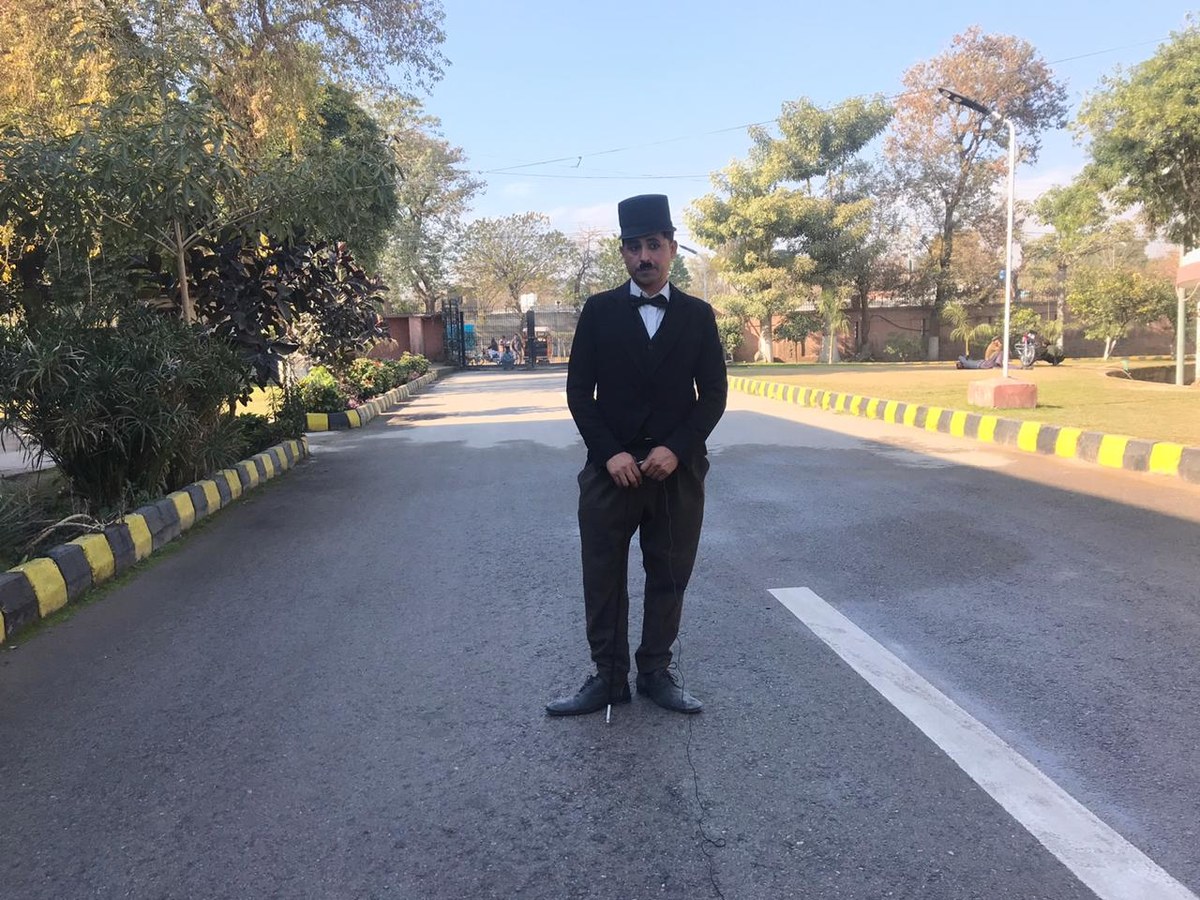


Pakistani Charlie Chaplin Usman Khan poses on a street in Peshawar, Pakistan, on January 11, 2021 (AN Photo)

He laughed and added: “I have adopted Charlie’s character and style in such a deep way that I perform even when I am sleeping. My wife has complained about this.”
Khan says he started watching Chaplin’s films from an early age and was soon able to imitate his cane and comic walk.
Now, when he roams the streets of Peshawar imitating Chaplin, people crowd around him to cheer and clap and ask for selfies.
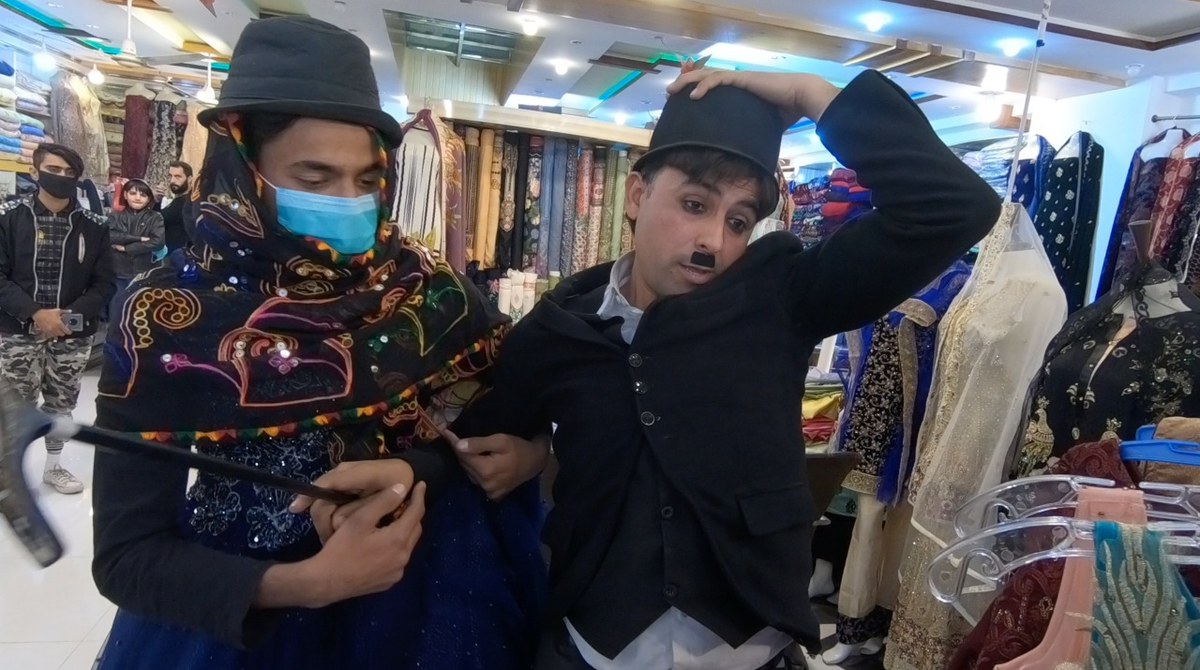


Comedian Usman Khan performs his Charlie Chaplin act in a shop in Peshawar, Pakistan, on January 11, 2021 (AN Photo)

“This man is among the few sources of smiles in the toughest times,” local shopkeeper Wali Afridi said. “Usman is now a kind of star in this area; he comes to our shops and takes what he wants and plays a few comic performances.”
Four of Khan’s friends help him with his routine. The team is now recreating many of Chaplin’s old routines on video, hoping that technology and social media will help them reach larger audiences and turn their passion for comedy into an “earning profession.”
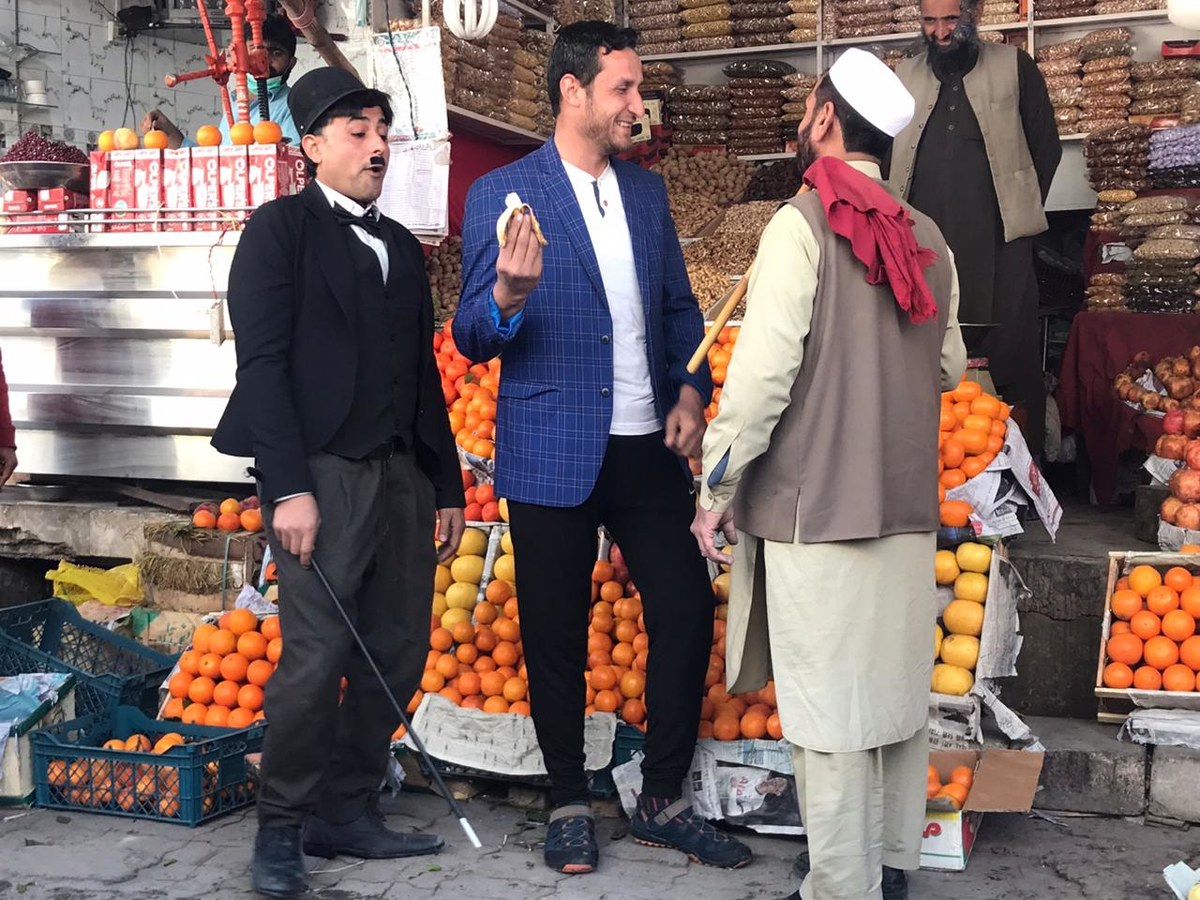


Comedian Usman Khan performs his Charlie Chaplin act outside a shop in Peshawar, Pakistan, on January 11, 2021 (AN Photo)

“Cheerful faces and crowds around us encourage us to do more funny videos,” Khan said, posing with a local for a selfie.

“Although the legendary Charlie died a few decades ago, his art of spreading happiness is fresh even today,” Rizwan Ahmad, a local at a Peshawar market, told Arab News. “Usman Khan is doing a great job; in this time of depression and coronavirus, he brings a smile to our faces and provides entertainment.”


Pakistan’s OGDC ramps up unconventional gas plans

Updated 4 sec ago
Follow

Pakistan’s OGDC ramps up unconventional gas plans

  • Pakistan has long been viewed as having potential in tight and shale gas but commercial output has yet to be proved
  • OGDC says has tripled tight-gas study area to 4,500 square km after new seismic, reservoir analysis indicates potential

ISLAMABAD: Pakistan’s state-run Oil & Gas Development Company is planning a major expansion of unconventional gas developments from early next year, aiming to boost production and reduce reliance on imported liquefied natural gas.

Pakistan has long been viewed as having potential in both tight and shale gas, which are trapped in rock and can only be released with specialized drilling, but commercial output has yet to be proved.

Managing Director Ahmed Lak told Reuters that OGDC had tripled its tight-gas study area to 4,500 square kilometers (1,737 square miles) after new seismic and reservoir analysis indicated larger potential. Phase two of a technical evaluation will finish by end-January, followed by full development plans.

The renewed push comes after US President Donald Trump said Pakistan held “massive” oil reserves in July, a statement analysts said lacked credible geological evidence, but which prompted Islamabad to underscore that it is pursuing its own efforts to unlock unconventional resources.

“We started with 85 wells, but the footprint has expanded massively,” Lak said, adding that OGDC’s next five-year plan would look “drastically different.”

Early results point to a “significant” resource across parts of Sindh and Balochistan, where multiple reservoirs show tight-gas characteristics, he said.

SHALE PILOT RAMPS UP

OGDC is also fast-tracking its shale program, shifting from a single test well to a five- to six-well plan in 2026–27, with expected flows of 3–4 million standard cubic feet per day (mmcfd) per well.

If successful, the development could scale to hundreds or even more than 1,000 wells, Lak said.

He said shale alone could eventually add 600 mmcfd to 1 billion standard cubic feet per day of incremental supply, though partners would be needed if the pilot proves viable.

The company is open to partners “on a reciprocal basis,” potentially exchanging acreage abroad for participation in Pakistan, he said.

A 2015 US Energy Information Administration study estimated Pakistan had 9.1 billion barrels of technically recoverable shale oil, the largest such resource outside China and the United States.

A 2022 assessment found parts of the Indus Basin geologically comparable to North American shale plays, though analysts say commercial viability still hinges on better geomechanical data, expanded fracking capacity and water availability.

OGDC plans to begin drilling a deep-water offshore well in the Indus Basin, known as the Deepal prospect, in the fourth quarter of 2026, Lak said. In October, Turkiye’s TPAO with PPL and its consortium partners, including OGDC, were awarded a block for offshore exploration.

A combination of weak gas demand, rising solar uptake and a rigid LNG import schedule has created a surplus of gas that forced OGDC to curb output and pushed Pakistan to divert cargoes from Italy’s ENI and seek revised terms with Qatar.