

Saudi Arabia, UAE top contributors to workers' remittances in Pakistan, says central bank

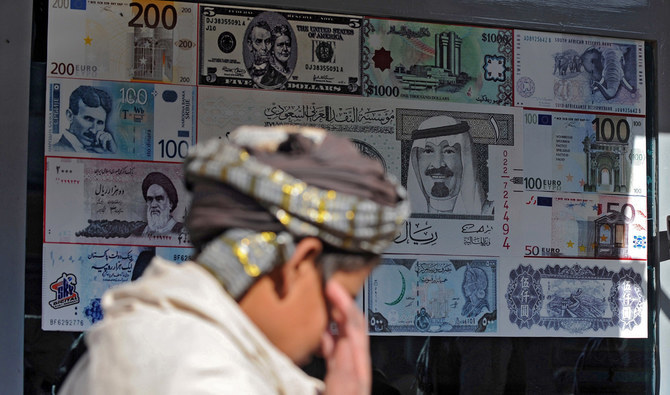
A pedestrian walks past a foreign currency exchange shop in Quetta on Dec. 8, 2011. (AFP/File)
Short Url
Updated 08 January 2021
Follow

Saudi Arabia, UAE top contributors to workers' remittances in Pakistan, says central bank

  • The strong growth in remittances can be attributed to increased use of formal channels and limited cross-border movement due to COVID-19
  • Workers in Saudi Arabia and the United Arab Emirates contributed $4 billion and $3 billion to the national economy, respectively

ISLAMABAD: Saudi Arabia and the United Arab Emirates continued to be the leading contributors to remittances in Pakistan, according to the latest data released by the State Bank of Pakistan (SBP) on Friday. 

According to the central bank, workers’ remittances maintained their strong momentum for the seventh consecutive month in December.

On a cumulative basis, remittances reached an unprecedented level of $14.2 billion during the first half of the current fiscal year, which is 24.9 percent higher than the same period last year. 

The State Bank of Pakistan added this was the highest half yearly growth since FY07. 

Most of the inflows during FY21 were sourced from Saudi Arabia ($4 billion), United Arab Emirates ($3 billion), the United Kingdom ($1.9 billion) and the United States ($1.2 billion). 

The bank observed that Pakistan’s remittance inflows had significantly diversified. 

“This strong growth in workers’ remittances is attributable to the increased use of formal channels on the back of sustained efforts by the government and SBP to encourage inflows through official channels as well as limited cross-border travel due to the second wave of the COVID-19 pandemic, together with favorable foreign exchange market dynamics,” the central bank explained in its official statement. 


At least 13 civilians killed in Pakistan strikes in Afghanistan, UN says

Updated 5 sec ago
Follow

At least 13 civilians killed in Pakistan strikes in Afghanistan, UN says

  • Pakistan said it launched the strikes after blaming recent suicide attacks on militants operating from Afghan territory
  • The reported toll adds to fears of a renewed cycle of retaliation between the neighbors, threatening a fragile ceasefire

ISLAMABAD/KABUL: At least 13 civilians ‌were killed and seven injured in Pakistani airstrikes in eastern Afghanistan, the United Nations said on Monday, as cross-border tensions escalated following a string ​of suicide bombings in Pakistan.

The reported toll adds to fears of a renewed cycle of retaliation between the neighbors, threatening a fragile ceasefire along their 2,600-km (1,600-mile) frontier and further straining ties as both sides trade blame over militant violence.

The United Nations Assistance Mission in Afghanistan (UNAMA) said it had received “credible reports” that overnight Pakistani airstrikes on February 21–22 killed at least 13 ‌civilians and injured ‌seven in the Behsud and Khogyani ​districts ‌of ⁠Nangarhar province.

Taliban ​spokesman Zabihullah ⁠Mujahid earlier reported dozens killed or wounded in the strikes, which also hit locations in Paktika province. Reuters could not independently verify the reported toll.

Pakistan said it launched the strikes after blaming recent suicide attacks, including during Ramadan, on militants operating from Afghan territory.

Pakistan’s information ministry in a post on X said ⁠the “intelligence-based” operation struck seven camps of the Pakistani Taliban ‌and Daesh (Islamic State) Khorasan Province ‌and that it had “conclusive evidence” the militant ​assaults on Pakistan were directed ‌by “Afghanistan-based leadership and handlers.”

Kabul has repeatedly denied allowing militants ‌to use Afghan territory to launch attacks in Pakistan.

The strikes took place days after Kabul released three Pakistani soldiers in a Saudi-mediated exchange aimed at easing months of tensions along the border.

Afghanistan’s defense ministry condemned ‌the strikes and called them a violation of sovereignty and international law, saying an “appropriate and measured ⁠response will ⁠be taken at a suitable time.” The Afghan foreign ministry said it had summoned Pakistan’s ambassador.

In a statement on the February 21-22 strikes, Afghanistan’s education ministry said eight school students; five boys and three girls, were killed in Behsud in Nangarhar province, and one madrasa student injured in Barmal in Paktika province, adding that dozens of other civilians were killed or wounded and educational centers destroyed. Reuters could not independently verify the information.

The latest strikes follow months of clashes and repeated border closures ​that have disrupted trade ​and movement along the rugged frontier.