

Mashreq Bank to relocate 47% employees to India, Pakistan and Egypt to rationalize expenses

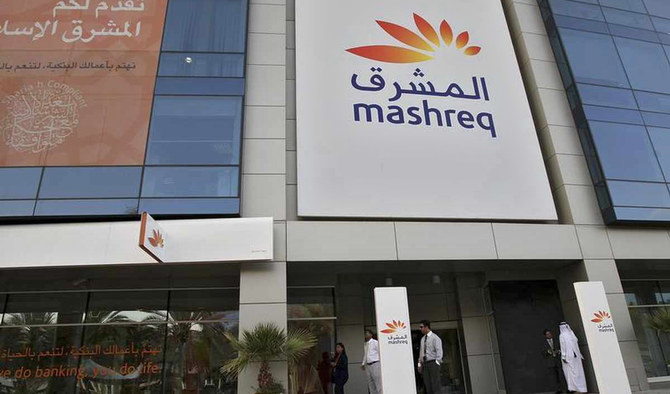
People walk out of a branch of Mashreq bank at Dubai Internet City on Feb. 5, 2012. (REUTERS/File)
Short Url
Updated 02 March 2021
Follow

Mashreq Bank to relocate 47% employees to India, Pakistan and Egypt to rationalize expenses

  • The bank’s decision is expected to immediately impact the lives of about 900 staff members, most of them Indian and Pakistani nationals
  • The relocation plan is likely to increase Pakistan’s remittances and support the local economy, say local financial analysts

KARACHI: One of the largest privately owned banks in the United Arab Emirates has decided to move about 47 percent of its UAE-based employees to India, Pakistan and Egypt to cut down expenses and transform itself into a global digital bank, said a financial expert who works with the organization. 

Mashreq Bank internally announced its relocation plan on Monday, saying it would be implemented in three phases. 

“The bank, which is owned by Al-Ghurair Group, will relocate 47 percent of its staff from the UAE to India, Pakistan and Egypt on the basis of their nationalities,” the bank employee, who did not want to be named since the decision has not been made public, confirmed while talking to Arab News from Dubai on telephone. 

According to the organizational data compiled in September 2019, the total number of employees at Mashreq and its subsidiaries is about 5,000.

The decision, which remained under consideration for a few months, is likely to impact around 900 employees immediately. Most of these staff members belong to India and Pakistan. 

Mashreq was the first bank in the UAE that introduced electronic modes of banking such as ATM cash dispensers, debit and credit cards, and consumer loans.

It also became the first bank in the Arab country to offer chip-based credit cards, digital point-of-sale readers, and investment funds directly linked to global stock markets. 

Industry experts say the bank’s decision will not only help its management save expenses but also give it an opportunity to practice virtual banking at a bigger scale. 

“Mashreq wants to present itself as a model of digital banking to the world,” said the employee. “It wants to operate as a virtual bank that does not require a lot of real estate and investment. The bank was also the first to introduce the concept of digital banking and it seems that its latest move is a continuation of the same vision.” 

The financial results posted on Mashreq’s website show a net profit of AED450 million in the first quarter of 2020 and AED85 million in the second quarter.

The bank posted a loss of AED183 million in the third quarter. 

Financial experts in Pakistan maintain that Mashreq’s move will benefit the country’s economy in several ways. 

“It will increase the amount of remittances. Besides, the relocated employees will also be spending in the local context that will support their home economy,” Samiullah Tariq, Head of Research at the Pakistan Kuwait Investment, commented. 

Under the current economic situation, many banks have already shifted their back offices to other locations. However, Mashreq’s back office will continue to remain in the UAE. 

Last November, Pakistan signed $370 million Syndicated Term Loan and Murabaha Financing Facilities with Dubai-based Emirates NBD. Mashreq Bank was also part of the syndicate along with other companies.


Court sentences Pakistan ex-PM Imran Khan, wife to 17 years in prison in graft case

Updated 20 December 2025
Follow

Court sentences Pakistan ex-PM Imran Khan, wife to 17 years in prison in graft case

  • The case involves a jewelry set worth over €380,000 gifted to the former first lady when Khan was PM
  • The couple were convicted of undervaluing the gift and buying it at a lesser price from state repository

ISLAMABAD: A Pakistani court on Saturday sentenced former prime minister Imran Khan and his wife, Bushra Bibi, to 17 years in prison each in a graft case, dealing another major legal blow to the jailed opposition leader who faces a string of cases.

The reference, popularly called the new Toshakhana case, was filed in July 2024 and involves a jewelry set worth over €380,000 gifted to the former first lady by a foreign dignitary when Khan was prime minister from 2018-2022.

The couple, accused of undervaluing the gift and buying it at a lesser price from the state repository, were indicted in the case in Dec. last year. In October, they denied the charges against them, saying the case was a “politically motivated” attempt to disqualify Khan from politics.

Both Khan and his wife were handed down 10-year rigorous imprisonment under sections 34 (common intention) and 409 (criminal breach of trust) of the Pakistan Penal Code, and seven years under Section 5(2) (criminal misconduct by public servants) of the Prevention of Corruption Act.

“This court, while passing sentences has considered the old age of Imran Ahmed Khan Niazi, as well as the fact that Bushra Imran Khan is a female,” read a copy of the court verdict.

“It is in consideration of both said factors that a lenient view has been taken in awarding lesser punishment.”

Khan, who has been in jail since August 2023, faces a slew of cases which the former premier says have been politically motivated.

His Pakistan Tehreek-e-Insaf (PTI) party has long campaigned against the military and government, accusing the generals of ousting him together with his rivals. Khan’s opponents deny this, while the military says it does not meddle in politics.

On Friday, an anti-terrorism court (ATC) acquitted Khan aide and former foreign minister, Shah Mahmood Qureshi, but awarded 10-year prison sentences to senior PTI figures, including Dr. Yasmin Rashid, Mian Mehmood-ur-Rashid, Omer Sarfraz Cheema and former senator Ejaz Chaudhry in a case linked to violent riots in May 2023.