

Hezbollah threatens Lebanese journalist working with US-funded Alhurra News channel

1 / 3
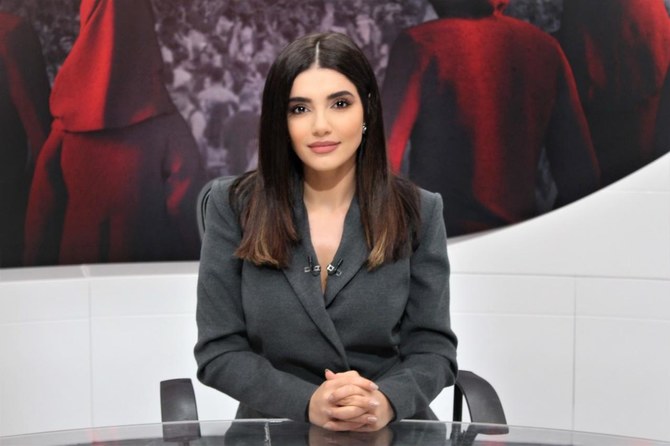
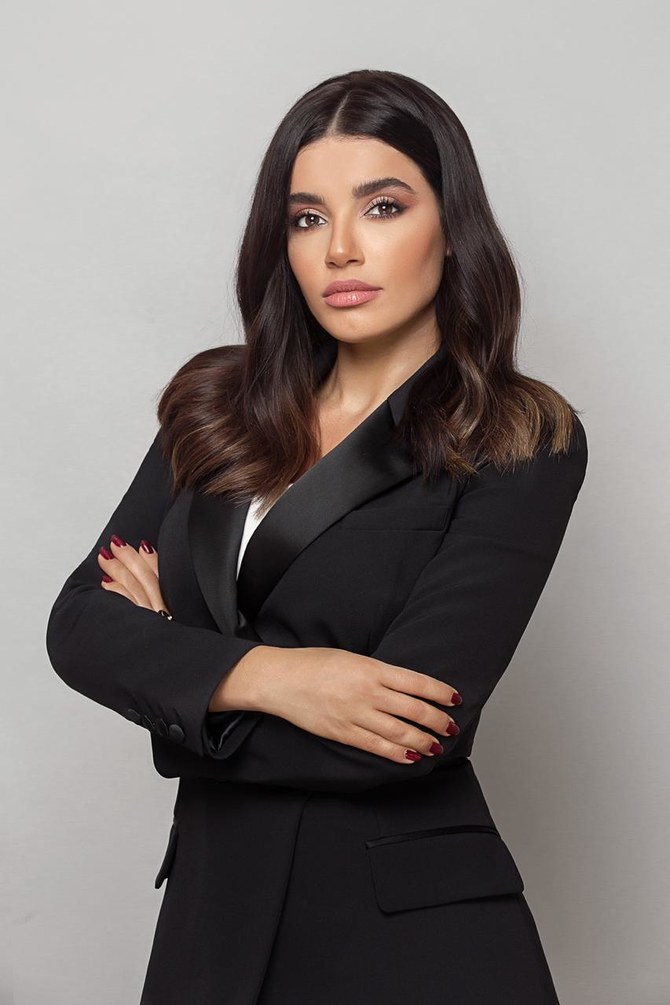
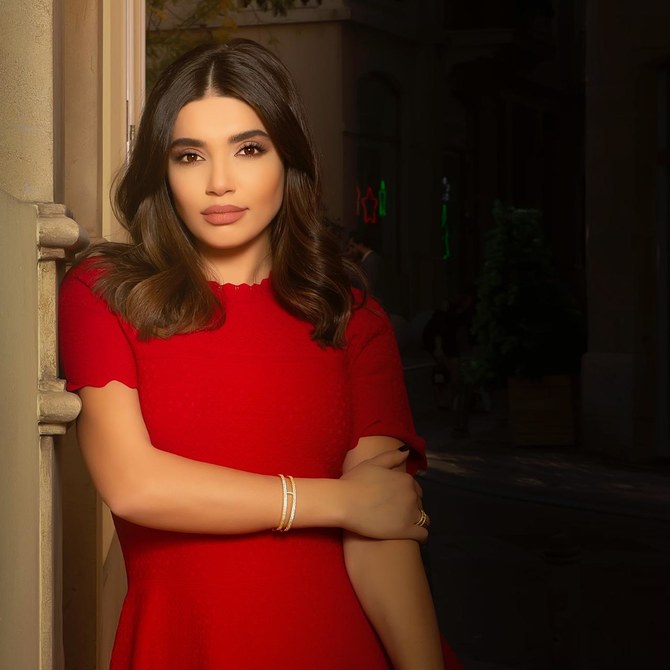
Layal Alekhtiar is latest victim of cyber bullying by the Iran-backed terror group. (Screenshot)
2 / 3
Layal Alekhtiar is latest victim of cyber bullying by the Iran-backed terror group. (Screenshot)
3 / 3
Layal Alekhtiar is latest victim of cyber bullying by the Iran-backed terror group. (Screenshot)
Short Url
Updated 08 January 2021
Follow

Hezbollah threatens Lebanese journalist working with US-funded Alhurra News channel

  • Layal Alekhtiar is latest victim of cyber bullying by the Iran-backed terror group
  • Committee to Protect Journalists slams online harassment of female reporters, says must be investigated

LONDON: Lebanese news anchor Layal Alekhtiar is the latest victim of a Hezbollah-led campaign to silence free media in and out of the country.

The journalist, who works for US State Department-funded Alhurra, received death threats via text following an incitement campaign launched by viewers loyal to Hezbollah. The Committee to Protect Journalists (CPJ) told Arab News that these threats must be investigated. 

The campaign comes after Alekhtiar tweeted a video of the unveiling of the newly erected statue of the late Iranian Gen. Qassem Soleimani with a line from Ayat Al-Anbya (The Prophets) from the Qur’an that said: “What are these statues to which you are so devoted?”

Alekhtiar told Arab News: “I didn’t provoke them specifically in any way, all I did was place this Ayat as a matter of freedom of speech, nothing more. I didn’t demean them, nor did I do it in any impolite way.

“So, they let their whole army loose on me, and all those from Al-Manar and Al-Mayadeen and all their news channels and I didn’t understand why, there is nothing to it.

“I tweeted the Ayat regarding the statues because what grabbed my attention was that there were Shiite religious men there. Anyway, to me, any statue that would be erected for someone not Lebanese — especially since he has a political agenda — paid by the Lebanese, should not be placed. Whoever it may be, not just Qassem Soleimani,” she said.

Shortly after, a senior member of the Israeli Army tweeted the same Ayat which added fuel to the fire.

“So, they begin to create a link between my tweet and his and they begin to photoshop both tweets together and spread it and say that I am a foreign agent and that I am an Israeli spy,” she added.

Speaking to Arab News, Sherif Mansour, Middle East and North Africa Program Coordinator for the Committee to Protect Journalists (CPJ) said: “the use of online harassment against women journalists is abhorrent tactic that aims to silence their reporting and opinions. 
“Threats by non state actors and their supporters online must not go unnoticed and must be throughly investigated.”

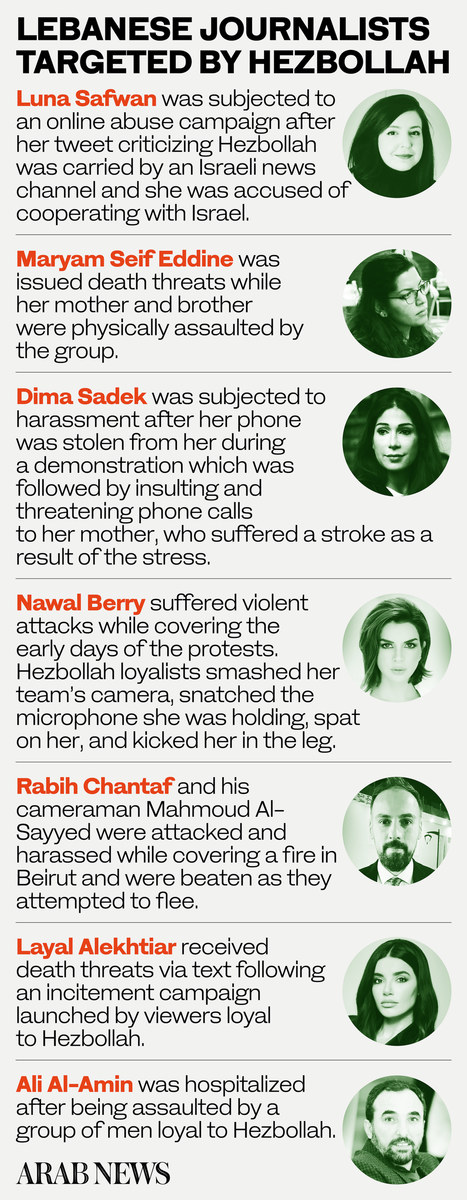
Alekhtiar is not the first journalist to be harassed and targeted by Hezbollah and accused of spying for Israel and will surely not be the last — this includes Lebanese  journalists who are also Shiite Muslims, but don’t agree with Hezbollah’s political beliefs. 

Late last year, journalist Luna Safwan, who happens to be Shiite, was subjected to an online abuse campaign after her tweet criticizing Hezbollah was carried by an Israeli news channel and she was accused of cooperating with Israel.

Similarly, Lebanese journalist Maryam Seif Eddine, known for her staunch criticism of Hezbollah despite being Shiite, had been issued death threats by the group while her mother and brother were physically assaulted, the latter being left with a broken nose. Hezbollah loyalists had targeted her family home in Burj El-Barajneh, in the Hezbollah-dominated southern suburbs of Beirut.

Before that, as the country witnessed unprecedented nationwide protests in 2019, former LBC news anchor Dima Sadek, another Shiite journalist, was subjected to harassment by the Lebanese militia group after her phone was stolen from her during a demonstration. The harassment, she said, was followed by insulting and threatening phone calls to her mother, who suffered a stroke as a result of the stress.

And prior to that, MTV television reporter Nawal Berry, also a Shiite, suffered violent attacks by supporters of Hezbollah and its allies while covering the early days of the protests. Loyalists smashed her team’s camera, snatched the microphone she was holding, spat on her, and kicked her in the leg.

Alekhtiar said: “Now, they continued with their campaign, but the principle is that we, in Lebanon, the foundation is freedom of expression and the democracy that puts it apart from other countries.

“We don’t want to become a part of another country, nor do we want the nationality of our country to change no matter who is coming.”

Activist and journalist Ali Al-Amin, who claimed that he had been attacked on more than one occasion by Hezbollah-linked people, in a previous interview told Arab News: “Hezbollah has always resorted to accusing its opponents of working for Israel, the US, or foreign embassies.

“It has mobilized its electronic armies to launch (online) campaigns against them over the past 15 years. There is much evidence for this.”

Alekhtiar, who remains unfazed by the threats, said: “An opinion must stay an opinion, no matter what happens, because without freedom of expression, journalism has no point, and the media has no point.”

Soleimani’s shadow
Qassem Soleimani left a trail of death and destruction in his wake as head of Iran’s Quds Force … until his assassination on Jan. 3, 2020. Yet still, his legacy of murderous interference continues to haunt the region

Enter


keywords


Saudi who swapped ejection seats for tech reviews — and topped KSA charts 

Updated 19 December 2025
Follow

Saudi who swapped ejection seats for tech reviews — and topped KSA charts 

  • In an exclusive interview with Arab News, the host of ‘2You’ and ‘Up To Date KSA’ talks about digital wellness, AI’s future, and his plans to fill the gap in Arabic tech content 
  • Top Arab content creator in Saudi Arabia’s 2025 top 10 most-viewed YouTube channels describes milestone as ‘shockingly’ positive 

LONDON: Speaking to Faisal Al-Saif, a self-described tech lover, one of the least likely things you expect to hear is advice on disconnecting from technology. 

Yet the idea of a “tech diet” — more commonly known as digital wellbeing — takes on added weight when it comes from someone whose work revolves around gadgets and who relies on social media as their primary platform. 

Beyond this seemingly analytical, Web 1.0-style perspective, Al-Saif draws on more than two decades of experience as a tech expert — or, in today’s terms, a content creator. 

“I’m an early believer that technology is here to connect us more, to make the world even smaller than what it is, and make us just more active, more productive, and have more time for our religion, for our families and for our actual lives,” Al-Saif told Arab News. 

Al-Saif trained as an aircraft engineer at BAE Systems, where he specialized in ejection seats for Royal Saudi Air Force jets, before entering broadcasting in 2004, hosting and producing KSA2’s English-language “2You” and, later, the technology show “Up To Date KSA.” 

In 2009, he pivoted to YouTube — a platform with more limited reach and no monetization at the time — to help fill the gap in Arabic tech content. 

“Back then, if you searched about a device or a system or a piece of information, the main language you would find the result in was English. So, I just started creating a channel and putting some good content in (both) Arabic and in English,” he said. 

This approach required filming videos twice. Initially, videos in English drew more views, while Arabic lagged, but that shifted month by month as Arabic content gained traction. 

“To put it in perspective, back then, it wasn’t a source of income — not a main, not a minor, not a partial.” 

Today, Al-Saif’s channel delivers straightforward reviews that guide viewers on whether to buy or avoid products based on their needs, not brand pressure. 

“I love creating content that gives value to the people. I love simplifying information. I love tech in a crazy way,” he said. “I like to see new tech, test it, be an early adopter of it. Tell people, ‘This is good because of this, and (that) could have been better with those implemented.’ Tell people to buy or not to buy based on their preferences, not based on companies and what they want to push.” 

Creators typically earn through ad revenue, fan funding, product placement, and sponsorships, though Al-Saif distances himself from the “influencer” label. 

“Part of it is that struggle we went through throughout the years, of trying to create valuable business propositions for everybody who works with us, being very fair and honest about what I present, and trying to help companies, just to help companies. Not seeking business.” 

Earlier this month, almost two decades after starting his channel, Al-Saif was named top Arab content creator — and the only regional entry — in Saudi Arabia’s 2025 top 10 most-viewed YouTube channels, a milestone he described as “shocking” in a positive sense. 

“Being on that top 10 list gives me a cool push after 16 years,” he said of his UTD Saudi channel, which has 8.92 million subscribers. 

“(When) I go into a hospital, I find a lot of Saudis that know me. But also, I find some Filipino nurses coming to me (telling me), ‘I watch your videos.’ I like that kind of diversity (which) is only possible on YouTube and educational content.” 

Al-Saif views YouTube as a modern visual library to help informed decisions. While social media shifts toward short-form videos, he believes the platform is resisting this trend. 

“If it’s all short-term content, it’s us supporting that short attention span (which) is being developed with people.”  

He champions long-form reviews, beginning with a brief story, then details, to encourage informed decisions. By contrast, he argued, three-second or ultra-short videos may be excellent at grabbing attention, but are largely useless for serious decisions, “unless (perhaps) it’s a cooking video.” 

In 2012, after seeing an opening, Al-Saif left BAE Systems — “initially only for two years” — to launch Tech Pills Productions, helping companies such as Intel, Microsoft, and HP create content, a move that boosted his career. He later diversified into tech startups, though he shuns the “investor” label. 

“I don’t see myself as an entrepreneur or an investor. I just see myself as a tech lover,” he said. “I try to push myself into diversifying the business and creating other pillars. So, I went into other types of investments, working and developing applications with different partners, and all of that went well. That part made me more comfortable creating content for the joy of it instead for the business side of it.” 

In 2021, Al-Saif backed Karaz (Arabic for “cherries”), an EHR platform using IoT, AI, and real-time data for healthcare, originally a gamified app for diabetic children. “(I’m drawn to a project) if there’s a human touch,” he said. “It’s relating data to human change in a positive way that made me not hesitate and go for it.” 

While AI pitches flood in, past flops have left him with a degree of “marketing resistance.” 

“I find that AI does add value if you have those (proper) steps into getting into AGI (artificial general intelligence) and the later steps that will come. It’s the proper development. But the hype about relating everything to AI, that part, I’m definitely against,” he said. 

AI has dominated headlines for three years, fueling an economic boom, and sparking debate over job losses and ethical risks. Al-Saif acknowledges the technology’s “endless opportunities,” but doubts the hype will last and that AI will ultimately drive the world. “They will find something else; either it’s diverted from AI or from another field in technology to create that marketing sense.” 

Asked what people should be more aware of, he urged greater public education on AI’s dual nature. 

“It’s a knife that you can cook with, or it’s a knife that can stab someone. There’s a seriousness about AI, and sadly, the world does not do enough regarding the sense of awareness,” he said. 

Without greater understanding, unchecked AI could create generations shaped entirely by whatever information they are fed, regardless of truth, he said, adding that the technology already enables bad behavior excused as “AI-generated” and blurs fact and fiction, making regulations essential. 

Saudi Arabia is leading responsibly through its Data and AI Authority, he said. “I think they’re going very well within multiple sides: the regulatory part, the governance side, as well as when it comes to investing heavily with the infrastructure and AI companies.”  

Through the authority, the Kingdom has launched an ambitious plan to position itself at the forefront of AI technology. Al-Saif has contributed directly and indirectly, including advising on public strategies such as the Riyadh Charter on AI Ethics in the Islamic World. 

“It’s a very interesting place to be (at a) very interesting time. I’ve sat with the Crown Prince (Mohammed bin Salman). He talked about AI, his vision, and how AI will create this next wave of businesses and next wave of economy.” 

Asked whether our society is obsessed with technological progress, Al-Saif replies that “we are adopting (technologies) for what we need,” but adds that limits, such as Australia’s recent social media ban for youth, are needed. “But the thing is, they don’t ban stuff in the Kingdom of Saudi Arabia. They try to create a system.” 

At home, he supervises his children’s screen time or watches content together. “YouTube is still, I find, the safest platform (out) there because of its nature of long videos and vlogs. It is much more mature than any other platform when it comes to how to censor, how to control, how to do things.” 

However, he agreed that younger generations, as tech natives, perceive tech interaction differently, specifically when it comes to privacy. 

“Privacy is kind of a stretchy thing. I define privacy different than my kids when they grow up, and that made me think of privacy different. It’s not that we’re letting go of information. It’s the environment that we live in that creates that sense of privacy.” 

Al-Saif believes privacy has already been reshaped — not as a value we hold dear, but as an illusion where true personal boundaries have been eroded. What remains is a mere reflection of our actions online, not tied to our names, but reduced to anonymous data points or numbers in the digital ether. 

For Al-Saif, part of the answer lies in the power of disconnection, an approach that he has strongly advocated. 

“I give myself an hour or two a day maximum (online) to know about certain other stuff. My advice for anybody who wants to live 12 hours of cool life is: Try to experience or to learn something unrelated to tech.” 

Pointing to a beehive he keeps in the office, Al-Saif added: “There are other fields that I like to, let’s say, learn about. It’s a clear state of mind that you reach with it. And I just try to do as normal, natural things as possible; try to work with gadgets and appliances that don’t have batteries.”