



KARACHI: Allah Dino stood with his elbow resting on the handle of his shovel, beaming as he surveyed his flourishing spinach crop along Karachi’s 36-kilometer-long Malir riverbed.
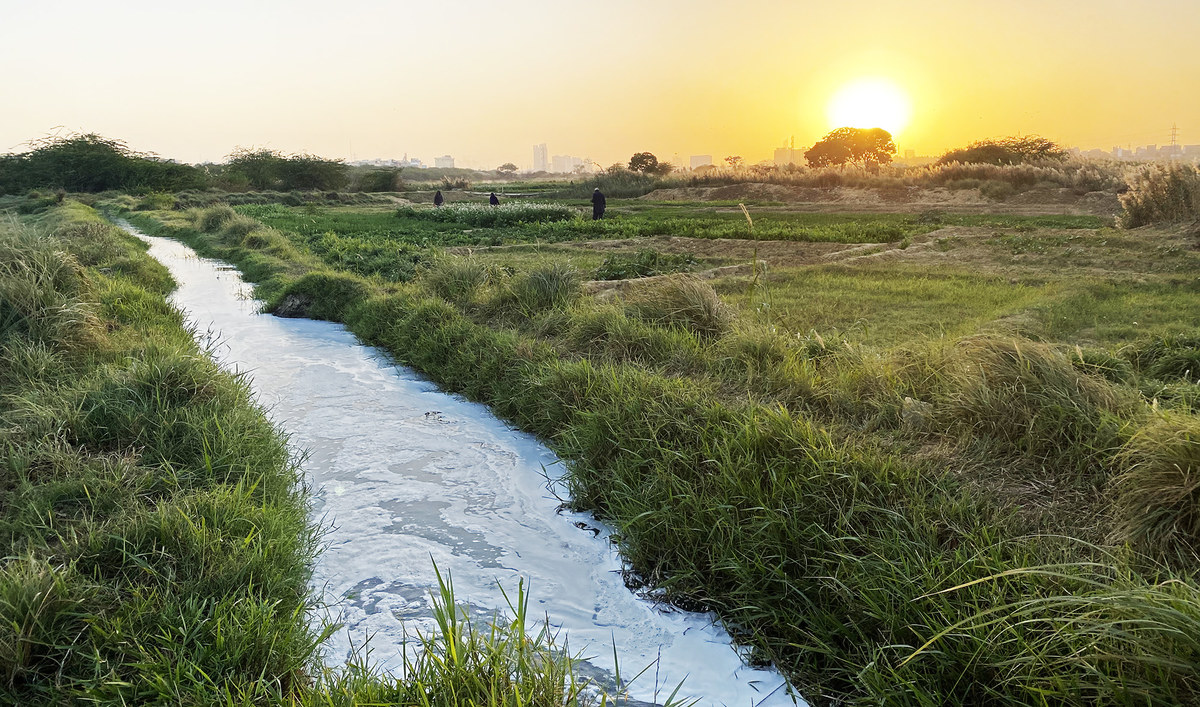
The riverbed runs parallel to one of the largest industrial areas in Pakistan’s financial hub of Karachi. Untreated water suffused with chemical waste from factories, and the city’s sewage, floods into the river.
It is this toxic water that irrigates almost 300 acres of land on the riverbed, including Dino’s, where up to 15 percent of the vegetables sold across Karachi are grown. Officials and environmental experts say the crops are not safe for human consumption but cultivation continues — despite a court order asking that the toxic crops be destroyed and officials saying farming was taking place in the area illegally.
A grower, Muhammad Danish and his family members, collect coriander from an agro-farm near Korangi causeway on the Malir river in Karachi, Pakistan, on December 28, 2020 (AN photo)
Muhammad Zubair Chhaya, chairman of the Korangi Association of Trade and Industry, admitted that untreated water was being pumped into the Malir river and used to grow vegetables but said it was the government’s responsibility to set up treating plants for small industrial units. Larger factories already had their own treatment facilities, he said.
“I admit that water from small industrial units is going into the Malir river but it is the government’s responsibility to dispose of it,” Chhaya said. “The major industrial units have water treatment plants.”
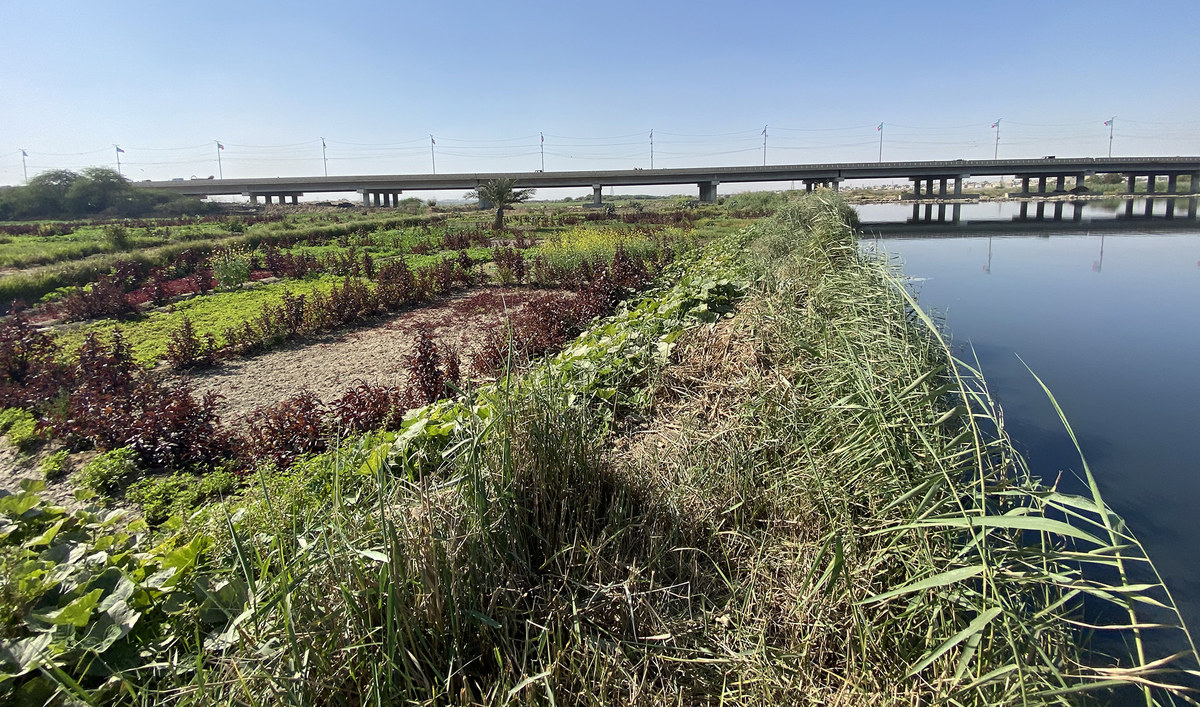
A large agro-farm with vegetables growing is seen on the Malir rivered at Sharafi Goth near Shah Faisal area Karachi, Pakistan, on December 29, 2020. (AN photo)
While several of the growers said they had been allotted land on the riverbed by the government, Deputy Commissioner Qur’angi, Shehryar Memon, rejected this, saying the government had not leased out the riverbed land either to individual farmers or contractors. He said a “grand operation” was conducted against illegal growers last year but they returned to the lands after the monsoon rains. In past years also, authorities had carried raids to expel growers, who ultimately always managed to return, Memon said.
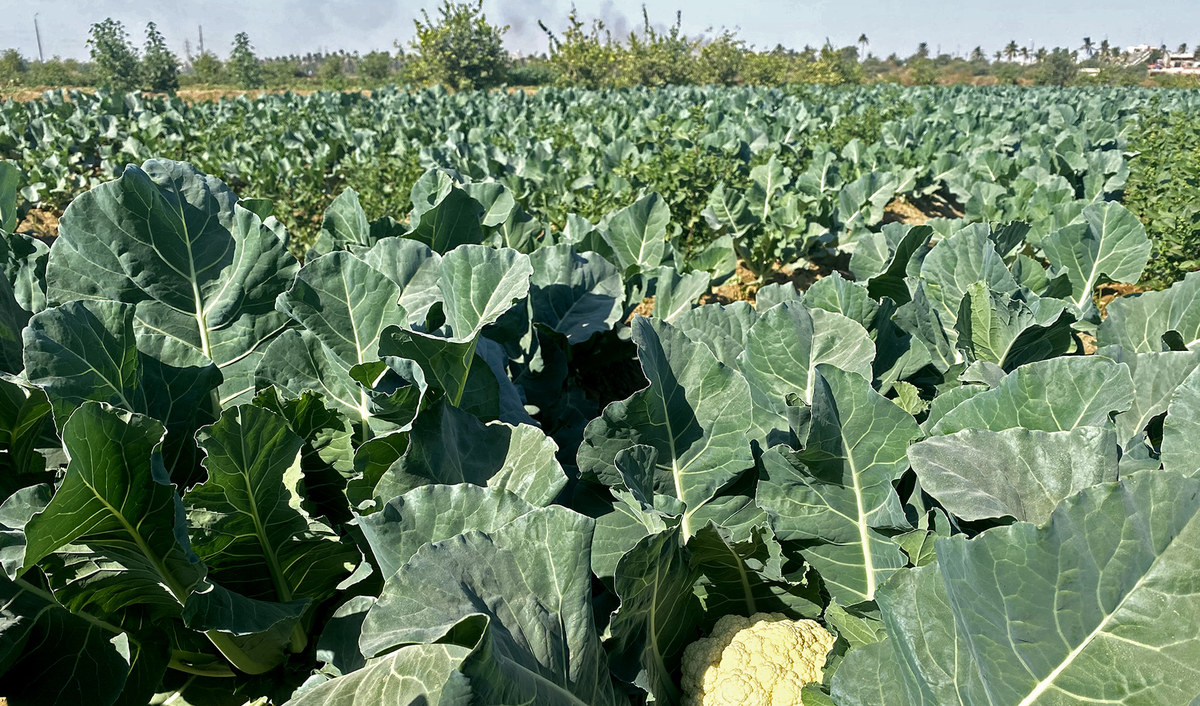
Cauliflower being cultivated in the Mansihra colony area of the Malir riverbed in Karachi, Pakistan, on December 29, 2020. (AN photo)
“We have formed a permanent committee of police and district administration’s officials following the court’s orders” he said, adding that authorities planned to carry out another operation to destroy the toxic crops, as per court orders.
Shahid Ali Lutfi, an environmental engineer and former government official, said the practice of growing vegetables using toxic water had been rampant on Malir riverbed for years.
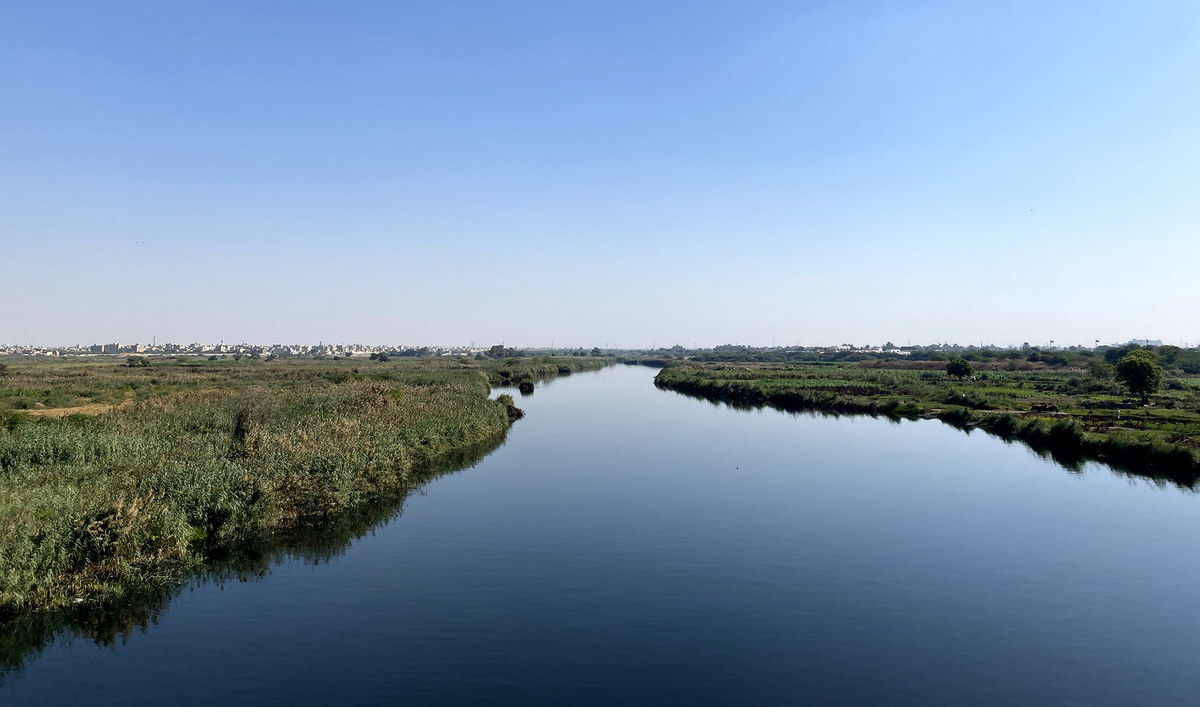
River Malir in Karachi, Pakistan, on December 29, 2020. (AN photo)
“In 1998, when I was a government servant, I investigated the issue on a complaint and found that untreated water coming out from heavy industries was flushing into the river and being used for vegetable cultivation,” Lufti said. “There is a strong mafia behind this. Action is taken and then we see that cultivation restarts.”
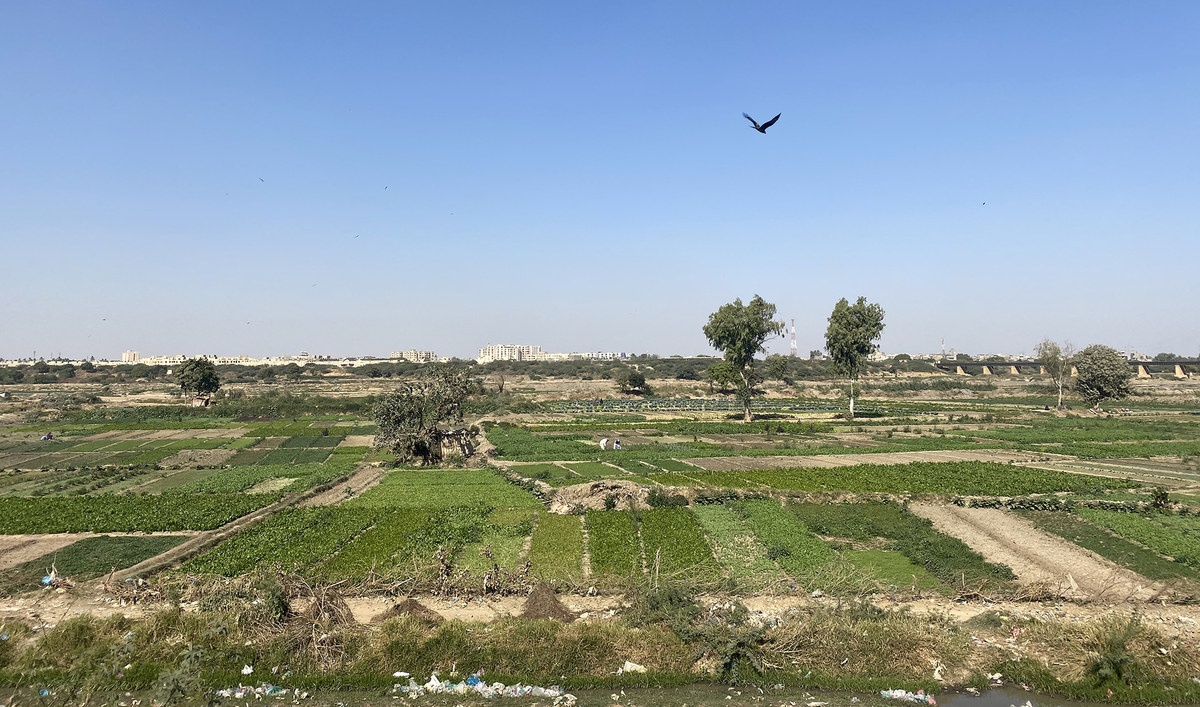
Farmlands on the Malir riverbed near the Future colony area of Karachi, Pakistan, on December 29, 2020. (AN photo)
Dr. Aamir Alamgir, an environmental studies professor at the University of Karachi, conducted a study in 2016 and found that 10 out 13 vegetables grown on the Malir riverbed had higher levels of heavy metals than allowed for human use.
“Unrestricted irrigation of vegetables with wastewater is a serious health risk to consumers because of high levels of metals,” he told Arab News, warning against farm workers also being exposed to toxic metals and pathogenic microorganisms in the water.
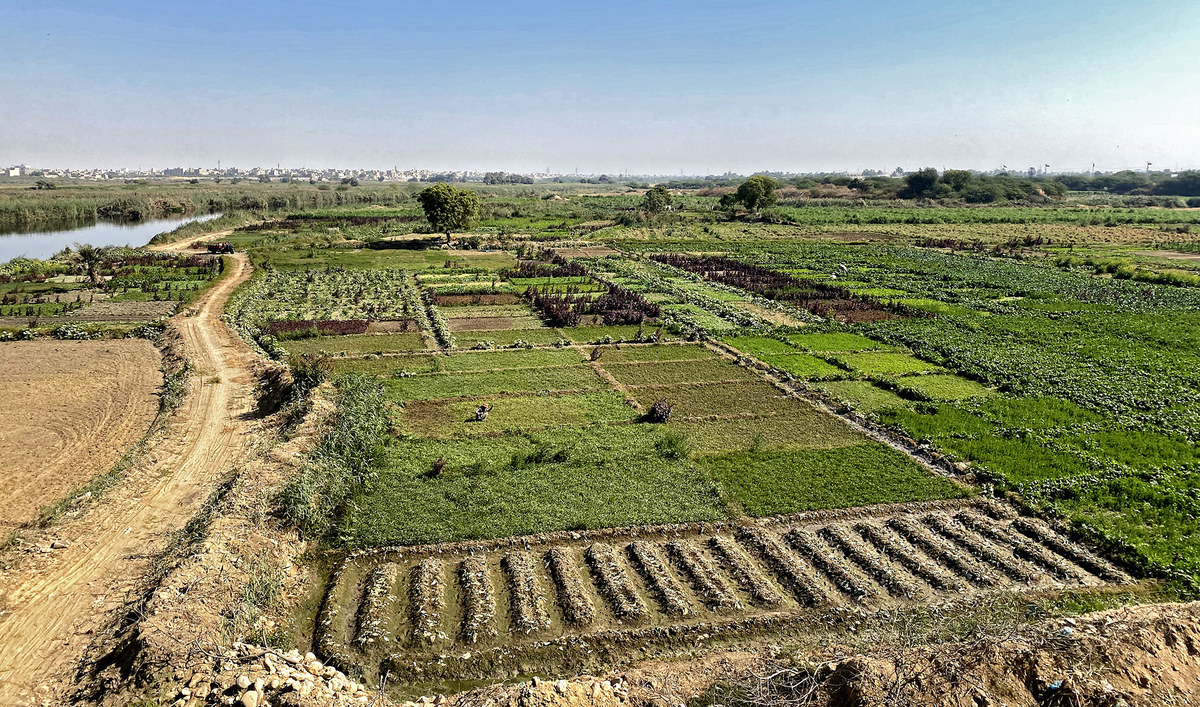
A farmland at Sharafi Goth near the Shah Faisal colony area of Karachi, Pakistan, on December 29, 2020. (AN photo)
But growers like Sarfraz Khan said they were resolved to continue cultivation on the riverbed, saying months of hard work would go to waste if authorities destroyed crops.
“Why do they allow it to happen for months,” he said. “Why don’t authorities just stop it when cultivation started?”


