Public-Private Partnerships — The key to transforming the Saudi economy

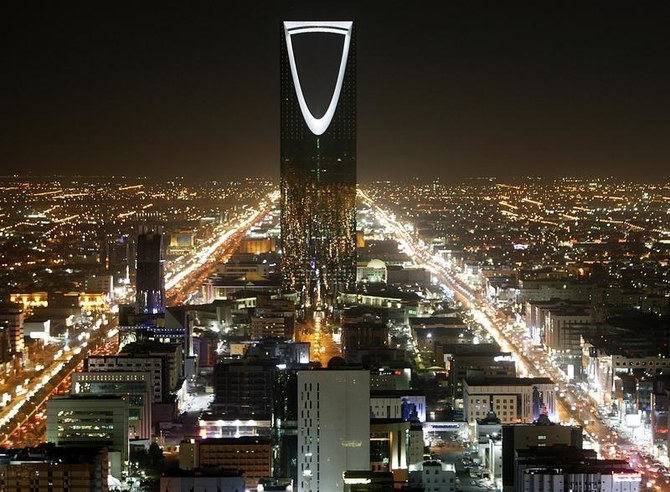
The Kingdom Tower stands in the night in Riyadh, in a file photo. (Reuters)
Short Url
Updated 04 January 2021
Follow

Public-Private Partnerships — The key to transforming the Saudi economy

  • Legal amendments, changes to contracts are key to encouraging more involvement by the private sector

JEDDAH: Public-Private Partnerships (PPPs) are an effective way to reduce the burden on the government and encourage more private investment and involvement in the economy. Saudi Arabia has been using PPPs — merging government bodies with private companies aligned in their fields — for decades. Some of the well-known names involved in recent endeavors include Saudi Aramco, Saudi Airlines, SABIC and the Haramain High-Speed Railway.

Under the Saudi Vision 2030 transformational plan, PPPs and the divestment of state-owned properties are seen as a crucial step to changing how the government operates. A key aspect of this is to change the role of the government from an implementor to a regulator and encourage more private sector involvement in the Kingdom.

“PPP and privatization will support these objectives by facilitating the transfer of ownership of economic activities, services and assets owned or traditionally delivered by the government to the private sector,” Tim Armsby, a partner in the Projects and Finance section at law firm Pinsent Masons Middle East, told Arab News.

“This will play a key role in transforming the country from an oil-dependent economy to a diverse, private-sector driven one,” he added.

He said the Kingdom has a long track record of using PPPs, but this has been limited historically to certain main sectors, especially traditional power, where new plants were built on a Build-Own-Operate basis by the private sector.

“The private sector has financed these plants and entered into a long-term (25-year) power purchase agreement with the government. Saudi Arabia is now seeking to use PPPs in a much wider range of sectors, including education, agriculture, water, environment, real estate, tourism, housing, technology and transport,” he said.

A variety of new projects have been launched on the market over the last few years, including a number of renewable energy projects, water and waste-water projects, schools, hospitals, diagnostic centers and ports. The National Centre for Privatization and PPP, which is a government body mandated to enable the program, lists 11 transactions currently within its remit that have closed, 18 that are under tender and 34 that are under preparation, Armsby said.

In order to encourage more PPPs in the future, the lawyer said legislative changes may help to facilitate this. “The last few years have seen a series of laws issued to establish the principles and bodies to support the delivery of PPP and privatization in the Kingdom,” he said.

A draft law was issued in 2018, and this is understood to be in the final stages. Armsby said there is even an appetite to include an initial public offering as part of future PPP packages, “which introduces another interesting element to the initiatives.” 

Traditionally, PPPs were governed by English law, which Armsby said may also change going forward. “It can be expected that the government may wish to move away from this approach, and therefore there are likely to be more changes to the general legislation to provide further comfort to the private sector and international investors in particular,” he added.


Bahri profit rises 12% to $647m in 2025 as oil shipping boosts earnings 

Updated 9 sec ago
Follow

Bahri profit rises 12% to $647m in 2025 as oil shipping boosts earnings 

RIYADH: The National Shipping Co. of Saudi Arabia, also known as Bahri, posted a 12.07 percent increase in annual profit as stronger tanker earnings and higher global freight rates boosted results. 

Net profit attributable to shareholders reached SR2.43 billion ($647.46 million) in 2025, compared with SR2.17 billion a year earlier, according to a filing on Saudi Exchange. 

Revenue for the year ended Dec. 31, 2025, rose 9.12 percent to SR10.35 billion, compared with SR9.48 billion in 2024, while gross profit increased 14.71 percent to SR3.10 billion. 

Highlighting the main reason for the increase in net profit during the current year, the company said: “The increase in gross profit of Bahri Oil BU by SR755 million mainly due to improved operational performance and global shipping rates during the current year compared to the last year.”  

It added: “The increase in the company’s share of results of equity-accounted investees by SR134 million during the current year compared to the last year. 

However, the gains were partly offset by declines in other areas. Gross profit from the chemicals business unit fell by SR324 million, while the integrated logistics unit recorded a SR37 million decrease.  

The company’s operating profit climbed 4.67 percent year on year to SR2.73 billion, reflecting improved operational performance across several business units.  

Bahri said the increase in revenue was driven primarily by higher activity in multiple divisions, particularly its oil business unit, where revenue rose by SR1.26 billion due to increased operational activity and higher global shipping rates. 

The growth in revenue was partially offset by lower performance in other segments. 

Revenue from the chemicals business unit declined by SR396 million, while the dry bulk unit recorded a decrease of SR87 million compared with the previous year. 

Bahri also reported a SR138 million decline in other income, mainly due to lower capital gains from vessel sales.  

The company recorded SR216 million in gains from vessel sales in the previous year compared with SR6 million in the current year. Higher general and administrative expenses and increased finance costs also weighed on profitability. 

Total comprehensive income attributable to shareholders reached SR2.38 billion, up 8.65 percent from SR2.19 billion in the previous year. 

 Total shareholders’ equity rose 12.07 percent to SR15.27 billion, compared with SR13.63 billion a year earlier, while earnings per share increased to SR2.63 from SR2.35. 

Separately, Bahri’s board of directors recommended the distribution of cash dividends totaling SR922.85 million for the 2025 fiscal year, equivalent to SR1 per share.  

The proposed dividend represents 10 percent of the share’s par value and will be distributed to shareholders owning 922.85 million eligible shares, subject to approval at the company’s upcoming general assembly meeting. The eligibility and distribution dates will be announced at a later stage.