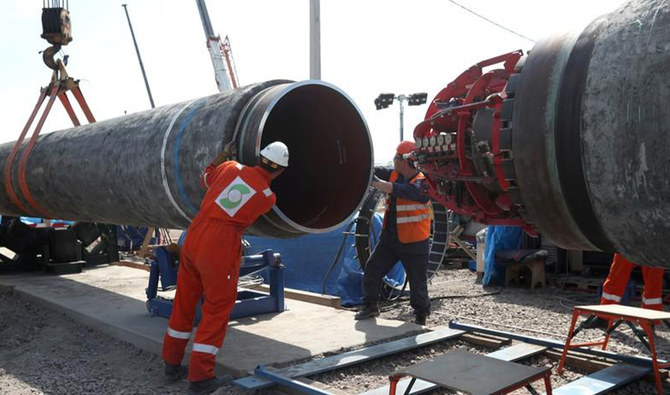
KARACHI: Construction of a multibillion-dollar project with Russia to transport 1.6 billion cubic feet per day of regasified liquefied natural gas from the cities of Karachi to Kasur will commence in July this year, a top Pakistani official said on Sunday.
The project, earlier called the North-South Pipeline but recently renamed the Pakistan Stream Gas Pipeline Project, will deliver gas from Pakistan’s coastal regions to industrial areas in the north. It has been held up since 2015 due to a disagreement over fees and United States sanctions against Russian state conglomerate Rostec.
In November, Russian officials visited Pakistan for three-day-long negotiations to finalize work on the project, the biggest infrastructure deal with Russia since the early 1970s when the Soviet Union set up the Pakistan Steel Mills industrial complex at Port Qasim, near Karachi.
“Yes, we are working on the pipeline with Russians,” Nadeem Babar, special assistant to the prime minister on petroleum, told Arab News. “The construction of the 1,100 km long pipeline that will transport 1.6 bcfd gas will start in July.”
Babar said it was too early to estimate the cost of the project, but officials had earlier put it between $2-3 billion. Documents submitted to the Supreme Court of Pakistan by the Pakistani government show the cost of the project was estimated at $2.7 billion.
The project will be implemented through a special purpose company to be incorporated in Pakistan, with Pakistan holding majority shares.
During the November 2020 meeting, officials from both nations agreed to sign a protocol for amendment in an Inter-Governmental Agreement (IGA) signed in 2015 to reflect a revised implementation structure for the project after requisite approvals from the two governments.
Indigenous natural gas contributes around 38 percent to Pakistan’s total primary energy supply mix. Pakistan produces around 4 billion cubic feet per day against an unconstrained demand of 6 bcfd and imports gas to meet the deficit, particularly when demand peaks in winters.
Pakistan has become an emerging buyer in the international LNG market over the last few years, with an increasing gap between demand and supply of gas.
The power sector is Pakistan’s largest natural gas consumer, followed by residential consumption and the fertilizer industry.


![]()

Pakistan says work on Russian gas pipeline project to start in July
Short Url
https://arab.news/zxjht
Pakistan says work on Russian gas pipeline project to start in July
- The 1,100 km long pipeline will transport 1.6 billion cubic feet per day of regasified liquefied natural gas from the cities of Karachi to Kasur
- The gas pipeline project is the biggest infrastructure deal with Russia since the early 1970s, when the Soviet Union set up Pakistan Steel Mills
Latest updates


© 2026 SAUDI RESEARCH & PUBLISHING COMPANY, All Rights Reserved And subject to Terms of Use Agreement.