

Aden airport reopens as governor demands probe into attack

1 / 5
Travelers wait at the airport of Yemen's southern city of Aden on January 3, 2021, as activity resumes after explosions rocked the building on December 30, killing or injuring dozens of people. (AFP)
2 / 5
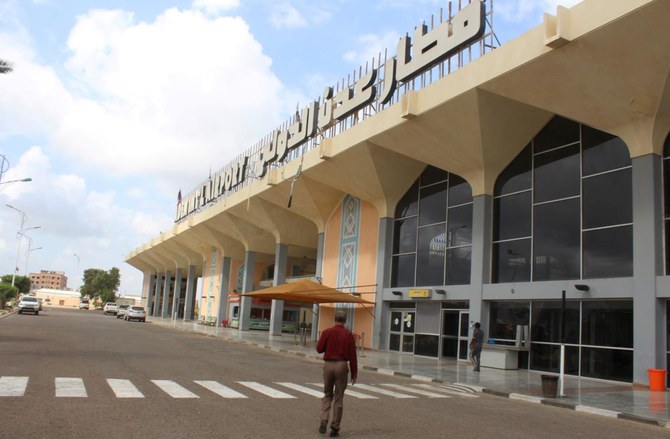
A man walks to the airport building in Yemen's city of Aden on January 3, 2021, as activity resumes after explosions rocked the building on December 30, killing or injuring dozens of people. (AFP)
3 / 5
Passport control staff wait at their stations at the airport in Yemen's southern city of Aden on January 3, 2021, as activity resumes after explosions rocked the building on December 30, killing or injuring dozens of people. (AFP)
4 / 5
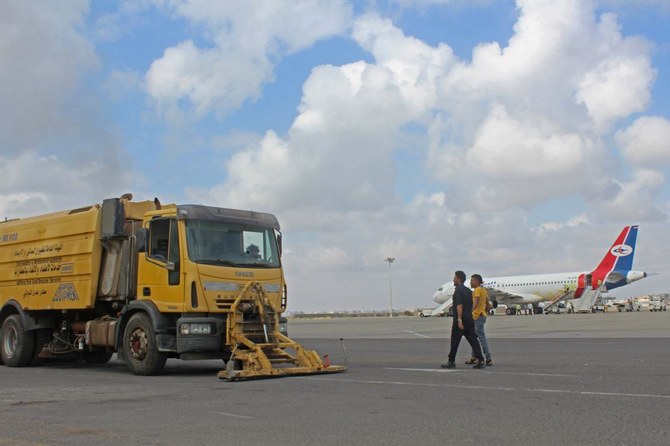
A firefighting vehicle is stationed on the tarmac of the airport of Yemen's southern city of Aden on January 3, 2021, as activity resumes after explosions rocked the building on December 30, killing or injuring dozens of people. (AFP)
5 / 5
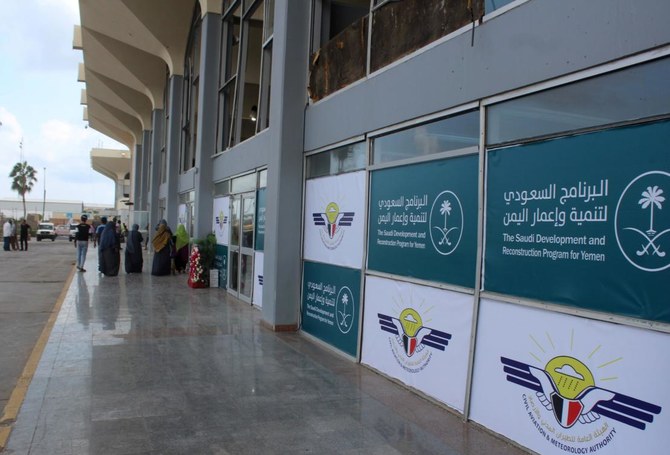
People stand outside of the airport building in Yemen's southern city of Aden on January 3, 2021, as activity resumes after explosions rocked the building on December 30, killing or injuring dozens of people. (AFP)
Short Url
Updated 04 January 2021
Follow

Aden airport reopens as governor demands probe into attack

  • On Sunday, the airport received a Yemenia airline flight arriving from Sudan’s capital Khartoum
  • Yemen’s interior minister and the governor of Aden were at the airport to receive the flight

AL-MUKALLA: Yemen’s Aden airport reopened on Sunday, days after a deadly Houthi missile attack killed more than 25 people and brought operations to a halt, officials and media said.
National carrier Yemenia said on Sunday that it was resuming flights to Aden. A plane coming from Khartoum landed at the airport, even as workers were retrieving debris and fixing the damage caused by the attack.
Aden Gov. Ahmed Hamid Lamlis said the airport would remain a “symbol of peace” and renewed calls for an international investigation into the airport attack, the official Saba news agency reported.
“We reiterate that Aden is strong and seeks peace,” he said at a ceremony to celebrate the airport’s reopening. “This is our message to the international community and we call (on) it to investigate this crime.”
The governor, the commander of the Arab coalition in Aden, Brig. Gen. Nayef Al-Otaibi, and senior government officials released white doves as peace signs.
Yemen’s new Prime Minister Maeen Abdul Malik Saeed and several government officials accused the Iran-backed Houthis and military experts from Iran of staging the airport attack. They called for an international investigation and branded the Houthi militia a terrorist group.

BACKGROUND

• Yemen’s new PM accused the Iran-backed Houthis and military experts from Iran of staging the airport attack.

• They called for an international investigation and branded the Houthi militia a terrorist group.

• Yemen’s Defense Ministry said on Saturday that at least 9,328 Houthi fighters were killed in 2020 in fighting with government forces or in Arab coalition airstrikes.

Yemen’s Defense Ministry said on Saturday that at least 9,328 Houthi fighters, including 688 officers with different military rankings, were killed in 2020 in fighting with government forces or in Arab coalition airstrikes.
The highest number of Houthi deaths was recorded in October and August when 1,220 and 700 rebels were killed.
The ministry also said that coalition warplanes and army troops had destroyed 27 arms and ammunition depots and 573 vehicles belonging to the Houthis. The army and allied tribesmen had shot down 104 explosive-laden drones fired by the militia in 12 months.
The war in Yemen began in late 2014, when the Houthis stormed Sanaa and expanded their military footprint across the country. 
A coalition led by Saudi Arabia intervened in support of the internationally recognized President Abed Rabbo Mansour Hadi and managed to put an end to the Houthi military expansion.
It also helped government forces to take the offensive on the battlefields.


Iranian diplomats leave Lebanon after Israeli strikes near embassy

Updated 16 sec ago
Follow

Iranian diplomats leave Lebanon after Israeli strikes near embassy

  • The security source said they were being flown to Russia on a Russian plane
  • A source from the Iranian embassy in Beirut said a number of non-essential diplomats were leaving

BEIRUT: More than 150 Iranian nationals including diplomats and their families left Lebanon on Saturday, a senior Lebanese security source told Reuters, after the Israeli military threatened Iran’s representatives in Lebanon and conducted strikes near the embassy.
The security source said they were being flown to Russia on a Russian plane, and that another 20 Iranians had left on Friday following the start of a new war between Lebanese armed group Hezbollah and Israel.
A source from the Iranian embassy in Beirut said a number of non-essential diplomats were leaving, but did not give a number.
Iran’s foreign ministry confirmed in a ⁠later statement that Iranian ⁠nationals residing in Lebanon have temporarily left Beirut owing to the security situation in the country.
The Iranian embassy in Lebanon continues its normal operations and consular services for Iranian nationals residing there will continue as before, it added.
The war has refocused attention on Iran’s backing for Hezbollah, which launched rockets and drones at Israel on ⁠Monday and triggered heavy Israeli bombardment across Lebanon.
On Tuesday, an Israeli military spokesperson said in a post on X that representatives of the Iranian government still in Lebanon should “leave immediately before they are targeted.”
The following day, Lebanon’s Prime Minister Nawaf Salam asked authorities to arrest and deport any Iranian Revolutionary Guards carrying out military activities in Lebanon, the first time authorities have hinted at the possible presence of Iranian forces on its territory.
The Lebanese government has not said whether it has determined that Iranian forces were operating in Lebanon. Hezbollah official ⁠Mahmoud Qmati ⁠earlier this week denied that any Iranian military forces were in the country.
On Friday, Israeli air strikes hit an area near Iran’s embassy in Lebanon, two security sources told Reuters. The Iranian embassy source told Reuters that the strikes had driven the decision for Iranian diplomats to leave.
But Lebanese authorities had also been planning to make moves against Iranian diplomats this week, two people familiar with the government’s discussions told Reuters.
They said the Lebanese government had intended to expel diplomats from the country. Reuters could not determine whether the diplomats who had left so far were ousted or left for security reasons.