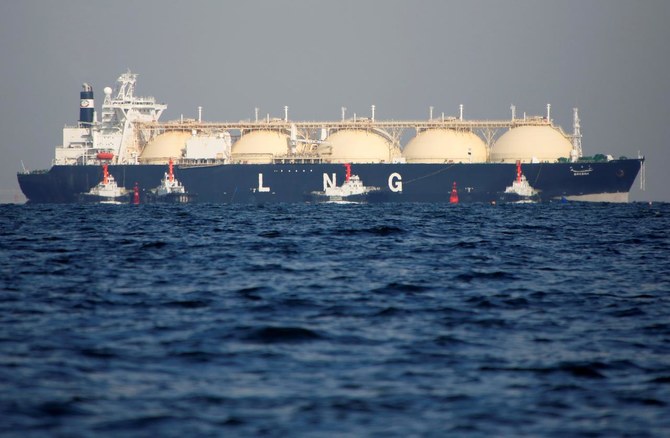
ISLAMABAD: SOCAR Trading (UK) Limited and ENOC Singapore have offered the lowest prices to supply two liquefied natural gas (LNG) cargoes to Pakistan LNG Limited (PLL) for delivery in February 2021, according to a tender document published on Tuesday.
SOCAR offered a cargo for delivery between Feb. 15 to 16 at a percentage of the Brent crude oil futures price, known as a slope rate, of 23.4331% while ENOC offered a slope rate of 20.8483% for a cargo for Feb. 23 to 24, according to the document on the PLL website.
PLL is a government subsidiary that procures LNG from the international market.
Global LNG supply has been tight amid production issues and that has pushed spot prices to a near two-year high and freight rates for LNG tankers to a more than one-year high.
Pakistan is yet to decide on whether it will award the tenders, said an official at the country's petroleum ministry, as the rules require a 10-day gap between the bid announcement and the award.
Earlier this month, Pakistan issued a prompt tender after three out of six cargoes it had sought in an earlier tender for January received no bids, but the country did not award the tenders given the high rates.
The South Asian country has become an emerging buyer in the international LNG market over the last few years, with an increasing gap between demand and supply of gas.
Pakistan has long-term purchase deals in place, but regularly taps the spot market as demand continues to rise.
The power sector is Pakistan's largest natural gas consumer, followed by residential consumption and the fertiliser industry.


SOCAR, ENOC offer lowest prices for Feb LNG cargoes to Pakistan
https://arab.news/24m7s
SOCAR, ENOC offer lowest prices for Feb LNG cargoes to Pakistan

- Global LNG supply has been tight, pushing spot prices to near two-year high and freight rates for tankers to more than one-year high
- Pakistan has become an emerging buyer in the international LNG market over the last few years, with an increasing demand-supply gap
Pakistan reports current account surplus in Jan. owing to improved trade, remittances
- Pakistan’s exports crossed the $3 billion mark in Jan. as the country received $3.5 billion in remittances
- Last month, IMF urged Pakistan to accelerate pace of structural reforms to strengthen economic growth
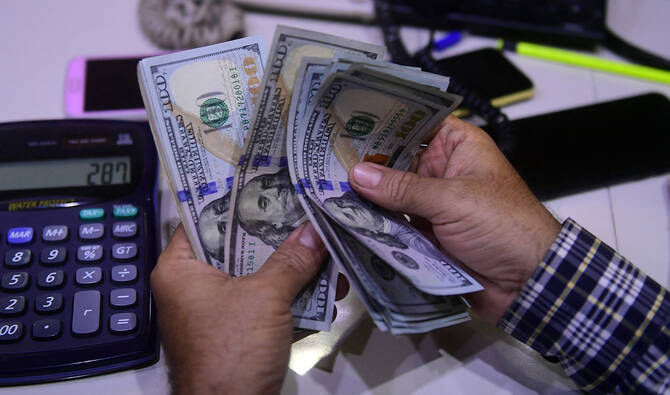
ISLAMABAD: Pakistan recorded a current account surplus of more than $120 million in January, the country’s finance adviser said on Tuesday, attributing it to improved trade balance and remittance inflows.
Pakistan’s exports rebounded in January 2026 after five months of weak performance, rising 3.73 percent year on year and surging 34.96 percent month on month, according to data released by the country’s statistics bureau.
Exports crossed the $3 billion mark for the first time in January to reach $3.061 billion, compared to $2.27 billion in Dec. 2025. The country received $3.5 billion in foreign remittances in Jan. 2026.
Khurram Schehzad, an adviser to the finance minister, said Pakistan reported a current account surplus of $121 million in Jan., compared to a current account deficit of $393 million in the same month last year.
“Improved trade balance in January 2026, strong remittance inflows, and sustained momentum in services exports (IT/Tech) continue to reinforce the country’s external account position,” he said on X.
Pakistan has undergone a difficult period of stabilization, marked by inflation, currency depreciation and financing gaps, and international rating agencies have acknowledged improvements after Islamabad began implementing reforms such as privatizing loss-making, state-owned enterprises (SOEs) and ending subsidies as part of a $7 billion International Monetary Fund (IMF) loan program.
Late last month, the IMF urged Pakistan to accelerate the pace of these structural reforms to strengthen economic growth.
Responding to questions from Arab News at a virtual media roundtable on emerging markets’ resilience, IMF’s director of the Middle East and Central Asia Jihad Azour said Islamabad’s implementation of the IMF requirements had been “strong” despite devastating floods that killed more than 1,000 people and devastated farmland, forcing the government to revise its 4.2 percent growth target to 3.9 percent.
“What is important going forward in order to strengthen growth and to maintain the level of macroeconomic stability is to accelerate the structural reforms,” he said at the meeting.
Azour underlined Pakistan’s plans to privatize some of the SOEs and improve financial management of important public entities, particularly power companies, as an important way for the country to boost its capacity to cater to the economy for additional exports.
“This comes in addition to the effort that the authorities have made in order to reform their tariffs, which will allow the private sector of Pakistan to become more competitive,” the IMF official said.


