KARACHI: Six leading Pakistani banks have signed a Master Credit Guarantee agreement with the Pakistan Mortgage Refinance Company (PMRC) for risk coverage on financing for low-income housing, with the 10-year credit guarantee scheme providing coverage of up to 40% on a first-loss basis.
To support financing, the government of Pakistan has set up a Credit Guarantee Trust, managed by PMRC, with the support of the central bank and funded by the World Bank.
“SBP in coordination with the ministry of finance and World Bank undertook these strategic initiative of providing liquidity in the form of PMRC to provide liquidity to primary mortgage lenders and enabling them to prudently manage and match maturity profile of assets and liability”, Jamil Ahmed, deputy governor of the central bank, said while speaking at the signing event held in Karachi on Monday. “It would also help developing hybrid mortgage models and develop capital markets in Pakistan.”
The banks that signed the agreement included Faysal Bank, a subsidiary of Bahrain based Ithmaar Bank; Meezan Bank, a subsidiary of Kuwaiti Noor Financial Investment; BankIslami, a joint venture of the Dubai based Randeree family, Dubai Bank and Jahangir Siddiqui & Company; Habib Bank, JS Bank and Soneri Bank.
Pakistan currently has an overall housing backlog of 10-12 million housing units, with the gap continuing to increase by roughly 350,000 units per year, World Bank and Pakistan’s official data shows.
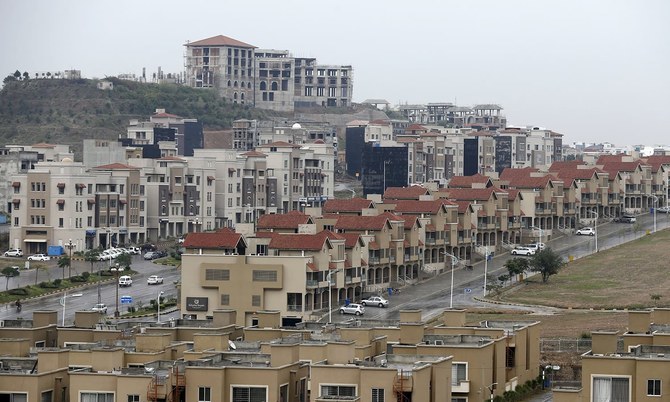
Prime Minister Imran Khan had promised to fill the housing demand gap by building five million houses under his government’s flagship Naya Pakistan Housing Program (NPHP). Officials at the newly created Naya Pakistan Housing & Development Authority (NAPHDA) say construction will commence from January 2021.
Mortgage to GDP ratio in Pakistan is less than one percent, one of the lowest in the region.
“This is a major step for the Naya Pakistan Housing Program to make affordable housing possible for all,” PMRC CEO Mudassir H. Khan said at Monday’s event. “PMRC is the first institution to introduce an Islamic refinance product which is a first of its kind not just in Pakistan but across the North African and South Asian region.”
Syed Amir Ali, President and CEO of Bankislami, said the risk coverage would assist BankIslami and PMRC in providing affordable housing finance to fresh homeowners in Pakistan and help the bank alleviate credit risk, while ensuring affordable mortgage facilities for low-income segments of the population.
“Now with PMRC on board, we can work together to promote Islamic housing finance to all demographics,” Ali said. “The agreement will cover the Naya Pakistan Housing Program projects and it will also be applicable on private projects and single houses.”


![]()

Six leading Pakistani banks to get 40% risk coverage on low-cost housing finance
Short Url
https://arab.news/2byqt
Six leading Pakistani banks to get 40% risk coverage on low-cost housing finance
- Pakistani PM has vowed to fill housing gap by building five million houses under flagship Naya Pakistan Housing Program
- Pakistan currently has overall housing backlog of 10-12 million housing units, with gap continuing to increase by roughly 350,000 units per year
Latest updates


Recommended


© 2026 SAUDI RESEARCH & PUBLISHING COMPANY, All Rights Reserved And subject to Terms of Use Agreement.