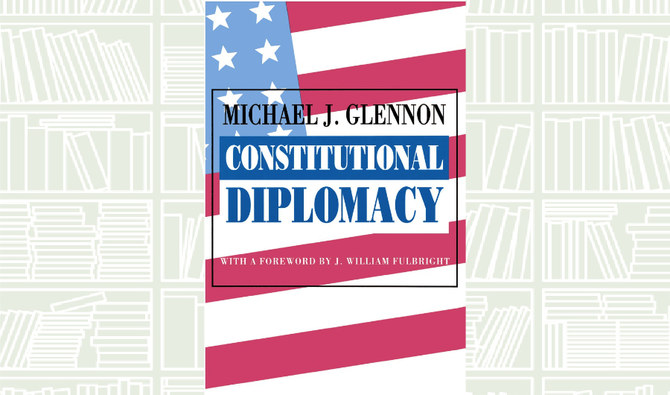
Challenging those who accept or advocate executive supremacy in American foreign policy making, Constitutional Diplomacy proposes that we abandon the supine roles often assigned our legislative and judicial branches in that field. This book, by the former legal counsel to the Senate Foreign Relations Committee, is the first comprehensive analysis of foreign policy and constitutionalism to appear in over 15 years. In the interval since the last major work on this theme was published, the War Powers Resolution has ignited a heated controversy, several major treaties have aroused passionate disagreement over the Senate’s role, intelligence abuses have been revealed and remedial legislation debated, and the Iran-Contra affair has highlighted anew the extent of disagreement over first principles.
Exploring the implications of these and earlier foreign policy disputes, Michael Glennon maintains that the objectives of diplomacy cannot be successfully pursued by discarding constitutional interests. Glennon probes in detail the important foreign policy responsibilities given to Congress by the Constitution and the duty given to the courts of resolving disputes.
What We Are Reading Today: Constitutional Diplomacy by Michael J. Glennon
https://arab.news/9nats
What We Are Reading Today: Constitutional Diplomacy by Michael J. Glennon
Mini op-ed: We need a ‘potluck’ culture of reading
DUBAI: The number of times we hear, “My kids don’t read,” “I don’t have the time,” or “Do people even read anymore?” is alarming.
With newspapers declared dead and YouTube summaries or ChatGPT reviews becoming the main course of words, I often wonder: have those asking these questions considered the role they play?
Each of us — school representatives, librarians, parents, educators, children, and even occasional readers — must ask whether we are helping create a culture where reaching for a book feels as natural as reaching for a smartphone.
Even the smallest effort counts. I think of a reading culture as a potluck where everyone brings something small, and together it becomes a wholesome meal. If you do not know where to begin, look around.
The UAE is rich in public libraries including in Sharjah and Dubai, such as the Mohammed Bin Rashid Library, which is proof that access is not the issue.
Meanwhile, Saudi Arabia is embedding reading into its national identity under Vision 2030 through digital libraries, major book fairs, and daily school reading.
Not a reader? Events such as the Emirates Airline Festival of Literature or the Sharjah International Book Fair offer easy entry points for conversation, community and curiosity.
They are built on cultural blocks that subtly encourage even non-readers into reading spaces. You could even start a reading club. I run one in Dubai called The Reading Village and have seen its quiet magic.
Culture is built by saying yes. And no to pirated PDFs on WhatsApp, as well as unchecked screen habits.
Tiny habits can help build an environment where reading becomes as much a part of our lives as scrolling on Netflix to decide what to binge-watch next.
Purva Grover is an author, poet, playwright, stage director, TEDx speaker, and creative entrepreneur. She is the founder of The Reading Village, a Dubai-based community.