

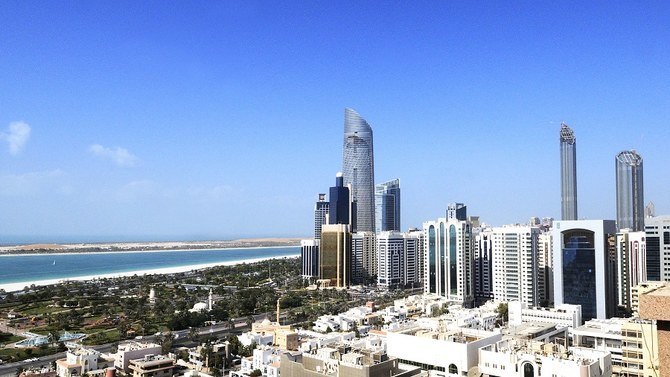
Abu Dhabi prepares for students’ return to campus for second term

The return to campus covers all levels, the education authority said. (File/AFP)
Short Url
Updated 23 December 2020
Follow

Abu Dhabi prepares for students’ return to campus for second term

  • Students and staff of private schools who wish to physically attend classes must have a negative COVID-19 test result

DUBAI: The Abu Dhabi Department of Education has released a new set of guidelines when schools reopen on January 3, including limiting classroom capacity to just 15 students.

“The maximum number of students per class is 15 with social distancing at 1.5 meters and mandatory masks for Grade 1 and above... The maximum of 15 only applies to areas where the students are socially distancing and wearing masks,” local daily Khaleej Times has reported, quoting the education department.

The return to campus covers all levels, the education authority said, but schools will be subject to strict precautionary measures to avoid an outbreak.

Schools in Abu Dhabi had started receiving students in campus on Aug. 30 in phases.

Students and staff of private schools who wish to physically attend classes must have a negative COVID-19 test result, which could be obtained for free until December 31 at drive-through centers across the city.

Abu Dhabi has earlier announced a city-wide vaccination drive using the Chinese COVID-19 vaccine by Sinopharm.

The Gulf nation is one of the first countries to start widespread inoculation, after Britain became the first to roll out a campaign using a vaccine by US pharmaceutical giant Pfizer and its German partner BioNTech.


Iran says can fight intense war for months

Updated 3 sec ago
Follow

Iran says can fight intense war for months

  • Iran’s security chief accuses Trump administration of seeking to replicate a scenario similar to Venezuela
  • Analysts warn there is still no clear path to ending a conflict that could last a month or longer
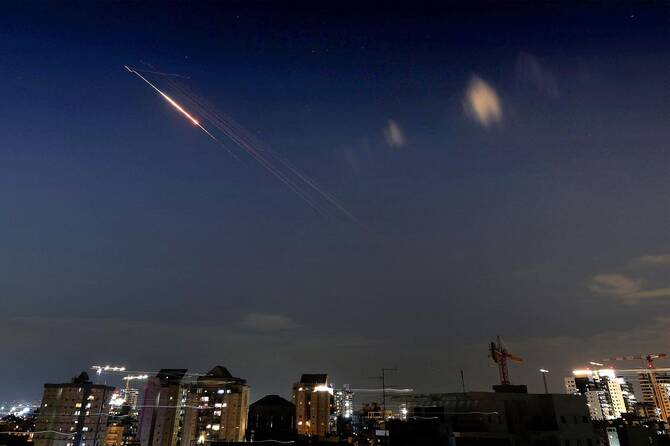
TEHRAN: Iran’s Revolutionary Guards said Sunday that the country’s forces could fight an intense war for six months against the United States and Israel.
Israeli Prime Minister Benjamin Netanyahu has vowed to press on with the war against Iran “with all our force,” with a plan to eradicate the country’s leadership after joint US-Israeli raids killed supreme leader Ayatollah Ali Khamenei last week, sparking the regional conflict.
Despite the threat, the Revolutionary Guards said Sunday that the Islamic republic’s forces could wage an “intense war” for six months at the current speed of fighting.
Guards spokesman Ali Mohammad Naini said Iran had so far used “first and second generation” missiles, but will use “advanced and less-used long-range missiles” in the coming days.
‘Trapped’
The widening reach of the war and Iran’s ability to inflict damage and harm were underscored by US President Donald Trump attending the return of six American service members killed in a drone strike on a US base in Kuwait last Sunday.
Iran’s security chief Ali Larijani accused the Trump administration of seeking to replicate a scenario similar to Venezuela where it ousted leader Nicolas Maduro.
“Their perception was that it would be like Venezuela — they would strike, take control and it would be over — but now they are trapped,” he said in a pre-recorded interview broadcast on state TV on Saturday.
Iran’s hardline judiciary chief Gholamhossein Mohseni Ejei also warned Middle East neighbors which are “openly and covertly at the disposal of the enemy” that “the heavy attacks on these targets will continue.”
Iranian President Masoud Pezeshkian said Sunday that Tehran “will be forced to respond” if a neighboring country were to be used as a launchpad for any attack or invasion attempt.
Tehran had vowed to go after US assets in the region, and Saudi Arabia, Qatar, the United Arab Emirates and Kuwait on Sunday all reported new attacks.
No clear way out
Analysts warn there is still no clear path to ending a conflict that US and Israeli officials say could last a month or longer.
Trump has suggested Iran’s economy could be rebuilt if a leader “acceptable” to Washington replaces the late supreme leader, which Tehran has rejected.
China and Russia have largely stayed on the sidelines despite close ties with Tehran.
China’s top diplomat Wang Yi said on Sunday that the war in the Middle East should “never have happened.”
“This is a war that should never have happened,” he told a press conference in Beijing, adding that “a strong fist does not mean strong reason. The world cannot return to the law of the jungle.”