

Islamabad zoo’s last inhabitants, bears Suzie and Bubloo, leave for Jordan

A Himalayan bear, one of the last inhabitants of the zoo in Islamabad, Pakistan, looks out of a cage before its departure to be relocated to Al Ma'Wa for Wildlife and Nature sanctuary in Jordan, on December 16, 2020. (Photo Courtesy: FOUR PAWS)
Short Url
Updated 17 December 2020
Follow

Islamabad zoo’s last inhabitants, bears Suzie and Bubloo, leave for Jordan

  • With the bears’ departure, the zoo will now be completely closed to the public, the ministry of climate change has said
  • Suzie and Bubloo left almost three weeks after the country’s only Asian elephant Kaavan was relocated to a wildlife sanctuary in Cambodia

ISLAMABAD: Suzie and Bubloo, two Himalayan bears who were the last inhabitants of the Islamabad zoo, flew to Jordan on Thursday, almost three weeks after the country’s only Asian elephant was relocated to a wildlife sanctuary in Cambodia.
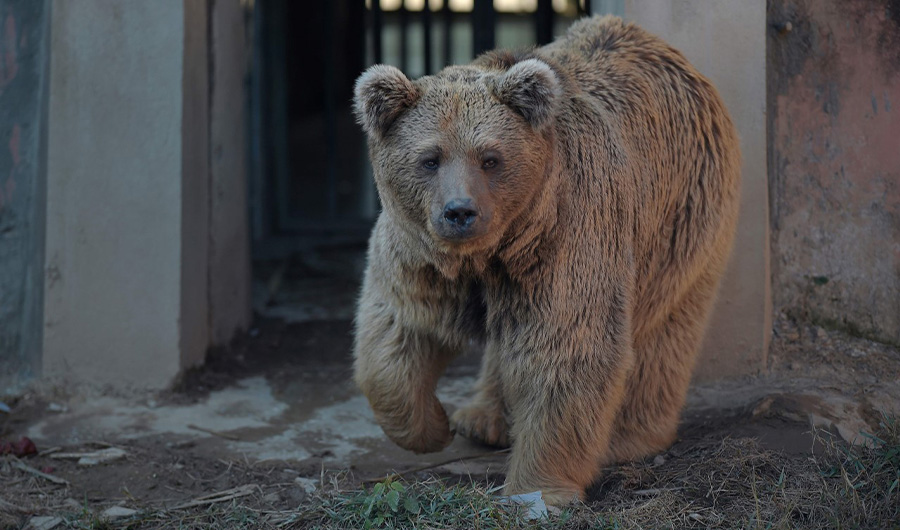


A Himalayan bear, one of the last inhabitants of the zoo in Islamabad, Pakistan, looks out of a cage before its departure to be relocated to Al Ma'Wa for Wildlife and Nature sanctuary in Jordan, on December 16, 2020. (Photo Courtesy: FOUR PAWS)
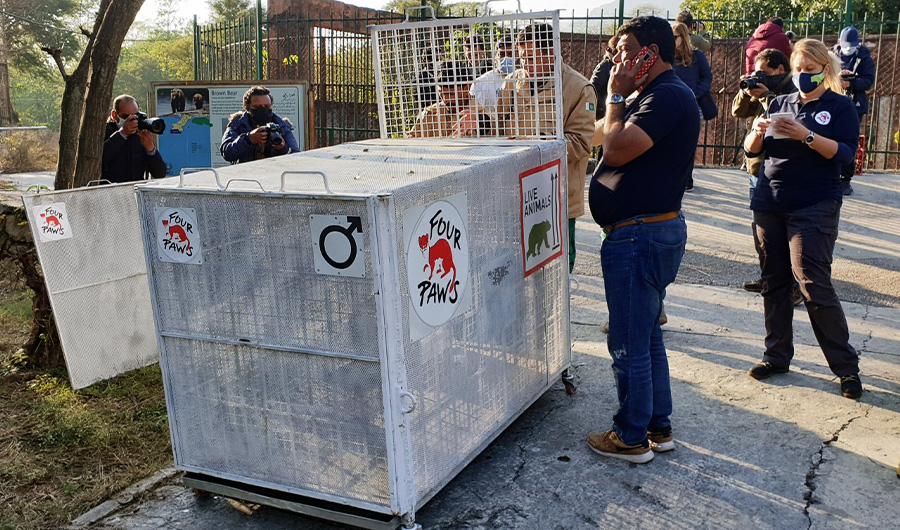


Amir Khalil, head of project development at FOUR PAWS International, and others, stand by a Himalayan brown bear being relocated to Al Ma'Wa for Wildlife and Nature sanctuary in Jordan, at the Marghazar Zoo in Islamabad, Pakistan December 16, 2020. (Photo Courtesy: FOUR PAWS)

With the bears’ departure, the zoo will now be completely closed to the public, the ministry of climate change has said. 

The Express Tribune newspaper reported that Bubloo and Suzie were sent via Qatar Airline flight 633.

“The Civil Aviation Authority (CAA) made special arrangements at the Islamabad airport for the safe transfer of the bears,” the newspaper reported. “A special team of the international animal rights organization Four Paws was also present on the occasion to oversee the transfer of the pair.”

Four Paws International also spearheaded the relocation of Kaavan the elephant, whose plight was championed by singer and Oscar-winning American actress Cher. She flew to Pakistan to see the elephant’s departure last month, and then went to Cambodia to watch him arrive.

The ailing health of Kaavan, an overweight, 35-year-old bull, highlighted the woeful state of Islamabad’s zoo, where conditions were so bad that the Islamabad High Court judge in May ordered all animals to be moved.

Two lions died during their relocation when zookeepers attempted to pry them from their pen by setting ablaze piles of hay. An ostrich also died in the move.

Islamabad Zoo was established in 1978 on 10 hectares of land as a home for indigenous species. Authorities now plan to expand it as a wildlife conservation center.

With little legislation to safeguard animal welfare, zoos across Pakistan are notorious for their poor conditions. In 2018, some 30 animals died within months of a new zoo opening in the northwestern city of Peshawar, including three snow leopard cubs.

Earlier this week, the IHC observed that the “bears’ natural habitat was the high altitude plateau of Deosai National Park in the Himalayas.” “It was indeed inhumane to have deprived them of living in their natural habitat, merely for the entertainment of humans.”

IHC Chief Justice Athar Minallah termed the zoo a ‘dungeon for animals’, and said a zoo, no matter how well equipped, is no less than a concentration camp for living beings.

They were subjected to unimaginable pain and there is no justification for it as the bears’ behavior was unnatural while imprisoned, he added.

He said it is time to end imprisonment of sentient animals in cages at zoos and let balance be restored so they could live with dignity in their respective natural habitats and enjoy their natural rights.


IMF hails Pakistan privatization drive, calls PIA sale a ‘milestone’

Updated 10 January 2026
Follow

IMF hails Pakistan privatization drive, calls PIA sale a ‘milestone’

  • Fund backs sale of national airline as key step in divesting loss-making state firms
  • IMF has long urged Islamabad to reduce fiscal burden posed by state-owned entities

KARACHI: The International Monetary Fund (IMF) on Saturday welcomed Pakistan’s privatization efforts, describing the sale of the country’s national airline to a private consortium last month as a milestone that could help advance the divestment of loss-making state-owned enterprises (SOEs).

The comments follow the government’s sale of a 75 percent stake in Pakistan International Airlines (PIA) to a consortium led by the Arif Habib Group for Rs 135 billion ($486 million) after several rounds of bidding in a competitive process, marking Islamabad’s second attempt to privatize the carrier after a failed effort a year earlier.

Between the two privatization attempts, PIA resumed flight operations to several international destinations after aviation authorities in the European Union and Britain lifted restrictions nearly five years after the airline was grounded following a deadly Airbus A320 crash in Karachi in 2020 that killed 97 people.

“We welcome the authorities’ privatization efforts and the completion of the PIA privatization process, which was a commitment under the EFF,” Mahir Binici, the IMF’s resident representative in Pakistan, said in response to an Arab News query, referring to the $7 billion Extended Fund Facility.

“This privatization represents a milestone within the authorities’ reform agenda, aimed at decreasing governmental involvement in commercial sectors and attracting investments to promote economic growth in Pakistan,” he added.

The IMF has long urged Islamabad to reduce the fiscal burden posed by loss-making state firms, which have weighed public finances for years and required repeated government bailouts. Beyond PIA, the government has signaled plans to restructure or sell stakes in additional SOEs as part of broader reforms under the IMF program.

Privatization also remains politically sensitive in Pakistan, with critics warning of job losses and concerns over national assets, while supporters argue private sector management could improve efficiency and service delivery in chronically underperforming entities.

Pakistan’s Cabinet Committee on State-Owned Enterprises said on Friday that SOEs recorded a net loss of Rs 122.9 billion ($442 million) in the 2024–25 fiscal year, compared with a net loss of Rs 30.6 billion ($110 million) in the previous year.